
惯性聚合 高效追踪和阅读你感兴趣的博客、新闻、科技资讯
阅读原文 在惯性聚合中打开

推荐订阅源

Google DeepMind News
I
InfoQ
Engineering at Meta
Engineering at Meta
D
DataBreaches.Net
L
LangChain Blog
Cyber Security Advisories - MS-ISAC
奇客Solidot–传递最新科技情报
奇客Solidot–传递最新科技情报
Recent Announcements
GbyAI
GbyAI
爱范儿
爱范儿
Microsoft Security Blog
腾讯CDC
美团技术团队
罗磊的独立博客
Microsoft Azure Blog
WordPress大学
WordPress大学
T
The Blog of Author Tim Ferriss
freeCodeCamp Programming Tutorials: Python, JavaScript, Git & More
雷峰网
雷峰网
M
MIT News - Artificial intelligence
D
Docker
MongoDB | Blog
MongoDB | Blog
F
Fortinet All Blogs
博客园 - 叶小钗

The Guardian

Rory McIlroy surges into six-shot Masters lead with stunning second-round flourish ‘That’ll be the end’: actor Sam Neill joins fight to stop controversial goldmine near his New Zealand vineyard Roberto De Zerbi targets ‘Ange-ball’ revival to save Spurs from relegation Bath hit back to reach semi-final after stunning Northampton in 11-try epic Secret Garden to Outcome: the week in rave reviews Zebras, wealth and power: Hungary’s election tests Orbán’s grip on power ‘TikTok effect’ brings sellout crowds and younger fans to Grand National meeting The war over Omagh’s gold: the £21bn mine plan tearing a community apart Britain’s shadow workforce is paid as little as 65p an hour. Who cares for the carers? From You, Me & Tuscany to Euphoria: your complete entertainment guide to the week ahead Six great reads: the man who let snakes bite him, masked heavy metal and the brutal reality for foreign students in the UK American Classic review – I defy you not to fall in love with Kevin Kline and Laura Linney’s tender comedy Cuba’s doctors were a lifeline for the world. Now the Caribbean is shamefully complicit in the US drive to expel them An environmental disaster in Moldova has Russia’s fingerprints all over it RMIT drops misconduct case against student who accused university of being ‘complicit in Gaza genocide’ Ichiro Suzuki statue unveiling goes awry as bronze bat snaps during ceremony Survivors of Epstein’s abuse accuse Melania Trump of ‘shifting burden’ on to victims European football: Real Madrid held at home by Girona to extend winless run Arne Slot insists he is ‘aligned’ with Liverpool board and fans as squad is rebuilt Kamala Harris ‘thinking about’ running for president again in 2028 JD Vance warns Iran against trying to ‘play’ the US in peace talks West Ham double up twice to thrash Wolves and put Spurs in relegation zone Trump administration releases new renderings of so-called ‘Arc de Trump’ Crispin Odey drops £79m libel claim against FT over sexual misconduct allegations Bafta apologises for events surrounding John Davidson’s Tourette’s outburst Cocktail of the week: Bar Shrimp’s la rosita – recipe New drug may extend survival in aggressive ovarian cancer, trial shows One dead and 27 injured after bus with British passengers crashes in Canary Islands Pope adds to Smith’s mass of Surrey runs with England woes a world away OpenAI CEO Sam Altman’s home targeted with molotov cocktail
Mystery sitter in Holbein portrait could be Anne Boleyn, ...
Lanre Bakare · 2026-05-03 · via The Guardian

They are two small sketches by the Renaissance master Hans Holbein: one has long been considered to be a portrait of Henry VIII’s doomed second wife, Anne Boleyn, and the other is of an unknown woman whose name was lost to time.

Now researchers using AI have discovered that the unnamed woman might be the tragic queen after all, while the other figure could in fact be Boleyn’s mother.

The works, which belong to the Royal Collection and are known as the Windsor sketch and the Unidentified Woman, respectively, were analysed by a team at the University of Bradford, who found that they might have been incorrectly inscribed in the 1700s, leading to a misunderstanding that has lasted centuries.
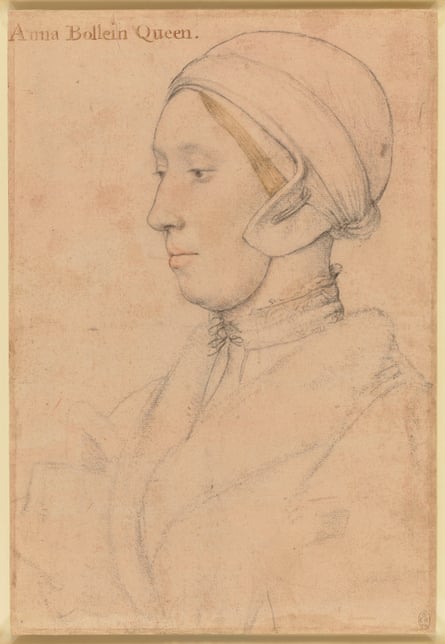
Side-profile sketch of a woman
The Windsor sketch. Illustration: Royal Collection Enterprises Limited 2026 | Royal Collection Trust

The independent scholar Karen Davies was studying the Holbein corpus of images, which number more than 80, and had her suspicions about the Windsor sketch, which shows the sitter in side profile. She was light-skinned, with red hair, while Boleyn was often described as being of a darker complexion.

The corpus was also known for its inconsistent labelling, with an image of Boleyn’s cousin Henry Howard actually being of his father. In a study published in March, Davies estimates that fewer than 15% of the works in the corpus possess contemporary documentary verification.

Davies teamed up with Prof Hassan Ugail, the director of the centre of visual computing at Bradford University, who has developed an AI model to recognise paintings by old masters and previously attributed to Raphael a painting that had puzzled art historians for decades.

“We looked at the entire collection and compared one image against another to create a huge matrix,” he said of the Holbein corpus. “It clustered paintings that were close to each other.”

The unidentified woman sat in the Boleyn-Howard cluster, while the Windsor sketch, seemed to be closer to images of Elizabeth Howard, Boleyn’s mother.

Davies said she hoped the analysis would open up debate on the images, and the rest of the Holbein corpus. She said: “I think now we’ve opened up the question. It’s not like we’re making a claim and that’s the thing settled. I hope that there’s a debate about reassessment more widely.”

A Royal Collection Trust spokesperson said the identity of the unnamed sitter had long been the subject of debate. “In sharing the Royal Collection and opening it up for research, we welcome further discussion, debate and new information,” they said.

Hans Holbein’s portraits of the Tudor court are among the finest Renaissance-era artworks.

Born in Augsburg in Germany, Holbein worked in Basel before moving to England where he specialised in portraits and sketches.

He had moved to escape the chaos of the Reformation in Europe but ended up among the suspicion and paranoia of the court of Henry VIII. The monarch wanted to divorce his wife, Catherine of Aragon, and marry Boleyn; the pope’s refusal to help led to the English Reformation.

Holbein painted portraits of Thomas More, who was executed in 1535, and Boleyn, who was beheaded the year after.

Earlier this year the most well-known Boleyn image, the Hever “Rose” portrait, was analysed, with historians suggesting the Elizabethan artist responsible for the painting sought to create a “visual rebuttal” to claims she was a witch with a sixth finger on her right hand.