


Holidaymakers have faced numerous stresses in recent years when planning and budgeting for the sacred summer holiday. Holiday flights to Europe have kept growing despite a pandemic, a cost of living crisis and long airport queues, but summer 2026 threatens to bring fresh anxieties.
Legacies of Brexit mean longer border checks for Britons and most non-EU nationals to get into much of Europe, and the US-Israel war on Iran has prompted fears that airlines may not have enough fuel for every scheduled flight.
Confusion still surrounds the exact status of the EU’s new entry-exit system (EES), which in theory should now be taking biometric data – fingerprints and photographs – from every applicable visitor, after the 10 April deadline for full implementation passed.
Meanwhile, some airlines and industry leaders have warned of fuel surcharges and potential cancellations of flights by the end of the summer if the strait of Hormuz – through which a fifth of the world’s oil and gas exports would normally flow – does not fully reopen. Others, including easyJet, say there are no concerns about jet fuel shortages.
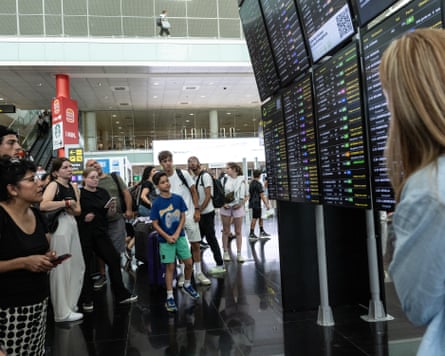
As far as fuel supply goes, forecasts remain entirely dependent on how the war unfolds, whether the current fragile ceasefire persists and if shipments start leaving the Gulf unimpeded – and remain that way. Nerves will not have been helped by warnings from the International Energy Agency that Europe has only six weeks’ supply of jet fuel left before shortages will hit. Fatih Birol, the executive director of the IEA, said there would be flight cancellations soon if oil supplies from the Middle East were not restarted within weeks. Hopes were revived on Friday, after Iran’s foreign minister said Hormuz would be completely open for the duration of a 10-day ceasefire in Lebanon. Oil prices started to fall. But all depends on whether the ceasefire holds, and what happens after that.
Airlines have so far been adamant that supplies remain unaffected – even if the soaring cost of fuel likely means more expensive travel. According to the trade body Airlines UK, carriers in Britain “are currently not seeing disruption to jet fuel supply”, in part due to the country’s diverse supply sources.
But in a sign that all is far from assured, they are also lobbying the government about contingency measures, including relaxing “use it or lose it” airport slot rules – the kind of changes made after Covid when flights were grounded.
Kenton Jarvis, the chief executive of easyJet, said: “We only ever in this industry have three to four weeks’ visibility. We have a visibility to the middle of May and we have no concerns.”
What this means for some bookings is unclear.
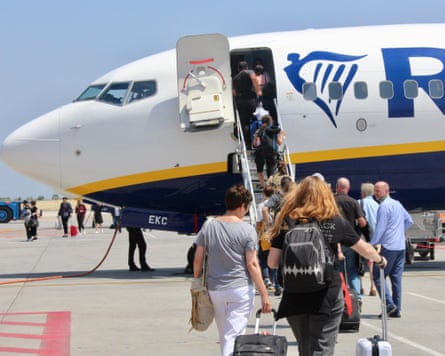
Michael O’Leary, Jarvis’s rival at Ryanair, has warned of having to cancel as much as 10% of late summer flights if shipping does not return to normal quickly. Jarvis dismissed this as “just speculation”, adding: “We see normal fuel supply happening and therefore we have normal operations.”
Transport analysts are not convinced that airlines are “communicating transparently”, as Andrew Lobbenberg of Barclays puts it – be it to sustain consumer confidence or due to extreme uncertainty. He told investors to expect fewer flights, a “blended impact of forced cuts in May, June and perhaps July from fuel shortages evolving to voluntary cuts later in the year in response to fuel prices”.
Airlines clearly do not want to dissuade bookings – which easyJet said were already being made ever later in an uncertain climate. Confidence on fuel availability does not rely on a formal reserve, according to Isabelle Gilks, an analyst at the energy consultancy Wood Mackenzie. She said: “It’s less about there being plenty of supply, and more about how the system is set up to absorb short-term shocks.”
Most of Europe’s jet fuel comes from the Gulf, with the UK heavily reliant on Kuwait. But, Gilks said, “Europe can still pull barrels from other regions like the US – why you’re not seeing airlines panic at this stage. The issue is more what happens if this drags on.”
Airlines will start managing demand – cutting back on weaker routes, reducing frequencies, or trimming capacity. Flights should broadly run as planned, Gilks said. “But if the disruption continues into the summer, you’re more likely to see higher fares and some route cuts rather than planes being grounded altogether.”
Short-haul routes run by low-cost carriers are at particular risk, with tight profit margins sensitive to fuel, and demand stoked by low fares, according to Janiv Shah, an oil expert at Rystad Energy. He said: “European jet fuel stocks are at a three-year low, and prices will continue to rise with weak supply from current levels of production and imports.”
Costs will hit the “unhedged” airlines hardest – those who have not ordered fuel ahead at a constant price. Even easyJet, which has locked in 70% of its jet fuel requirements at $700 (£516), less than half the current price of $1,500 per metric tonne, anticipates a £40m hit this summer for every $100 rise in the price of kerosene.
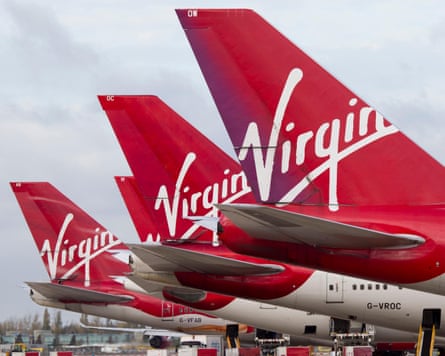
While that has driven some fares up – Virgin Atlantic has slapped a fuel surcharge on long-haul flights starting from £50 in economy – European carriers may have less leverage to immediately pass on costs, with customers already pausing before booking.
Where does this leave the passenger? The aviation consultant John Strickland thinks most people can book with confidence that their summer plans will be unaffected: “Airlines will always come up with contingency planning – we’ve had things like the pandemic, economic shocks, strikes – they will always plan how to get maximum benefit to protect passengers, and revenues.”
On short-haul flights, local shortages in regions or airports can be overcome by “tankering” – carrying more fuel than needed, ready for a return or onward leg. That makes European destinations a safer bet than some Asian or African routes, where shortages are already biting.
Strickland noted that not all airlines had the same resources, in terms of fuel-efficient aircraft, power or cash in the bank. It was perhaps not time to take a punt on a cheaper ticket with a smaller airline, he said: “When something like fuel is as volatile as it is, that’s life or death for some of the weaker brethren.”
In the context, fears about EES are very much second billing. The system, which the EU hopes will eventually make for speedier as well as more secure borders, has been for some a highly disruptive delay, and for others a barely noticeable formality, if applied at all.
Immigration queues of three hours ascribed to EES have been reported around Europe, according to the Airports Council International. Last weekend more than 100 easyJet passengers were reportedly left stranded in Milan due to the impossibility of them clearing passport control in time.
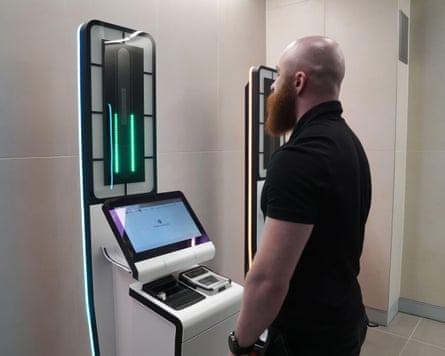
After EES started in October with a phased rollout, all applicable visitors – broadly, with exceptions, non-EU citizens going into the Schengen area – should now be handing over their biometric information.
For most visitors, this will happen on arrival in Europe, on landing at the airport. Those travelling across the Channel from Britain to France complete the checks before travel, due to the juxtaposed French borders on UK soil: at London St Pancras for Eurostar and likewise at Folkestone for Eurotunnel’s Le Shuttle service and the Port of Dover’s ferries.
At all three, the kiosks expensively installed are yet to be switched on, pending full technical approval by French authorities. Wet-stamping of the passports by border guards continues.
Some travellers will have fingerprints and photographs taken at the normal booths by France’s Police aux Frontières, but Eurotunnel said car drivers would continue to pass without their biometric data being collected, despite the April deadline.
EES checks take place only at the point of entry and departure to the entire Schengen area. For individual travellers the processing time will be quicker after the first visit, with prints only taken once. However, it appears that as long as all EES data collection is being done at the border by officers, no system is in place for those who have already submitted their biometrics to bypass queues.
A European Commission spokesperson said it was “aware that fixes and fine tuning” were needed at some border crossing points but that it was the responsibility of member states to ensure implementation. It added: “Overall, the rollout is progressing well and the EES rules foresee flexibility to ensure border fluidity, in particular in view of the next summer.”
此内容由惯性聚合(RSS阅读器)自动聚合整理,仅供阅读参考。 原文来自 — 版权归原作者所有。