









Last year, at the age of 35, I decided it was time to grow up and get my driver’s licence.
I had considered it before but it had never stuck. As a teenager, I thought driving was scary and significantly less cool than sitting on the bus, listening to the same eight songs on my MP3 player. As a news reporter in my 20s, not driving was inconvenient to both me and my editors, but so was spending days off learning how to parallel park.
Then I moved to suburban Sydney – and suddenly driving felt essential.
Over the years, I’d had a few teachers – my dad, a flatmate, a driving instructor who insisted on playing me his amateur song recording. I found a new driving instructor named Pete, a jovial British man who loved to talk politics. After a few months, we decided I was ready.
The testing officer’s monotone voice could have secured him a job in ASMR. For half an hour, we navigated suburban streets, me making nervous quips about pedestrians in a bid to seem confident and aware of my surroundings, him attempting to ignore me.
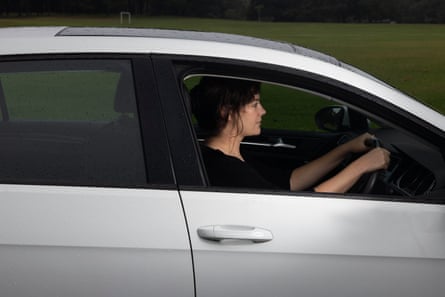
I was crawling through the mall car park at 5km/h, just seconds from the end, when a car stopped to let out passengers. I dutifully performed my blind spot check, just as Pete had taught me. “Good to go!” I said cheerily, preparing to pass the car and the test.
Suddenly, the testing officer slammed on his brakes. “There’s a person there,” he said, dropping his practised calm. Out of the gloom, an elderly lady had appeared at the edge of the crossing.
It was over. I had failed. As Pete drove me home, tears rolled down my face.
Over the subsequent six months, I would fail three more times, each for a different reason. The second time, I mounted a kerb at a roundabout. The third time, I attempted to run a red light. The fourth, I hesitated too long at a pelican crossing.
Learning to drive as an adult is humiliating because everyone knows how to drive, and frustrating because no one knows how to drive properly. All around me, people were running red lights and failing to brake at pedestrian crossings, yet Service NSW seemed to think they deserved licences.
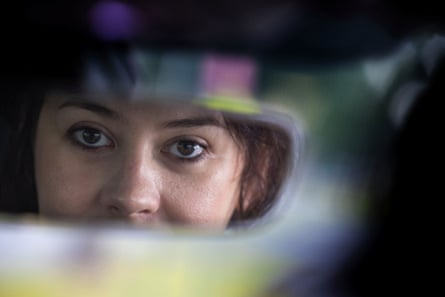
After waiting so long, I had also hoped I would be a natural. While I have many skills – typing fast, crying delicately – it was starting to feel as though driving would not be one of them.
For my fifth attempt, I put on an outfit channelling McLeod’s Daughters, hoping it would convey to the testing officer that I was competent and could drive a manual if needed. I told no one what I was off to do, steeling myself for the possibility of failure.
But my seemingly endless capacity to flub had also strengthened my resolve. One way or another, regardless of how long it took, regardless of how many times I had to pay the $72 fee, I was going to pass.
This time, things were going in my favour. A perfect parallel park. Staying off the kerb. I even managed to turn on the windscreen wipers.
I returned to the Service NSW office where Pete was waiting. The testing officer called me to the counter.
“Congratulations,” he said. “You’ve passed.”
Against all odds, I was a driver.
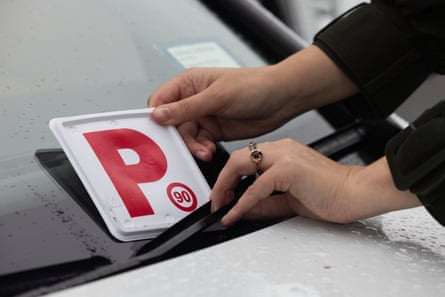
A few weeks later, I downloaded a carshare app. Driving with the windows down, I felt like a 2000s heart-throb headed to the beach and as though I was doing something illegal. Then a man yelled what sounded like “flat tyre”. It seemed best to ignore him. At the traffic lights, another man pulled up beside me, telling me the same. “There’s a servo up ahead,” he said.
Alarmed, I drove in the direction he had pointed, unable to check for directions as P-platers are banned from using their phones to navigate. When I found the service station, I ran to the counter, frantic and said: “It’s my first day driving!”
Soon the NRMA arrived, lights flashing, and my pancake-flat tyre was changed.
I drove away, frazzled, on edge, but slightly proud. I wasn’t just a driver. I could even deal with a flat tyre. Perhaps I could do anything.