


Are you ready for a spin-off of a counterfactual drama series? Or is the current air of unreality surrounding actual reality enough for you? If you find yourself in the market for the former, congratulations for your psychological and spiritual robustness – and welcome to Star City.
This is the counterpoint/companion piece to For All Mankind, the creation of Ronald D Moore, Ben Nedivi and Matt Wolpert that posed the question: what if the Russians had been the first people to land on the moon? And what if the space race never ended? That was – and indeed is, as it is now in its fifth season and been renewed for a sixth and final one – set in the US with the alt-history seen through American eyes. Now Moore and co return with the timeline set behind the iron curtain.
We join the denizens of Star City (a bit like the USSR’s equivalent of Cape Canaveral) as they celebrate the moment that, in For All Mankind, galvanised the US into a massive catch-up mission; their man Alexei Leonov walking on the moon and beaming a speech back to Earth about the tremendous benefits (I paraphrase) of “the Marxist-Leninist way of life”.
Here, we see the words being closely followed by the woman who wrote the speech for him: the terrifying Lyudmilla (Anna Maxwell Martin), a colonel in the Great Patriotic War (the Eastern Front in the second world war – the rumour in Star City being that she killed more than a hundred Germans) and now head of KGB surveillance.
After the mission’s success, the chief designer (Rhys Ifans) tries again to get President Brezhnev interested in his plans to fly to Mars and Venus, but the State is firmly against diversifying efforts when there are still American faces to be ground in terrestrial mud. Back to working on the next lunar mission he goes, but even there his plans are semi-scuppered. One of the cosmonauts – Yana (Niamh Algar) – due to take part in the coming launch is deemed to have transgressed against the State. She is replaced – after several increasingly (but never gratuitously) harrowing scenes of interrogation – by a far less qualified but more loyal party member, Anastasia Belikova (Alice Englert).
New girl Irina (Agnes O’Casey) is one of the myriad typists arranged in row upon immaculate row in a vast hall, spending their days transcribing the KGB’s many covert home recordings of the cosmonauts and engineers. She discovers that Yana has been wrongfully accused and goes to Lyudmilla with her findings. This goes about as well as you would expect for Yana but – at least in the short term – a little bit better for Irina, whose aptitude impresses the colonel and who adopts her as a potential assistant as work begins to find the Russian mole who has leaked plans for a future moon base to the Americans.
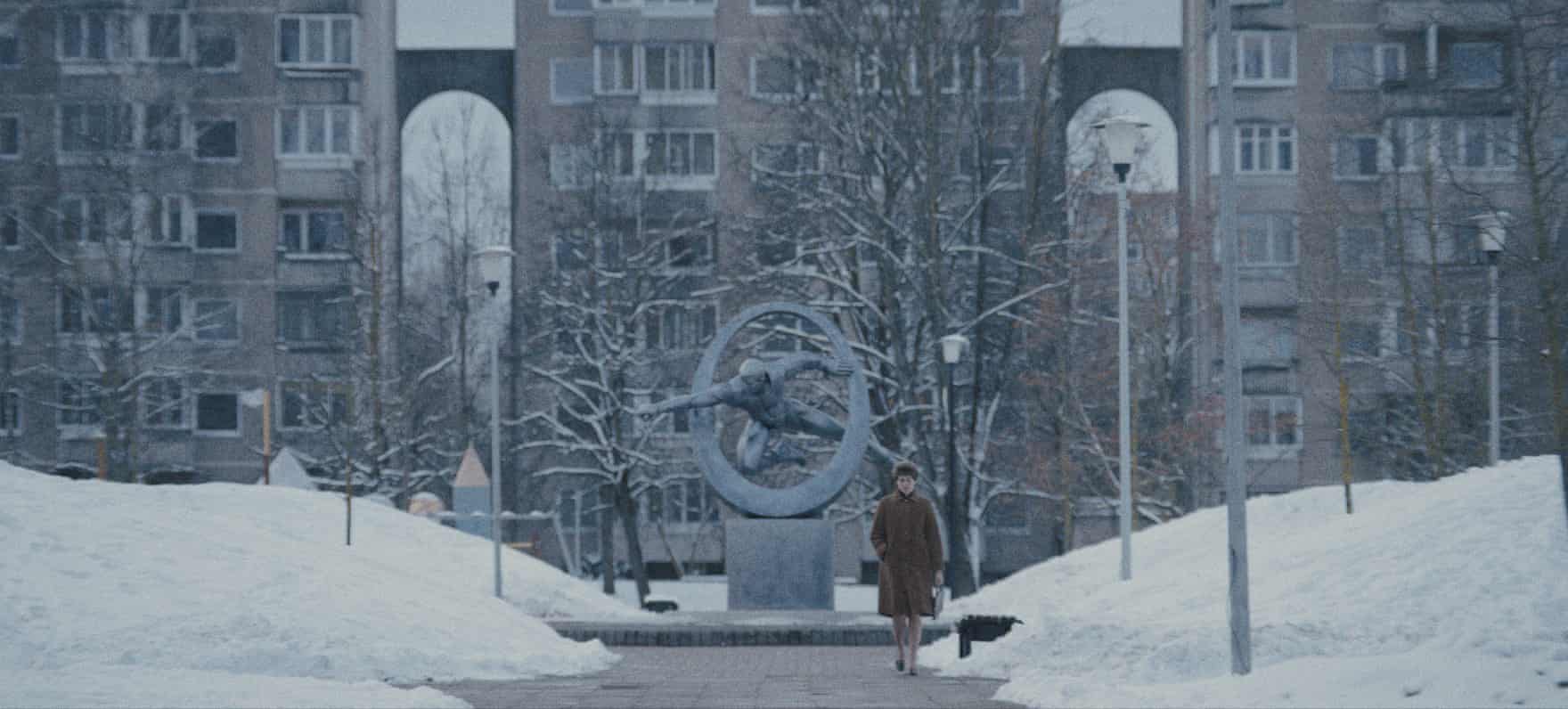
Star City has none of the glossy blandness that For All Mankind did at the beginning, before it found its feet, and none of the soapiness that has occasionally beset it since. By relocating to the USSR, the stakes are immediately higher and inescapable. The fear and the tension of living that vaunted Marxist-Leninist life are palpable in every scene. Everyone, after all, is trapped. The only differences are in degree and awareness of that fact. Every word must be considered, the possible ramifications of every decision carefully calibrated. And that is only to minimise risk, never banish it altogether.
Wolpert et al layer the daily compromises, doubts, stresses, accidental indiscretions (like catching sight of the cover of a top secret file on a superior’s desk) and insecurities endlessly, one on top of the other, and then – just when you think you can’t bear even this much anxiety – begin to weave them into bigger, more nightmarish events still. More and more mines are laid (Anastasia, for instance, goes off-script during her speech back to Earth, acknowledging Yana’s contribution to the mission; the chief designer shares with a colleague his plans to misappropriate lunar funds for his research into other interplanetary trips) and potentially fatal missteps abound.
As much as it will offer space history fans a deep dive into the “what if?” possibilities surrounding the intoxicating fundamental premise, it offers a broader audience something equally fascinating: how human nature warps in the absence of trust, how people survive intolerable stress, and what they will do to be free (especially as we get to know the characters as individuals – for there are few who remain ciphers in this delicate, detailed show for long). All mankind is here.