


For six awful days last summer, as her father, David, got progressively sicker in the cardiac ward of the John Radcliffe hospital in Oxford, Karen Osenton would read the poster above his bed telling patients about their right under Martha’s rule to ask for a second opinion.
Her father, a retired engineer in his early 70s who was normally extremely fit, was by then thin, jaundiced and could barely lift his head from the pillow. But his bed was right beside the nurses’ station, surely they would notice if he needed more urgent treatment?
David had first gone to his GP more than a month earlier complaining of extreme breathlessness, and over the following weeks he had become increasingly thin and weak with suspected heart failure. But it had taken repeated visits to the accident and emergency ward, being sent home each time, before he was finally given a bed in a specialist cardiac unit last July.
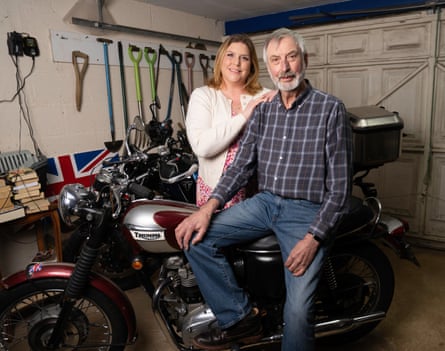
“Every day we saw him he got worse,” says Karen, a teacher from Aynho, in West Northamptonshire. “My mum kept saying: ‘Please, my husband is not right, this is not David. He is so unbelievably poorly.’ He couldn’t walk, he didn’t sleep, he couldn’t eat. Even the other gentlemen in the bay were saying to the nurses: ‘Can you not see this man is extremely unwell?’”
Almost a week after David was admitted, Karen was met by her tearful mother, Kathleen, as she arrived at the hospital. “She said: ‘You’ve got to help your dad.’
“He was on the edge of the bed, rocking, and he could barely speak. He was so yellow, so gaunt. I just walked to the desk and I said: ‘You will get a consultant here now. I am invoking Martha’s rule. I want somebody to see my dad right now.’”
Within minutes, says his daughter, the room was full of doctors. “He was very close to death. His lungs were filled with fluid. He had multi-organ failure. Within the hour he was in intensive care, fighting for his life.” A senior consultant told Karen her father was “the sickest person in the hospital”.
Oxford University Hospitals NHS foundation trust (OUH), which oversees the hospital, has apologised to the family and admitted it made mistakes in treating David’s cardiac failure. While some of the delays in assessing him were “unfortunately due to service pressures and staffing limitations”, the hospital said after a review of his case, clinicians also failed to spot that he was getting worse, and by the time they did, he was too unwell to have the recommended surgical valve repair. In addition, a “lapse in communication” meant there was confusion between two different teams over which was responsible for his care.
Once in intensive care, David’s treatment was “exceptional”, Karen says. “But it didn’t need to get to that point, ever. Every day I had read those posters, every day I thought about Martha’s mum and thought: what a strong woman to do something like this. Not realising that I’d actually have to use it myself.”

Though her father slowly recovered, the once active motorcyclist and hands-on grandfather is far from the man he was. “If we’ve gone for a family day out, he gets very shaky and light-headed and needs to sit down for a while.” They are “all still very angry” about the way Kathleen’s concerns were dismissed, Karen says.
“People of my parents’ age group are very much: ‘Doctors know best, don’t question them.’ Whereas you really have to advocate for yourself and say: ‘No, there’s something not right.’ To stand up for your loved ones, because you only really get one chance to do that.”
In a statement, Prof Andrew Brent, the chief medical officer at OUH, said: “On behalf of the trust, I am sorry that some aspects of the care David Osenton received did not meet the high standards that we set ourselves.
“As an organisation, we are committed to actively listening to the concerns voiced by patients, relatives and carers and continuously improving the care we provide to all our patients.
“Martha’s rule and second opinions provide patients, families, carers and our staff the opportunity to raise and discuss concerns, providing additional safeguards for our patients’ care. We are glad the family were able to do this in this instance, resulting in a good outcome for David.”