

惯性聚合 高效追踪和阅读你感兴趣的博客、新闻、科技资讯
阅读原文 在惯性聚合中打开

推荐订阅源

S
SegmentFault 最新的问题
爱范儿
爱范儿
博客园 - 三生石上(FineUI控件)
Microsoft Security Blog
Google DeepMind News
奇客Solidot–传递最新科技情报
奇客Solidot–传递最新科技情报
GbyAI
GbyAI
Cyber Security Advisories - MS-ISAC
V
V2EX
酷 壳 – CoolShell
酷 壳 – CoolShell
量子位
博客园_首页
T
Tailwind CSS Blog
aimingoo的专栏
aimingoo的专栏
A
About on SuperTechFans
T
The Blog of Author Tim Ferriss
Stack Overflow Blog
Stack Overflow Blog
Recent Announcements
P
Proofpoint News Feed
博客园 - 司徒正美
有赞技术团队
有赞技术团队
Engineering at Meta
Engineering at Meta
Last Week in AI
Last Week in AI
MongoDB | Blog
MongoDB | Blog

The Guardian

Rory McIlroy surges into six-shot Masters lead with stunning second-round flourish ‘That’ll be the end’: actor Sam Neill joins fight to stop controversial goldmine near his New Zealand vineyard Roberto De Zerbi targets ‘Ange-ball’ revival to save Spurs from relegation Bath hit back to reach semi-final after stunning Northampton in 11-try epic Secret Garden to Outcome: the week in rave reviews Zebras, wealth and power: Hungary’s election tests Orbán’s grip on power ‘TikTok effect’ brings sellout crowds and younger fans to Grand National meeting The war over Omagh’s gold: the £21bn mine plan tearing a community apart Britain’s shadow workforce is paid as little as 65p an hour. Who cares for the carers? From You, Me & Tuscany to Euphoria: your complete entertainment guide to the week ahead Six great reads: the man who let snakes bite him, masked heavy metal and the brutal reality for foreign students in the UK American Classic review – I defy you not to fall in love with Kevin Kline and Laura Linney’s tender comedy Cuba’s doctors were a lifeline for the world. Now the Caribbean is shamefully complicit in the US drive to expel them An environmental disaster in Moldova has Russia’s fingerprints all over it RMIT drops misconduct case against student who accused university of being ‘complicit in Gaza genocide’ Ichiro Suzuki statue unveiling goes awry as bronze bat snaps during ceremony Survivors of Epstein’s abuse accuse Melania Trump of ‘shifting burden’ on to victims European football: Real Madrid held at home by Girona to extend winless run Arne Slot insists he is ‘aligned’ with Liverpool board and fans as squad is rebuilt Kamala Harris ‘thinking about’ running for president again in 2028 JD Vance warns Iran against trying to ‘play’ the US in peace talks West Ham double up twice to thrash Wolves and put Spurs in relegation zone Trump administration releases new renderings of so-called ‘Arc de Trump’ Crispin Odey drops £79m libel claim against FT over sexual misconduct allegations Bafta apologises for events surrounding John Davidson’s Tourette’s outburst Cocktail of the week: Bar Shrimp’s la rosita – recipe New drug may extend survival in aggressive ovarian cancer, trial shows One dead and 27 injured after bus with British passengers crashes in Canary Islands Pope adds to Smith’s mass of Surrey runs with England woes a world away OpenAI CEO Sam Altman’s home targeted with molotov cocktail
Rose Finn-Kelcey review – flying puns, smart pranks and p...
Eddy Frankel · 2026-05-04 · via The Guardian

Rose Finn-Kelcey wanted to make art that was neither pompous nor condescending. Those are pretty rare ideals in conceptualism, where pomposity and condescension come with the territory, but Finn-Kelcey was a pretty rare artist.

This show in Northampton’s brand new £5m art centre – a very colourful retrofit of the historic municipal offices and town hall annexe, filled with artist studios – is a homecoming. Finn-Kelcey was born here in 1945 and grew up on a nearby farm, but spent the 1970s onwards causing a big old feminist ruckus with all sorts of art pranks, installations, performances, videos and photography in London before her death from motor neurone disease in 2014.
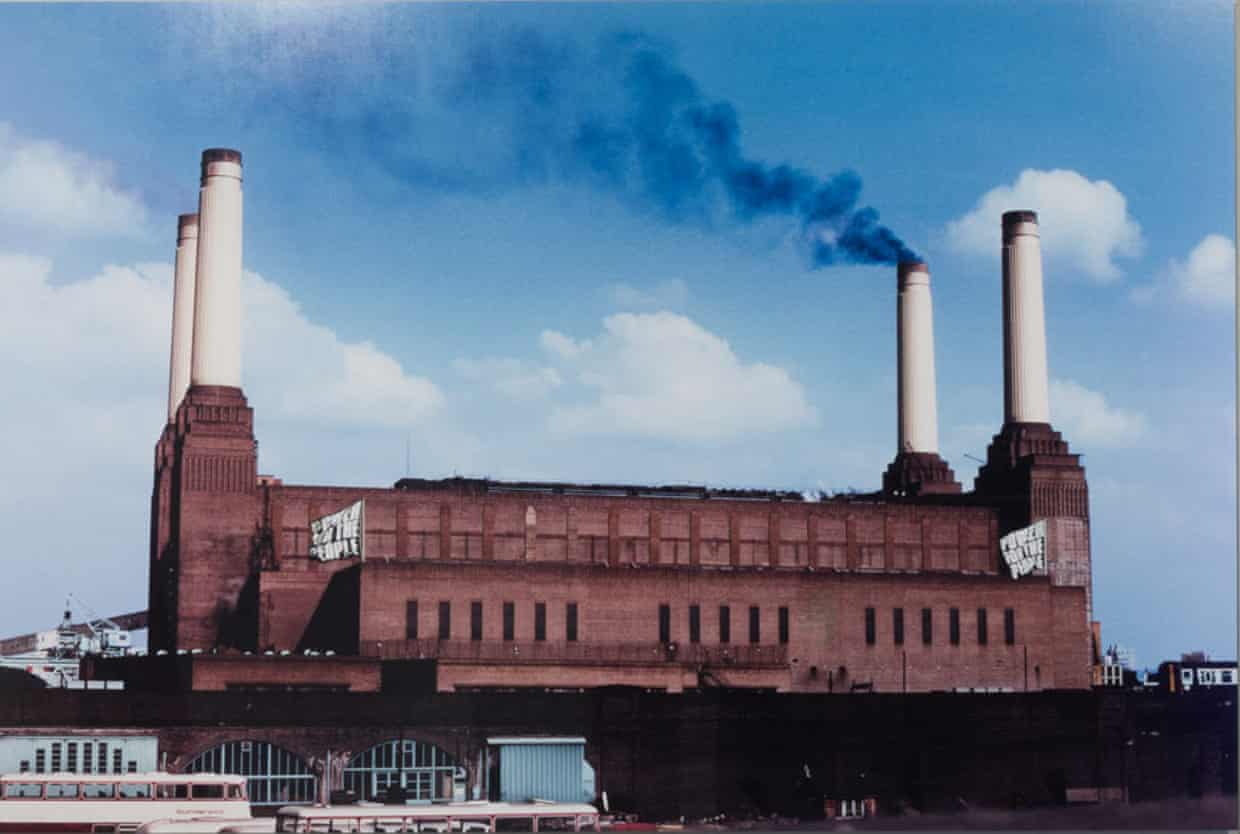
Power to the People flags raised on either side of Battersea Power Station
Fuel for freedom … Power to the People. Photograph: Rose Finn-Kelcey/Angus Mill

Her approach to conceptual art is summed up neatly and perfectly by Power for the People, a 1972 work that saw her hoist two huge flags up on Battersea power station, back when it was still a power station, keeping London lit and heavily polluted with coal. The flags, emblazoned with huge stark sans serif letters, are punny, silly, smart. And they riled posh neighbours across the river in Chelsea so much that they had them taken down. That’s Finn-Kelcey: talking about collectivity, togetherness, societal thinking, all while exposing the way those things are policed and restricted by people in power. The work is documented here in a big photo, the flags flapping in the wind, the power station belching fumes into the London sky.

Another photo shows an installation of swinging saloon bar doors installed in a Texas park. Removed from context, they act as dividers, as architecture of separation and permission. They say this place is for you, that place isn’t, you can go in there, but not in here.

That idea of permission and who gets to grant it comes up again in a later work called House Rules, two little LED displays, one red, one green. Instructions scroll by on the green one – clear it, calm it, dry it, whip it, chop it – while restrictions scroll by on the red – no floating, no gaming, no trusting, no washing. Do this, don’t that. Like any feminist punk icon, Finn-Kelcey saw society’s restrictions as expressions of power and repression, and she wasn’t going to let them go unchallenged.
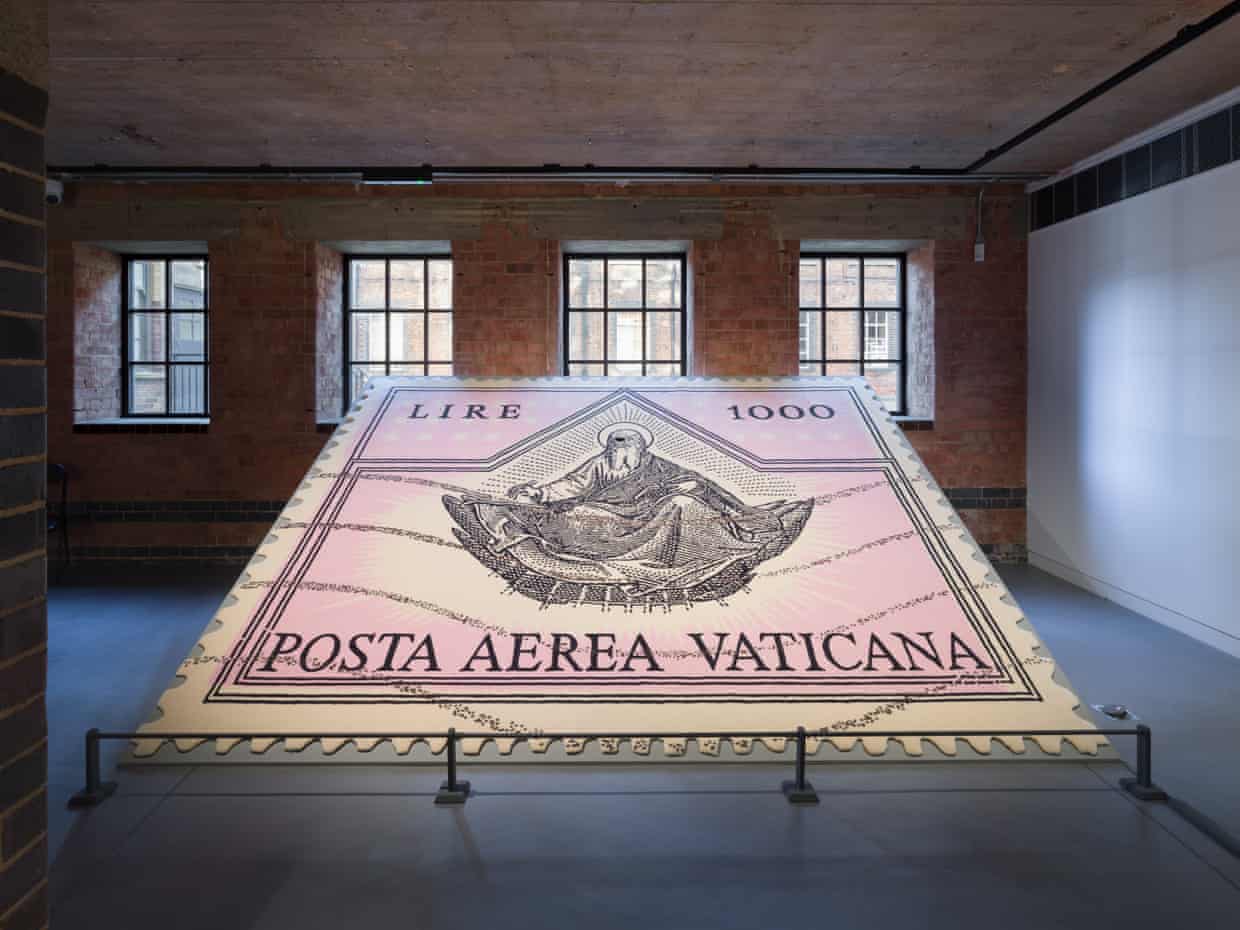
Papal address … exhibition view of Rose Finn-Kelcey: House Rules at Arts Collective, Northampton showing a large rug designed after a Vatican postage stamp.
Papal address … Rose Finn-Kelcey: House Rules. Photograph: Angus Mill

Her other big topic was spirituality. There’s a huge rug in the middle of the gallery of a Vatican postage stamp, with God now wearing an eye patch like an all-powerful, almost all-seeing pirate. Blobby yellow sculptures dot the space, giant versions of grain sacks from a Playmobil set, used here to represent everyday souls trying to enter the Pearly Gates. Neither work is all that great, both a bit ugly, a bit obtuse.

Way better, and the best work in the show, is It Pays to Pray, a fully functional prayer vending machine. Whack in 20p, pick a number, and sad, silly, poetic stanzas flash up on the LED screen: “No one will pull my hair”, “It’s not worth it”, “I just want to curl up and go to sleep”. They’re prayers for the 21st-century atheist, for jaded millennials and grumpy boomers, supplications for freedom – and boredom. That’s what passes for religion these days.

Finn-Kelcey was a funny, direct, critical, satirical, intelligible artist who cared deeply about people, spirituality and power. This isn’t the big retrospective her work deserves – it’s a relatively small display of photos and a handful of objects – but it’s a great introduction to an artist to whom bigger institutions should pay a whole lot more attention.