








Brexit’s back. Well, sort of. If it ever really went away. At any rate, an awful lot of ink has been spilled – in Britain, at least – over last weekend’s remarks by a would-be PM that Brexit was “a catastrophic mistake” and the UK’s future lay “back in the EU”.
That reflects, first, just how deep the wounds of Brexit still run. A decade after the referendum unleashed an identity politics so powerful it still dominates UK debate, Britain’s voters remain divided into the two warring tribes of remain versus leave.
The comments by Wes Streeting, the former health secretary who resigned to run for the Labour party leadership and the keys to No 10 Downing St, also look like a fairly smart tactical move in the domestic contest to succeed the embattled Keir Starmer.
As Anand Menon of the UK in a Changing Europe thinktank notes, Streeting’s main rival in the race so far, Andy Burnham, is also a bit of a Remainer himself – but to run in the leadership contest, he must first win a byelection in a heavily leave-voting constituency.
Burnham has since rowed back his EU-enthusiasm, but Streeting’s plan is plainly to force the Manchester mayor to promise byelection voters he will not reverse Brexit, thus infuriating the nearly 90% of Labour party members who want precisely that.
So far, so familiar: Britain’s political class arguing with itself about the EU is, believe me, no longer news in Europe. But if this latest bout has attracted a fraction more attention than usual, it’s because there’s interest in closer UK-EU ties here, too.
Since his election, Starmer has promised, variously, a full “reset” of relations with Europe, “unprecedented access to the EU market” and a Britain back “at the heart of Europe”. What has been accomplished so far, though, are baby steps.
The UK will rejoin the Erasmus+ student exchange programme, but a scheme to allow young Britons to live and work in EU countries and young EU citizens to live and work in the UK for a limited period is bogged down in disagreements over whether EU students should be charged UK “home” or international tuition fees .
UK integration into Europe’s electricity market has been held up by London’s refusal to pay into EU “cohesion funds” for less well-off member states. British reluctance to “pay to play” in Europe has also led to a “disappointed” UK being shut out of the bloc’s SAFE defence procurement fund.
London has said it hopes to have deals on food and agricultural products, carbon emissions trading and youth mobility by the summer. But none of all this will remotely fix what Starmer at least now admits is the “deep economic damage” of Brexit.
The scale of that damage is now accepted by all but staunch Brexiter economists: the National Bureau of Economic Research puts it at 6-8% of GDP, with Britain’s trade with Europe down 15% on what it might have been. Trade deals elsewhere have brought little benefit.
The economic hit is also felt in the EU, albeit to a far lesser extent: while trade with the UK represented 10-15% of the EU’s total, the EU accounted for 45-50% of the UK’s. Public opinion in the UK reflects this reality: YouGov polling suggests 63% of Britons want closer ties with the EU and 55% want to rejoin. Support for Britain’s return is above 50% in many EU countries.
But the economy is only part of the story. Geopolitics are bigger. The world of 2026 is not the same as that of a decade ago. Russia is waging war on Ukraine, on the EU’s doorstep. The US has talked seriously about invading Nato territory.
The transatlantic alliance is severely shaken, EU ties with the US strained to breaking point, and the UK-US “special relationship” dead in the water. The rules-based international order itself is in danger, maybe even in terminal decline.
What does Europe want?
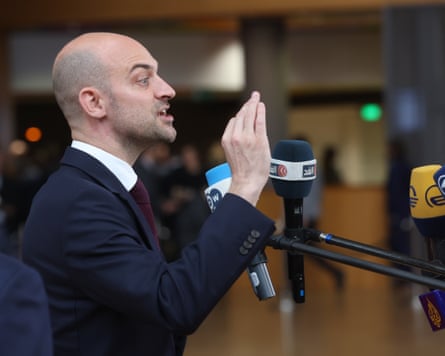
All of which now means Europe’s leaders would quite like stronger UK-EU ties too. They always did say the UK would be welcome back. But now Finland’s Alexander Stubb concludes Brexit was “like amputating a leg without medical reason”.
Hungary’s new prime minister, Péter Magyar, said at his election press conference he hoped Britain would one day return. French foreign minister Jean-Noël Barrot said Britain would be met “with open arms” if it rejoined even just the single market.
It’s worth pausing a moment at Barrot’s remarks. Because the French minister’s full phrase was “come back to the single market, with all associated privileges and duties”. And there, not for the first time in the UK’s relations with Europe, is the rub.
At present, the red lines of Labour’s election manifesto – no return to the customs union, single market or free movement, and of course no whole-hog rejoining the EU itself – prevent any real rapprochement that would actually move the UK’s economic dial.
And as Lisa O’Carroll pointed out in this explainer, any rapprochement that would do that – rejoining, Swiss-style “frictionless” access, the Norway option – would entail budget contributions, full regulatory alignment and free movement.
“There is a menu of choices as regards your relationship with the EU,” Radosław Sikorski, Poland’s foreign minister, recently explained of Britain. “But every item on the menu has a price in terms of sovereignty, in terms of honouring rules that you didn’t make yourself.”
Sikorski is not alone in thinking that the UK “seems unable to accept that”. In fact, he argues, Britain has still not fully “internalised the fundamental European deal: you get more benefits in return for more pooling of some aspects of sovereignty.”
Those European doubts will need lifting before any serious steps are made towards a significantly closer relationship – including rejoining. The comments Jennifer Rankin garnered in Brussels made it crystal clear that yes, Britain would be warmly welcomed back – but on the same terms as any new member: no opt-outs; no rebate; no “à la carte” deal.
Negotiations would be hard, with tough talks around free movement, the passport-free Schengen zone, the budget, very probably the euro. But all that is irrelevant until Britain has decided what it actually wants, and what it’s prepared to pay for it.
And for the UK to do that, it has to have an open and (above all) honest debate on the actual benefits and trade-offs, not cling to alternative realities. With Nigel Farage and half the media howling “Betrayal!” in the wings, Europe knows that won’t happen anytime soon.
To receive the complete version of This Is Europe in your inbox every Wednesday, please subscribe here.