


Clive Davis always claimed that his life in the music business was really kickstarted when he chose to attend the 1967 Monterey Pop Festival: it was there he saw Janis Joplin and her band Big Brother and the Holding Company, and immediately bought their contract for $200,000, the first really high-profile signing of his career. But Davis was an unlikely fit at the most high-profile event of the Summer of Love: he was a Harvard-educated lawyer who had been “shocked” when a restructuring of Columbia Records saw him promoted from general counsel to the company’s president. He was sharp enough to spot which way the pop cultural wind was blowing – “a revolution in culture and philosophy”, he later recalled, “the Haight-Ashbury scene, with love peace and flowers” – but he was no one’s idea of a hippie. Amid a sea of paisley, batik, love beads and bells David turned up to the festival clad in “khaki pants and a tennis sweater”.
It was an image he would often recall for comic effect – “I was the costumed freak surrounded by everyone with flowers in their hair” – but there was something rather telling about it too: Davis’s skill as what used to be called a record man lay in his ability to balance the progressive with the traditional. He turned one wing of Columbia into something of a home for artists associated with the burgeoning counterculture, swiftly signing Santana, Blood Sweat and Tears, the Electric Flag and the wonderful psychedelic soul band the Chambers Brothers. But he never lost sight of the other side of the company, which dealt lucratively in soundtracks and easy listening and was home to Barbra Streisand and Tony Bennett: at one juncture, he found himself simultaneously attempting to renegotiate the contracts of Bob Dylan and Andy Williams. When he founded Arista Records in 1974, he did exactly the same thing: it was a label that provided a home for both Patti Smith and Barry Manilow.
That Davis never seemed particularly in thrall to one style or genre of music might have been attributable to his background. Before taking the job at Columbia, he claimed he had “zero” interest in the music industry, and wasn’t even a particularly big fan of music: “I listened in a very ordinary way,” he recalled, “like anyone would listen to the radio. I never collected records, or wanted to be the fly on the wall in a studio.” You can see how that enabled him to flit between genres with ease – he was as happy to sign Earth Wind and Fire as he was Aerosmith or Bruce Springsteen – or to take risks when others might have demurred. When Miles Davis protested that his records weren’t selling in the quantities he would have liked, Davis boldly suggested he move out of traditional jazz venues and play as a support act for rock bands, one of the key factors in the crossover success of 1969’s Bitches’ Brew. But more mysterious was his seemingly unfailing ear for a song, his innate understanding of what would grab the public’s mass imagination.
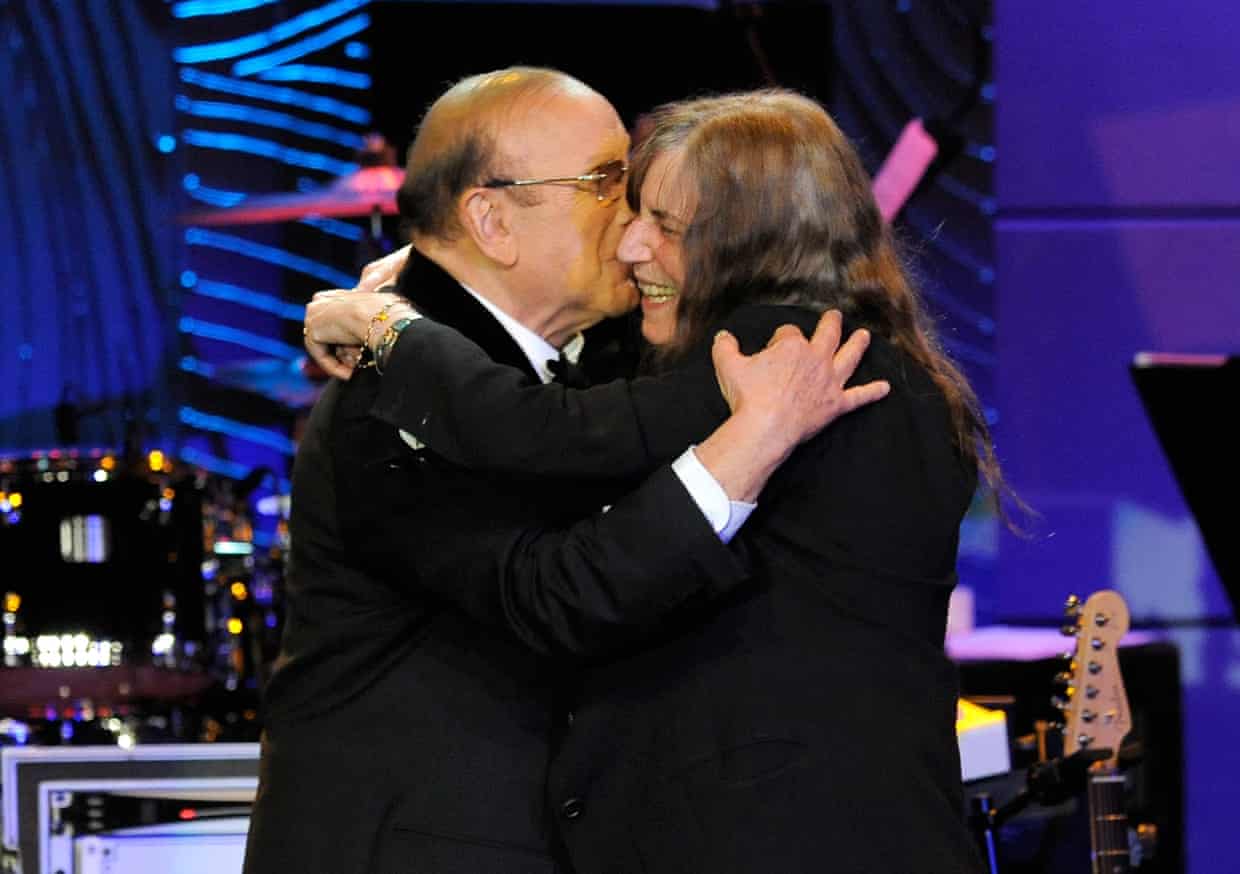
It was Davis who spotted a minor 1971 UK hit by Scott English called Brandy and took it to Manilow (retitled Mandy, it became his first No 1); Davis who heard something in the work of a minor songwriting duo called Kenny Gamble and Leon Huff and signed their nascent label, Philadelphia International Records, to a distribution deal; Davis who found Saving All My Love for You and I Wanna Dance With Somebody for his most celebrated signing of the 80s, Whitney Houston; David who re-signed Santana in the late 90s with the proviso that he be allowed to pick half the songs on his next album (Supernatural went on to sell 30m copies); Davis who worked out that what the American Idol winner Kelly Clarkson needed was a song a little tougher and hipper than the usual TV talent show winner’s fare, and spotted it in Since U Been Gone, a Max Martin/Lukasz Goswald track that had already been rejected by Pink and Hillary Duff. He seemed to know instinctively when to meddle in an artist’s career – he told Bruce Springsteen he needed to move around more onstage if he didn’t want to be saddled with the “new Dylan” tag that Davis considered a kiss of death – and when to sit back and leave them alone: rebuffed when he tried to sign the Grateful Dead in the early 70s, he simply bided his time while they attempted to set up their own label, completely independent from the rest of the music industry, then signed them when the venture came to grief, as Davis had predicted it would.
He certainly made mistakes, among them turning down Meat Loaf’s 43m-selling Bat Out of Hell on the grounds that it was “too theatrical” and its author didn’t look like a star. But his successes were so stellar and varied that it seems churlish to dwell on his failures. Moreover, he demonstrated an astonishing ability to pick himself up and carry on after what appeared to be career-derailing disasters. Arista was founded after he was fired by Columbia, who alleged financial irregularities that David hotly disputed. Ousted by Arista in 2000, he set up his own label J, which proved extraordinarily successful in the early 00s, the home of Christina Aguilera and Avril Lavigne, Alicia Keys and Kesha, Maroon 5 and Leona Lewis: still keeping one eye on the middle-of-the-road, J also reinvigorated Rod Stewart’s career by encouraging him to record albums of Great American Songbook standards.
It was, by any measure, an extraordinary career, so varied that it was almost impossible to make sense of. Confronted with the man who provided a connection between Barry Manilow and Iggy Pop or Bruce Springsteen and Whitney Houston, interviewers were given to wondering, what did the array of artists with whom Davis worked have in common? Clive Davis had a snappy answer preprepared: “They’re all,” he was wont to say, “headliners.”