



惯性聚合 高效追踪和阅读你感兴趣的博客、新闻、科技资讯
阅读原文 在惯性聚合中打开

推荐订阅源

Jina AI
Jina AI
宝玉的分享
宝玉的分享
Last Week in AI
Last Week in AI
Help Net Security
Help Net Security
让小产品的独立变现更简单 - ezindie.com
人人都是产品经理
人人都是产品经理
奇客Solidot–传递最新科技情报
奇客Solidot–传递最新科技情报
GbyAI
GbyAI
博客园_首页
freeCodeCamp Programming Tutorials: Python, JavaScript, Git & More
MongoDB | Blog
MongoDB | Blog
Cyber Security Advisories - MS-ISAC
L
LINUX DO - 最新话题
PCI Perspectives
PCI Perspectives
博客园 - 三生石上(FineUI控件)
V2EX - 技术
V2EX - 技术
Spread Privacy
Spread Privacy
T
Tor Project blog
量子位
阮一峰的网络日志
阮一峰的网络日志
S
SegmentFault 最新的问题
小众软件
小众软件
博客园 - 叶小钗
Threat Intelligence Blog | Flashpoint
Blog — PlanetScale
Blog — PlanetScale
H
Help Net Security
Y
Y Combinator Blog
N
News | PayPal Newsroom
K
KPMG report finds enterprise disconnect between AI and its ROI | CIO
T
Tenable Blog
Scott Helme
Scott Helme
G
GRAHAM CLULEY
大猫的无限游戏
大猫的无限游戏
aimingoo的专栏
aimingoo的专栏
IT之家
IT之家
Schneier on Security
F
Fortinet All Blogs
Martin Fowler
Martin Fowler
T
Threat Research - Cisco Blogs
博客园 - 司徒正美
Application and Cybersecurity Blog
钛媒体:引领未来商业与生活新知
钛媒体:引领未来商业与生活新知
Attack and Defense Labs
Exploit-DB.com RSS Feed
The Last Watchdog
The Last Watchdog
L
LangChain Blog
C
Check Point Blog
Google Online Security Blog
V
Visual Studio Blog
Latest news
Latest news

The Guardian

Rory McIlroy surges into six-shot Masters lead with stunning second-round flourish ‘That’ll be the end’: actor Sam Neill joins fight to stop controversial goldmine near his New Zealand vineyard Roberto De Zerbi targets ‘Ange-ball’ revival to save Spurs from relegation Bath hit back to reach semi-final after stunning Northampton in 11-try epic Secret Garden to Outcome: the week in rave reviews Zebras, wealth and power: Hungary’s election tests Orbán’s grip on power ‘TikTok effect’ brings sellout crowds and younger fans to Grand National meeting The war over Omagh’s gold: the £21bn mine plan tearing a community apart Britain’s shadow workforce is paid as little as 65p an hour. Who cares for the carers? From You, Me & Tuscany to Euphoria: your complete entertainment guide to the week ahead Six great reads: the man who let snakes bite him, masked heavy metal and the brutal reality for foreign students in the UK American Classic review – I defy you not to fall in love with Kevin Kline and Laura Linney’s tender comedy Cuba’s doctors were a lifeline for the world. Now the Caribbean is shamefully complicit in the US drive to expel them An environmental disaster in Moldova has Russia’s fingerprints all over it RMIT drops misconduct case against student who accused university of being ‘complicit in Gaza genocide’ Ichiro Suzuki statue unveiling goes awry as bronze bat snaps during ceremony Survivors of Epstein’s abuse accuse Melania Trump of ‘shifting burden’ on to victims European football: Real Madrid held at home by Girona to extend winless run Arne Slot insists he is ‘aligned’ with Liverpool board and fans as squad is rebuilt Kamala Harris ‘thinking about’ running for president again in 2028 JD Vance warns Iran against trying to ‘play’ the US in peace talks West Ham double up twice to thrash Wolves and put Spurs in relegation zone Trump administration releases new renderings of so-called ‘Arc de Trump’ Crispin Odey drops £79m libel claim against FT over sexual misconduct allegations Bafta apologises for events surrounding John Davidson’s Tourette’s outburst Cocktail of the week: Bar Shrimp’s la rosita – recipe New drug may extend survival in aggressive ovarian cancer, trial shows One dead and 27 injured after bus with British passengers crashes in Canary Islands Pope adds to Smith’s mass of Surrey runs with England woes a world away OpenAI CEO Sam Altman’s home targeted with molotov cocktail Reform UK local election candidate was twice disciplined by Tories over ‘racist comments’ Remaining in Nato is in best interests of US, says Keir Starmer Prince Harry sued for defamation by charity he co-founded Anthropic’s new AI tool has implications for us all – whether we can use it or not Concerns raised about motorbike tourist trail after death of British teenager in Vietnam The Guardian view on Trump’s civilisational threats: the words that fuel war must be condemned The Guardian view on dystopias for our times: the American nightmare Doctors’ leader claims new reduced pay offer killed chances of ending strikes in England Netanyahu-ism has achieved nothing for Israelis – and come at a monstrously high price Deborah Levy: ‘CS Lewis’s White Witch terrified me – but I wanted to meet her’ How I Shop with Michelle Ogundehin: ‘We grownups have enough stuff already’ Trump’s war and Melania’s Epstein statement, with US editor Betsy Reed – The Latest We have to stop killer motorists on Britain’s roads UK starts crackdown on EU citizens’ post-Brexit rights Londoners aren’t unfriendly – but don’t compare us to New Yorkers The religious right and the perversion of faith Artemis II images reignite moon mission memories Orbán and Magyar trade accusations in last days of Hungary election campaign Reckonwrong: How Long Has It Been? review | Safi Bugel's experimental album of the month Martin Rowson on Middle East peace talks – cartoon Masters magic, the Grand National and Premier League drama – follow with us Fears of UK and EU flight cancellations as airports warn of jet fuel shortages Reform’s petulance over slavery reparations shows it just doesn’t grasp Britain’s place in the modern world Peers vote to ban pornography depicting sex acts between stepfamily members Starbucks’s retail arm gets £13.7m tax credit even as sales increase Flyby review – interstellar musical is a voyage of epic strangeness Grand National preview: Jagwar can deny Irish cohort in Aintree classic Week in wildlife: an ostrich on the lam, a tortoise crossing a road and surfing seals Anger as swifts’ nesting holes in Derbyshire rail viaduct ‘blocked up’ Peter Mandelson faces fixed-penalty notice for urinating in public ‘There’s no shortage of terrifying technology’: how AI became TV drama’s new go-to villain ‘Fresher than anything in a shop’: the best recipe boxes and meal kits for time-poor foodies, tested Who was Hilma? Af Klint exhibition to highlight exclusion of women from abstract art Critics assemble! Here’s my list of the greatest superhero movies of all time US inflation soars in March as war on Iran drives economy into uncertainty Amazon to finally launch Leo satellite internet in ‘mid-2026’, says CEO Grand National 2026: horse-by-horse guide to all the runners Pete Hegseth’s holy war: the militant Christian theology animating the US attack on Iran Add to playlist: the beautifully dazed, countrified indie-rock of Tracey Nelson and the week’s best new tracks Not just about Gaza: the Muslim voters turning from Labour to the Greens ‘I’m worried there’s too much of me,’ says a birch: inside the interspecies council giving nature a voice Why is anyone surprised by the US and Israel’s latest war? It’s only what the world allowed them to do in Gaza Tori Amos review – fans hang on every note of this dramatic deep dive into her back catalogue Coachella 2026: Justin Bieber launches a major comeback in the desert Super Mario what?! The seven best obscure Mario games ‘An abomination’: the Lancashire town kicking up a stink over reopened landfill Pillion to Roofman: the seven best films to watch on TV this week Holly Humberstone: Cruel World review – Taylor Swift fave trades gothic melancholy for pop glow-up Thrash review – cursed shark thriller sinks like a stone on Netflix Gulf states rethink security in light of US-Israel war on Iran Go Gentle by Maria Semple review – a joyfully clever New York romcom Welcome to Y’all Street: bullish Dallas aims to steal New York’s financial crown Margo’s Got Money Troubles to Beef: the seven best shows to stream this week I baulked at the idea of ‘friction-maxxing’. But there’s more to it than meets the eye Reich: The Sextets album review – Colin Currie celebrates the minimalist master’s joy of six Benjamina Ebuehi’s sweet and salty chocolate chip cookies recipe Experience: my house was taken over by 70,000 bees Malcolm in the Middle: Life’s Still Unfair review – the TV magic they’ve created here is absolutely miraculous Lava bursts forth as Hawaii’s Kilauea volcano erupts Sonos review: Are these the best portable speakers that money can buy? I tested to find out Buy bread in the evening, hit the sales on a Tuesday: retail workers’ top tips to cut your shopping bill The best water flossers in the UK, tested for that dentist-clean feeling Where to start with: Muriel Spark You be the judge: should my girlfriend stop mixing gold and silver jewellery? The best carry-on luggage in the UK, tested on an assault course How games capture the awe and terror of cosmic isolation I never text back – and it’s ruining my relationships The pet I’ll never forget: Beau, the labrador who saved my life Life Is Strange: Reunion review – a decade-long story comes to an impassioned close Why is gaming becoming so expensive? The answer is found in AI
Childbirth room? It’s next to the period room … the astonishing Kerala homes designed for women’s bodies
Megha Mohan · 2026-06-23 · via The Guardian

A chance conversation with a distant family member led me to Palayil, the name bestowed on my ancestral tharavad. The latter is the name given to a house designed around women. Ours had stood, in some form, since at least the 17th century. My great-grandmother, Palayil Sreedevi, was the last woman in my line to live in one. It was in the southern Indian village of Tholanur.

My great-grandmother belonged to the Nair community, a matrilineal caste with its origins in the state of Kerala. Historically, it was a martial nobility that served royal dynasties. For centuries, Nair boys left home at 12 to train as soldiers before being dispatched to serve the Travancore royal family. When men returned, they often slept in outhouses – satellites to the tharavad of women.

I have spent several years researching societies around the world where women built systems, communities and institutions of their own, for my book Herlands: Lessons from Societies Where Women Make the Rules. The title nods to Charlotte Perkins Gilman’s feminist novel Herland, imagining a society governed by women, although my interest was in the real communities women built for themselves. I had hoped my journey would end with Palayil, and it did, but not in the way I had imagined. Palayil had been pulled down more than a decade ago, as the matrilineal system my great-grandmother was raised inside unravelled, dismembered by laws written by many men.
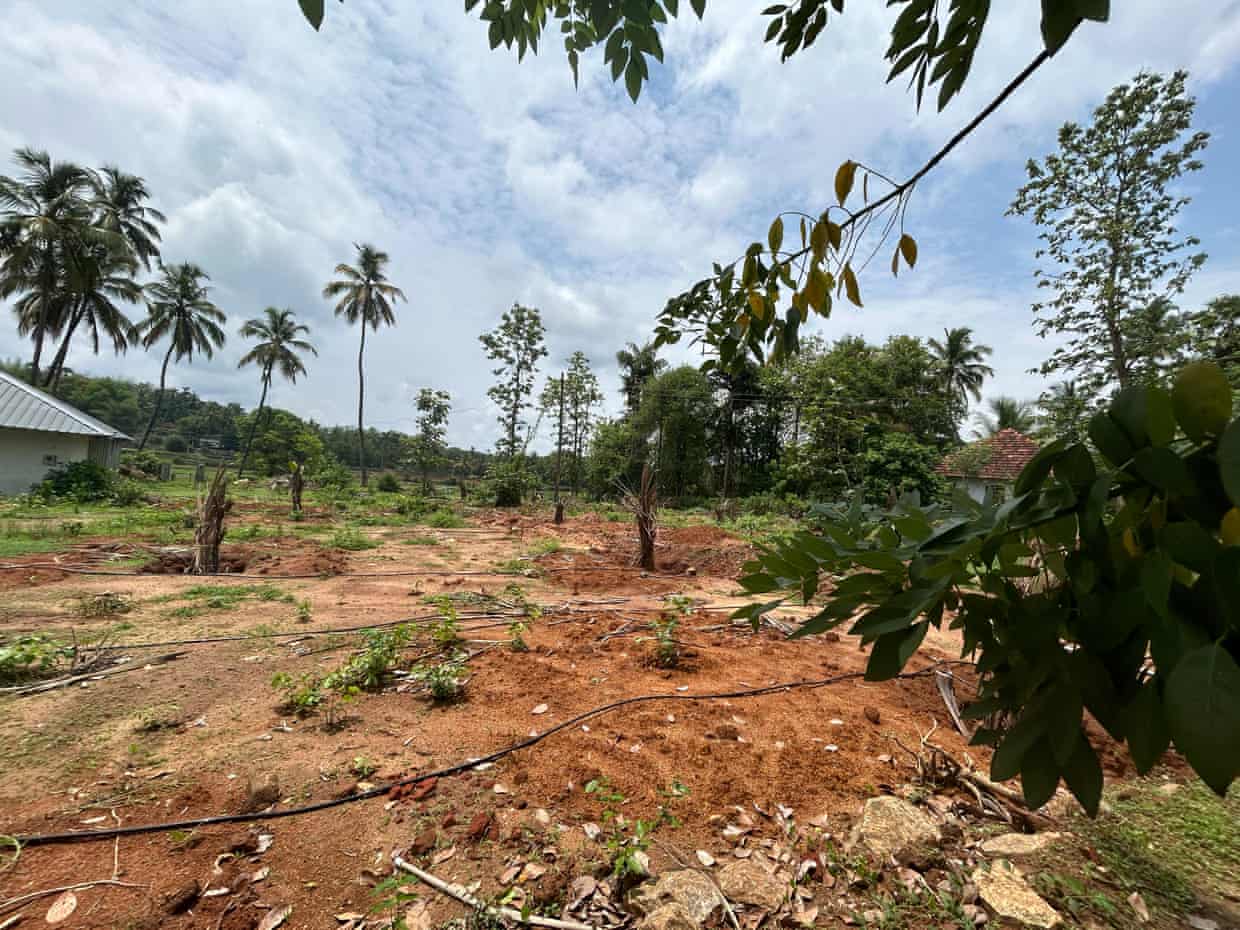
Lost to history … the former grounds of Palayil in 2024, with barely a trace of the former building showing in a scene of bare earth and palm trees.
Lost to history … the grounds of Palayil in 2024. Photograph: Megha Mohan

When I finally went looking for it in 2024, I walked across acres of paddy and found only a groundkeeper’s house, a serpent shrine, an old gate and the neighbours who remembered it. The tharavad in its glory exists now only in memory. But its grammar – the rooms, the routes, the bodies it was built to hold – survives in others like it across Kerala.

This matters beyond my own family history. Today, 23 June, International Women in Engineering Day celebrates the contributions women make to the design and construction of the world around us. The tharavad raises a complementary question: what happens when buildings are designed around women’s lives in the first place? While the houses were constructed by male artisans, they were engineered to accommodate women’s needs, rhythms and authority. Looking back at them reminds us that the built environment is never neutral; it reveals whose needs, experiences, and lives are valued enough to shape design decisions.

The house was a nalukettu, which translates as “four corners”: a rectangular structure of jackfruit wood and teak, opening on to a roofless central courtyard called a nadumuttam, with four blocks named for the directions they faced. These were not just houses in which women happened to live. They were houses designed around the female body: its cycles, labour, grief, desire and sound.

A photograph of Palayil Sreedevi wearing a white dress and sitting on a chair
Movie-star beautiful … my great-grandmother Palayil Sreedevi, who was born in the 1890s. Photograph: Megha Mohan

The buildings were drawn and built by male master carpenters but the brief was set by women. There is a surviving tharavad 20 minutes from Tholanur, called Kandath. It is now kept as a homestay by its custodian, Sudevan Bhagwaldas, who told me stories over ginger tea before leading me to the purathalams. These are raised, cushioned platforms designed for lounging, sitting diagonally opposite each other across the courtyard. The men gathered on one, the women on the other.

“It has been designed,” Bhagwaldas told me, “so that, acoustically, no word spoken by the women can be heard by the men and vice versa – even if you should shout.” The architecture not only sheltered women’s bodies – it protected their conversations.

The kitchen sat in the north-east. The architect Benny Kuriakose, who has restored several tharavads, told me this was because Kerala’s monsoon winds travel from the south-west, so the kitchen’s hot air would be carried away from the house. The women’s bedrooms, on the western side, were spared the kitchen heat. Off them lay smaller rooms: one for childbirth, another for menstruation. A menstruating girl could rest in this room. Her mother may have given birth to her in the other.

In a tharavad that Kuriakose conserved as part of the Muziris Heritage Project, those rooms appear on the architectural plan. A room on the ground floor is labelled: “Corridor with rooms for menstruating women and pregnant ladies.” I have been thinking about that corridor a lot. While researching Herlands, I encountered many examples of women creating systems of care, inheritance and mutual support. What struck me about the tharavad was that those values were embedded not only in social rules but in the architecture itself.

A renovated tharavad.
Built-in care, inheritance and mutual support … a renovated tharavad. Photograph: Benny Kuriakose

In much of south Asia, the “period hut” has been an instrument of exile. The Hindu practice of chaupadi treats menstruating women as polluted. But some of my relatives insist Palayil told a different story. There, they remembered the period room as a room of rest. A menstruating woman was catered to by other women in the house. She was excused from chores. She was not unclean. She was not exiled. Her body was anticipated, accommodated, given a room of its own.

I have only one photograph of my great-grandmother and she is movie-star beautiful. In Tholanur, the neighbours remembered her beauty, though they told me that even she was outshone by her mother, Palayil Kalyani. She held the keys to the main gate and to the storage room where the jewellery was kept. Her name was on Palayil’s deeds. Her blessing was needed before any business deal, marriage or naming.

Before the first world war, Kalyani arranged for the dried coconut-leaf roof to be replaced with clay tiles, modernising the structure that sheltered her line. This was a house for all women related to Kalyani: widows, single women, cousins, the child-free, new mothers. The architecture protected them all. Kalyani insisted the daughters of Palayil should always live in a safe and secure home. That insistence – that we were protected, financially solvent, not in need of rescue – was drilled into me by my grandmother and mother, who heard it from theirs.

Conjugally minded … a restored chuttu veranda
Conjugally minded … a restored chuttu veranda. Photograph: Benny Kuriakose

Several Nair communities practised a form of union called sambadhanam, from the Sanskrit sama, equal, and bandham, union, a sexual and relaxed alliance between a man and a woman that could be dissolved at the request of either party. A woman did not move into her husband’s home. He came to hers, and he could be asked to leave.

An arrangement like that needed a house to match. A corridor ran around the outside of the house, the chuttu veranda, lit at night by brass lamps. I have been told it was designed in part as a discreet route for a conjugal visit. The practice ended in the 1800s. But the architecture remembers the possibility.

Another thing it remembered was lineage: a lineage for women. “The birth of a girl child was more prized than a male child because of the role a woman has in physically carrying the progeny,” the Kerala gender academic Lekha NB told me. “This ensured the continuation of the tharavad legacy.” A girl arrived to the ringing of bells. Her body was the architecture’s reason for being.

I do not want to romanticise a system I am descended from but did not live inside. The architecture was generous, yet it was selective. Tharavads were caste structures. While Nair women, mostly literate, read in the courtyard, lower-caste women laboured in the fields outside, often under semi-bonded conditions. My father’s family is of a lower caste; his female relatives would not have been welcomed inside Palayil. A house for women’s bodies, yes, but not for all women.

The system ended in the early 20th century, codified out of existence by laws that dismantled female inheritance and made sambadhanam illegal. Palayil Kalyani built a house for her daughters. The walls fell. But the lesson remained: keep your shelter, keep your independence, keep the key.

Herlands by Megha Mohan is published by Penguin. To support the Guardian, buy your copy from guardianbookshop.com. Delivery charges may apply.