









Northern Ireland carved a grim reputation for homophobia for over half a century, a record of intolerance and bigotry so baroque it was turned into an opera.
In the 1970s, Ian Paisley, the leader of the Democratic Unionist party (DUP) and Free Presbyterian church, led a “save Ulster from sodomy” crusade to resist the decriminalisation of homosexuality.
In the 1980s and 1990s, the Royal Ulster Constabulary used plainclothes officers to bait and catch gay men in parks and public toilets.
In 2008, Iris Robinson, an MP and wife of the then DUP leader, Peter Robinson, told an interviewer that homosexuality was an “abomination”, which later became the title of a satirical opera. In 2011, more than a quarter of gay people complained about homophobia in the workplace. Northern Ireland held out against marriage equality until 2019.
However, it may not always have been like this. Research suggests that in the Victorian era and early 20th century, Northern Ireland was much more tolerant and accepting of gay men.
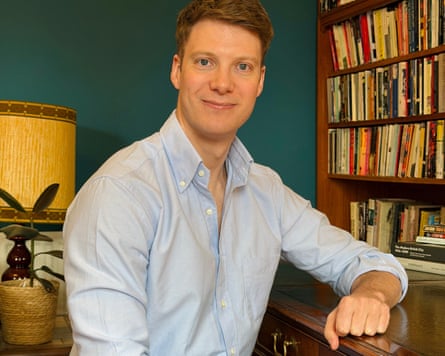
“I was expecting to find repression but there was a sort of benevolent toleration,” said Tom Hulme, a historian at Queen’s University Belfast and author of Belfastmen: An Intimate History of Life Before Gay Liberation, which is published this week.
“Among friends and families and employers it was sort of known and understood that a man may have desires for another man and that might be why they remain unmarried or live alone or have many close male friends.
“To reveal the open secret would have been problematic. While these things remained unsaid they could essentially kind of exist. We’re not talking about people walking down the streets, holding hands. It’s a much more closed, secret kind of culture.”
Hulme said tacit ignorance and public silence enabled male queerness to flourish with only rare exposure, condemnation or regulation, with a “live and let live” ethos especially prevalent in the working class.
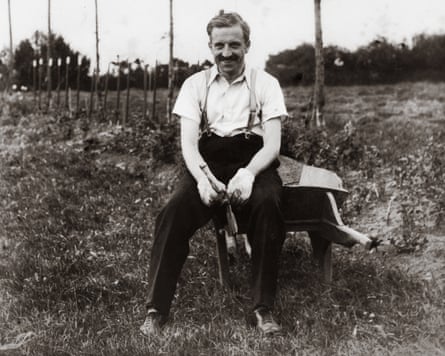
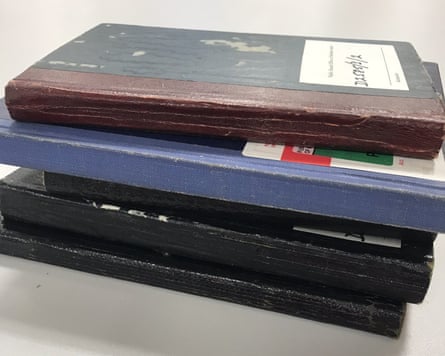
The academic drew on public records as well as private letters and diaries, including those of David Strain, a middle-class Protestant who chronicled his sexual identity in dozens of journals, comprising about 2m words, that were deposited at the Northern Ireland’s public records office before his death in 1969.
Hulme traced the lives of men who were prosecuted for sexual indecency and discovered that in many cases relatives or employers testified on their behalf, paid bail money and welcomed them home or back to work. This compassion was denied to Oscar Wilde in England after a London court convicted him in 1895 of gross indecency.
To be arrested, charged and jailed was an “awful” ordeal for gay men, but on release many returned to their former lives, with communities turning a blind eye to sexual orientation as long as there was discretion, said Hulme. “A careful game goes on between gay men and their friends and families. Knowing nods and winks, ‘oh, he’s not the marrying type’.”
Metropolises like London afforded anonymity and a degree of protection to men who cruised public spaces for sex, but the intimacy of Belfast, a provincial capital, also offered shelter by letting men establish relationships, said Hulme. “A glance on the way to work, next week, a conversation.”
While London had openly gay bars, and men who used cosmetics, the gay community in Belfast had to be more circumspect and socialise in venues with heterosexual norms.
With homosexuality hiding in plain sight, conservative political and religious leaders largely ignored the issue until the global gay rights movements began campaigning for open acceptance and equality, said Hulme. “A major moral panic really didn’t happen until the 1950s and 1960s. All of a sudden the churches and the politicians in Northern Ireland had to take a stance. The idea of being morally pure was an important part of Northern Ireland’s self-conception.”
Unionist politicians intervened to hush up court cases involving peers, said Hulme. “It’s a public relations disaster if you have a high-profile unionist member of society caught up in this sort of scandal.”
Jeff Dudgeon, a leading Northern Ireland gay rights activist, said gay men were able to lead a full life despite the threat of arrest: “Life was enjoyable for those who made it out into a gay sexual life, despite court catastrophes. It wasn’t unmitigated oppression.”
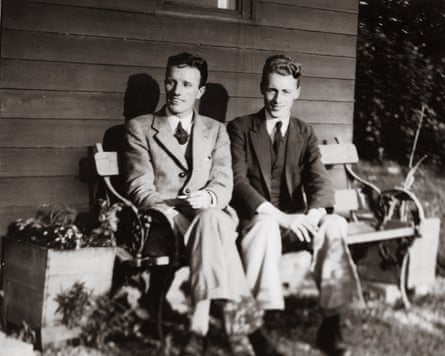
Most, however, were not so audacious. Dudgeon said: “Self-knowledge was sparse, as was information about meeting others, so most didn’t pursue a romantic or sexual life, becoming traditional bachelors or spinsters.”
Clerics and politicians ramped up denunciations of homosexuality during the Troubles but LGBTQ campaigners prevailed, said Dudgeon, who won a landmark 1981 European court of human rights case that decriminalised homosexual sex in Northern Ireland. “It was a story of the defeat of newly-vocal antagonists like Paisley and Peter Robinson.”
The DUP blocked same-sex marriage until 2019, when Westminster voted to align the region with the rest of the UK, prompting celebrations by gay couples. In 2021, DUP leaders apologised for the hurt inflicted by predecessors.