


Once home to the world’s largest port of arrival for enslaved Africans, Rio de Janeiro has, like the rest of Brazil, a majority Afro-descendant population.
Many of the country’s most prominent Black figures – scientists, lawyers, athletes, politicians, writers, musicians, activists and intellectuals – were either born or lived in the country’s second-largest city, which served as the capital for nearly 200 years.

-
A mural of the Brazilian singer-songwriter and composer Luiz Melodia, painted on a wall in Estácio, the Rio de Janeiro neighbourhood where he lived
But of the 360 or so statues and busts scattered across Rio, fewer than 10% commemorate Black people: 29 men and just three women.
The striking lack of such public monuments was what drove two Black men to create a mural project that has just been recognised by law as part of the city’s intangible cultural heritage.
-
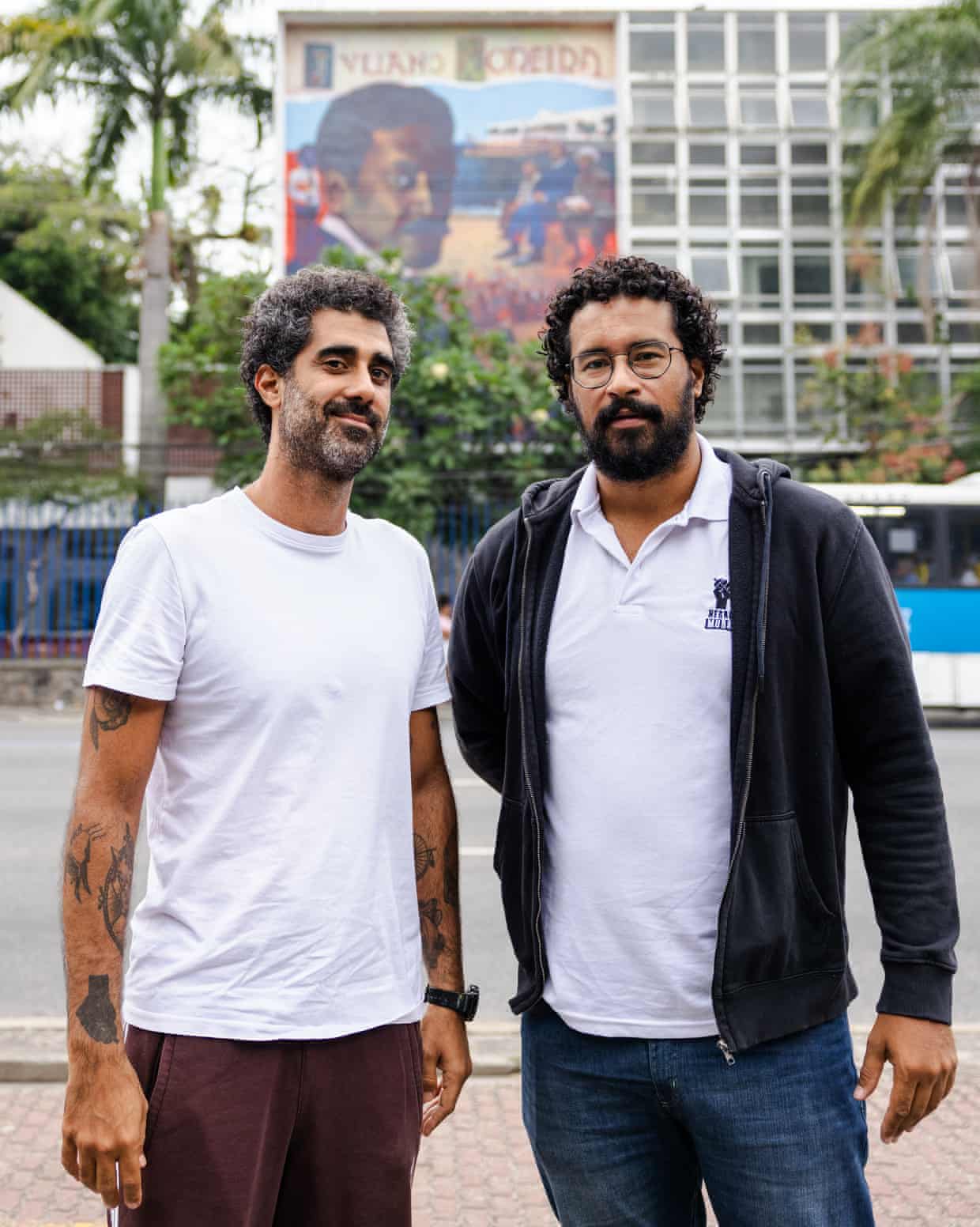
Fernando Cazé, left, and Pedro Rajão, in front of one of the murals painted for the Negro Muro project
“We’re creating a cartography of Black memory,” said Pedro Rajão, 40, a researcher and producer who created the project in 2018 alongside the visual artist Fernando Sawaya, 39.
Called NegroMuro, or BlackWall, the project now comprises 80 murals spread across the city, portraying about 120 people, 60% of them men – a disparity the duo say they are working to address.
-
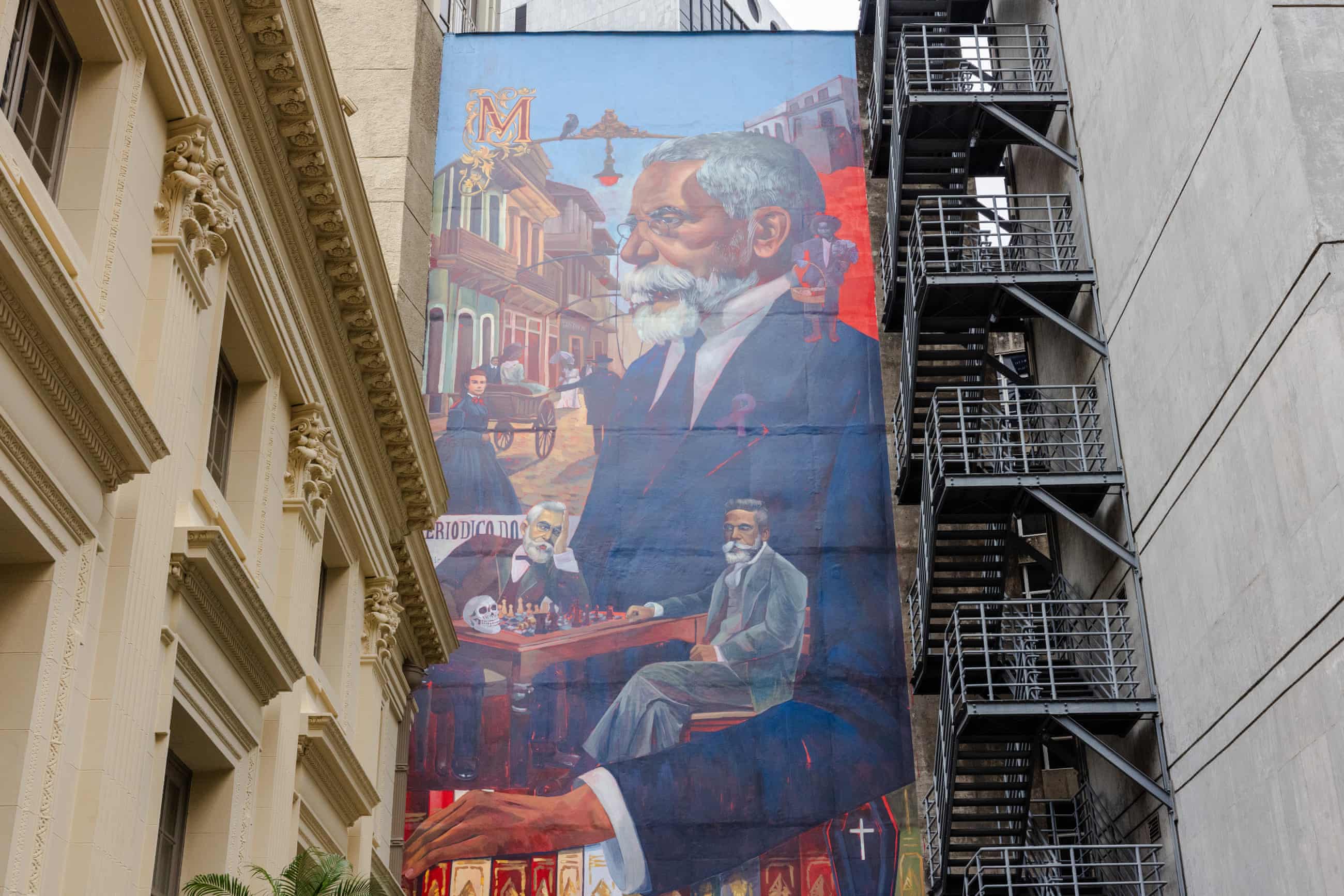
A mural of Machado de Assis in Rio de Janeiro
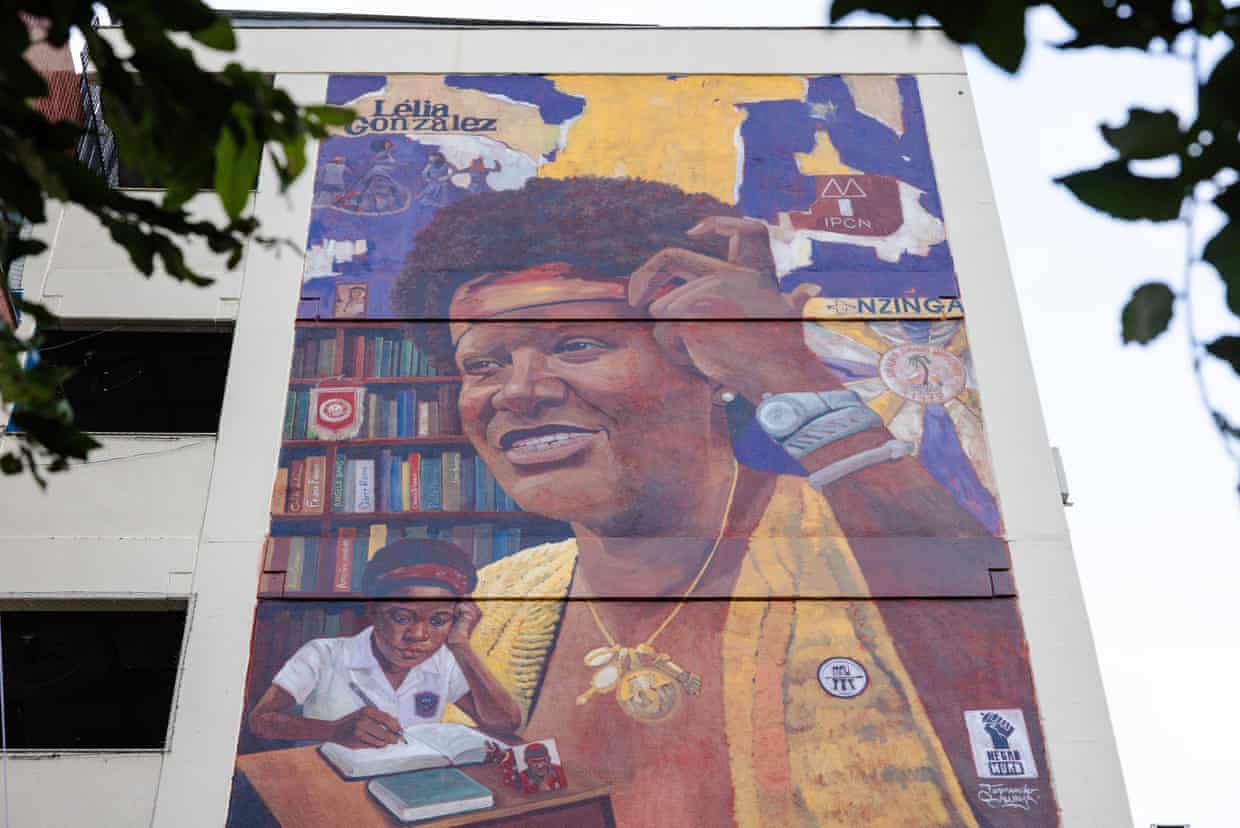
On the walls of schools, museums, train stations and even private homes there are brightly coloured, bold-lined paintings of people born in Rio – such as Joaquim Maria Machado de Assis, widely considered the greatest Brazilian writer of all time – and figures born elsewhere but who had a strong connection to the city, such as the Black feminist activist Lélia Gonzalez.
-
A mural of the Brazilian author, philosopher, professor and feminist Lélia Gonzalez, painted on the campus of Pedro II in Tijuca, Rio de Janeiro
“If there are no bronze monuments, then there will be murals – large and beautiful murals,” said Sawaya, who creates and paints the works while Rajão raises funds and researches the subjects’ biographies.
Most of the murals are located in the north zone, far from the tourist-heavy south that is home to the world-famous beaches and the Christ the Redeemer statue – in a deliberate decision to focus on areas that do not receive the same level of investment or attention despite being home to a significant share of the population.
“I’ve always been very curious about the history of the neighbourhoods around where I was born, and about historic figures from those places who were never recognised,” said Rajão.
Despite its focus on Rio, the project began by portraying someone who never even set foot in Brazil: the Nigerian superstar Fela Kuti.
In 2013, Rajão was a researcher of African music and was looking for an artist to paint a mural in tribute to Kuti “because I felt he should be a popular figure in Brazil”. He was introduced through a mutual friend to Sawaya, who had been painting graffiti since the age of 13. They painted the first mural together and, five years later, the two reunited for another Kuti mural, this time opposite a public school.
Sawaya said: “As we were painting Fela, we realised: ‘Damn, there are no Black figures across the city’ … We have generals, brigadiers; everything except the people who actually built and make this city happen.”
Today, even after the success that led the project to be recognised as part of the city’s cultural heritage, they still live “from wall to wall”, said Rajão. Sometimes support comes from a government body, other times from private companies or crowdfunding. They also run workshops and guided tours, recently published a colouring book and are being commissioned to create murals in other cities such as Brasília and São Paulo.
-
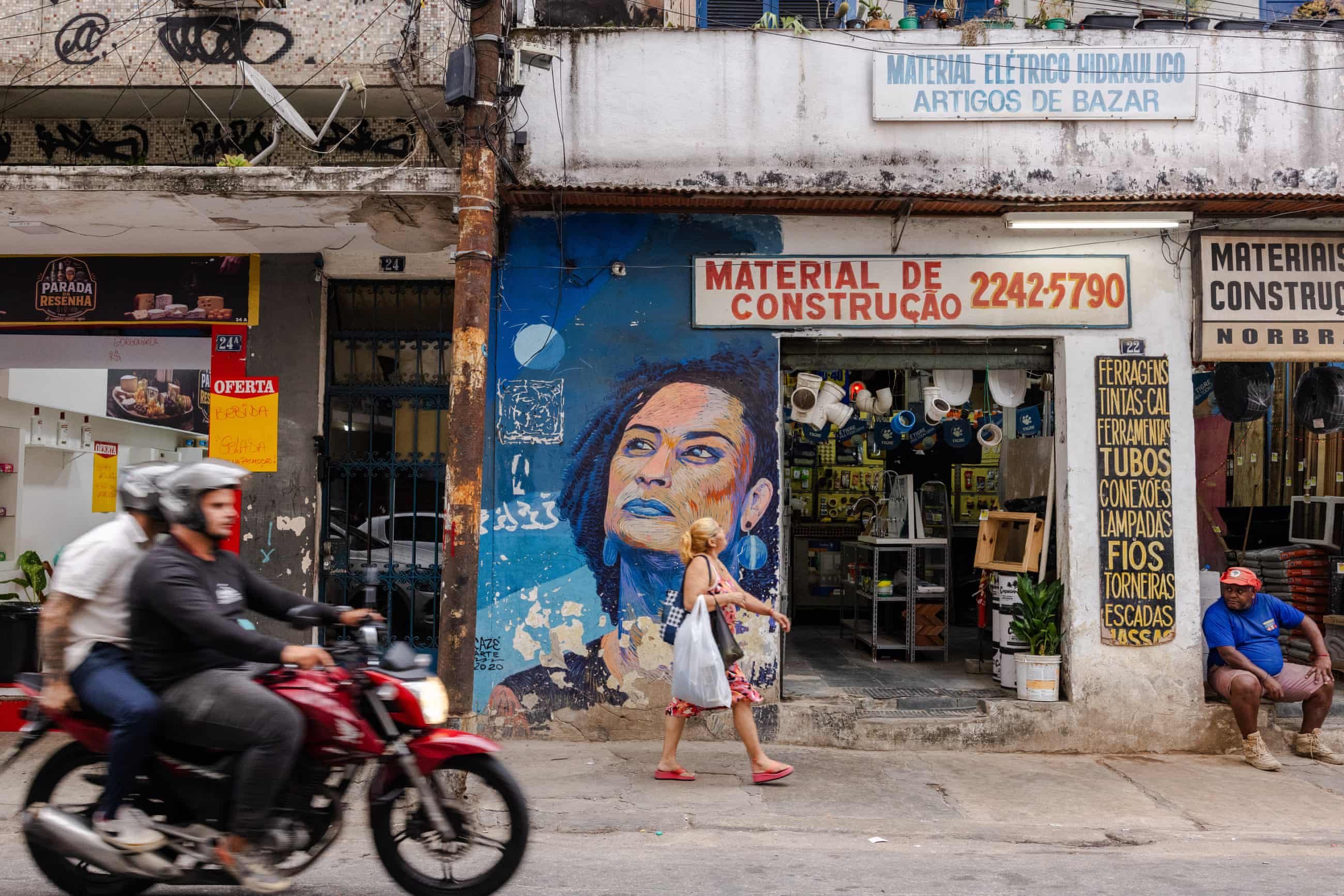
A mural of Marielle Franco, a renowned Black councilwoman assassinated in 2018, painted in Lapa
All the murals have involved extensive research to decide every element of the painting, except the one honouring the city councillor Marielle Franco, created the morning after her assassination eight years ago. “It came much more from instinct, from a feeling that we needed to do something in response to that horrific death.” The painting portrays Marielle standing tall, looking defiantly upwards.
One of their most famous works stands at the heart of one of Rio’s newly sought-after tourist spots, Largo de São Francisco da Prainha, an area filled with bars and samba performances that attracts hundreds of visitors to a region known as Little Africa because of its centuries-old Afro-descendant population.

-
A mural of the writer Conceição Evaristo painted in the region known as Little Africa
There, they painted a 20-metre-long mural of Conceição Evaristo, 79, one of Brazil’s most celebrated writers. Just a five-minute walk away is Valongo Wharf, where more than a million enslaved Africans are estimated to have arrived in the 19th century.
“When you arrive in Little Africa and look at the huge mural of Conceição, suddenly it makes more sense to understand the surroundings and say: ‘This is a Black territory’,” said Sawaya.
One thing the murals do not do is portray pain, Sawaya said: “Our concern has always been to bring beauty. There has already been enough pain attached to the history of Black people in the city, so the aim here is to tell our story in a beautiful, lighter way.”