




A few days after doing a nude swimming pool shoot on the set of the 1962 comedy Something’s Got to Give, Marilyn Monroe jumped into her raven black T-Bird and drove her photographer, Lawrence Schiller, to Schwab’s Pharmacy on Sunset Boulevard. Schiller had brought his negatives, now ready to be turned into prints. And in her purse Monroe had brought her scissors, which she now reached for – and, under the glow of the now legendary Hollywood hangout’s streetlights, began to cut the colour film into pieces.
“Ziiiiiip – the ones she didn’t like,” says Schiller, animating the sound. “Ziiiiiip.” She destroyed them? “Oh yeah, but that came with the territory,” laughs the now 89-year-old, the last living photographer of Monroe, as he recalls his 25-year-old self bending down to pick up the debris and thinking: “Well, I would’ve killed that one, too.” In fact, he speaks of her editing with nothing but admiration: “There wasn’t a picture she destroyed that I would’ve published.”
Two months later, Monroe had died from a drug overdose. In the six decades since, it is perhaps this negative-snipping Monroe that has been downplayed in favour of the myth – the so-called “messy” blond bombshell who struggled for control of herself, and was endlessly shaped by others.
Yet as Rosie Broadley, curator of the Monroe exhibition about to open at the National Portrait Gallery in London, writes in the accompanying catalogue: “Monroe not only performed, but also directed and claimed the right to veto any images she did not like.” Richard Avedon, Milton Greene and Bert Stern might have held the camera, but Monroe was instrumental in guiding it.
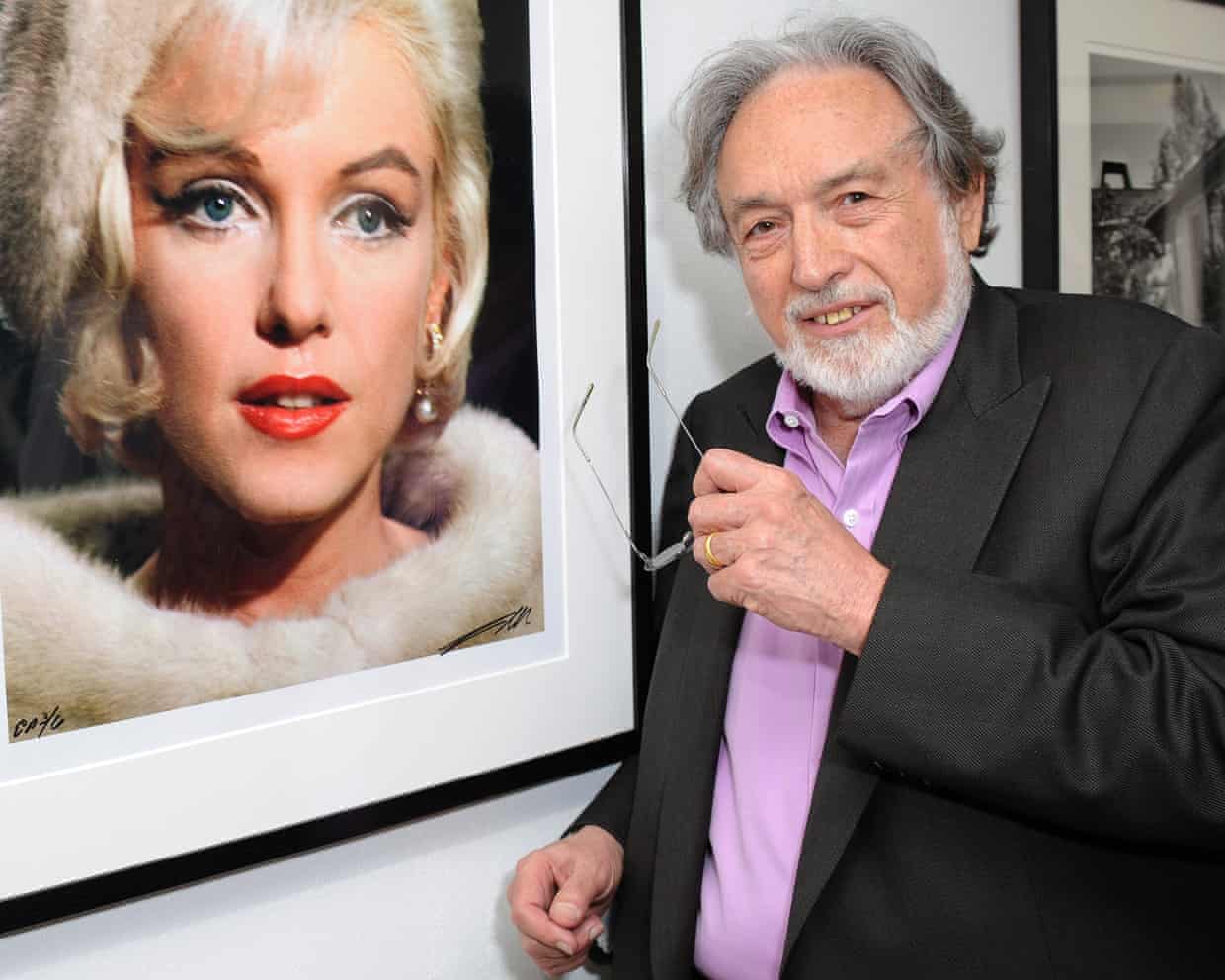
This takeaway forms the heart of the National Portrait Gallery show, timed for what would have been Monroe’s 100th birthday at the start of this month. It portrays the star not as a passive bystander, but as an active architect of her own image. By all accounts, Monroe could be brittle, but she could also be tenacious and firm. She “so brilliantly conveyed” her vitality, says Broadley, that it was “frequently at odds” with the reality of her life and struggles when the cameras were put away.
Schiller recalls the time, back at that pool shoot in May 1962, when Monroe jumped into the water and, disregarding director George Cukor’s commands, swam to where the light was better. In one shot, Monroe lifts her leg out of the water and hooks it on to the edge of the pool, like a glistening nymph. In another, she drops her towel just enough to reveal the small of her back – all cello-like, as if waiting to be played.
Before the shoot, Schiller remembers Monroe saying to him: “What would happen if I jumped into the swimming pool with my bathing suit, like they say, but I come out with nothing on?” He replied: “You’re already a famous woman. But if I take those photos, you’re going to make me famous.” To which Monroe jibed: “Don’t be so cocky, Larry. I could fire you in two seconds.” He laughs. “That was the relationship I had with her: I could crack a joke – and she could crack a joke back that was more poignant and piercing, with a lot of subtext. And you had to understand Marilyn’s subtext.”
It’s an undercurrent that Eve Arnold, another of Monroe’s photographers, elaborated on, likening the star to a woman in pursuit of her lost self, with the photographer seeming to give her what she was missing. How pertinent such an observation seems when one looks at Schiller’s glittering snapshots of her skinny-dipping in the moonlight, displaying a joy that belies what was going on in her life. Monroe was in freefall that summer: it was a year after her divorce from the playwright Arthur Miller, during which time her gynaecological and gallbladder surgery had overlapped with a terrifying stint in a psychiatric clinic, alongside an ever-worsening dependency on alcohol and prescription drugs.
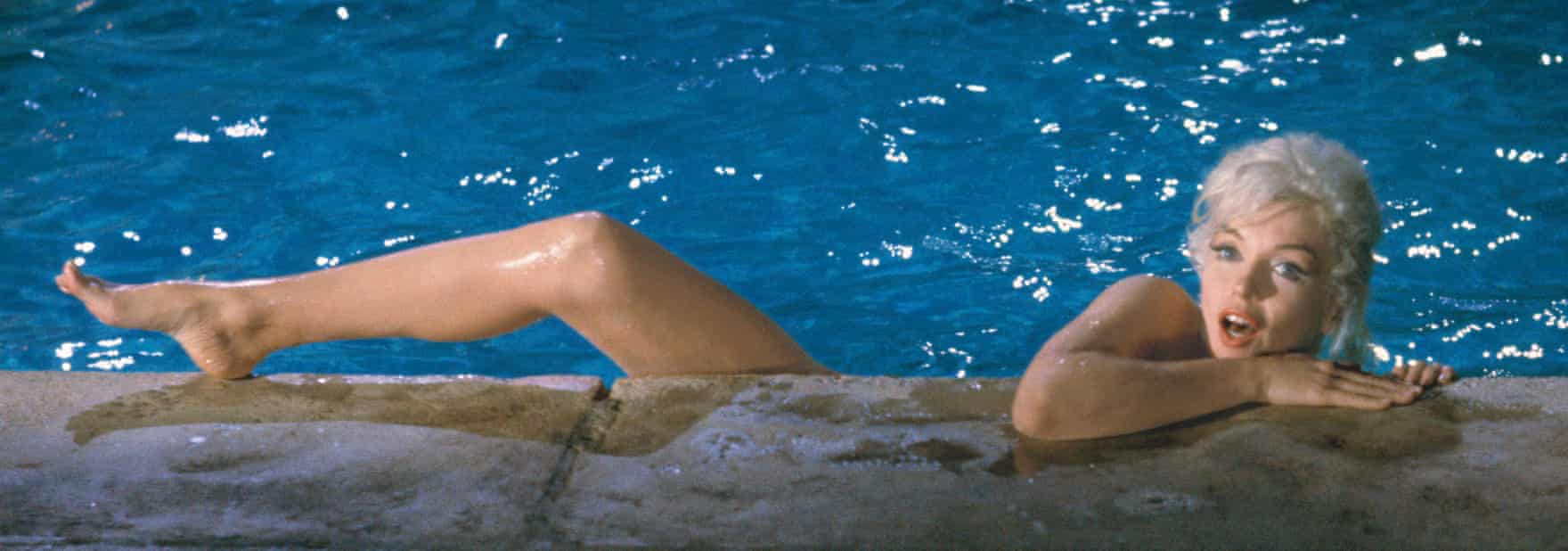
“She was showing up for work, showing up late,” recalls Schiller. “And the studio was saying it was costing them millions, while they were spending millions on Cleopatra.” This brings us to another Monroe subtext at the time: Elizabeth Taylor, her tabloid-filling affair with Richard Burton and the $44m “disaster” they were starring in that almost bankrupted Twentieth Century Fox a year later. “What was in her mind,” says Schiller, “was: if I do this shoot in a certain way, I’m going to be on the cover of every magazine around the world – and Liz Taylor won’t be.”
Rivalry aside, perhaps her naked pool frolics were also part of what Arnold called the photograph “giving her back herself”. Less a simple case of one-upmanship, more a complex attempt at reclamation – which, at the age of 36, was as much about reclaiming the past as anything else.
“I don’t look at myself as a commodity, but I’m sure a lot of people have,” Monroe said in the final interview before her death, just a few months after this pool shoot. This brings to mind a conversation I had with the photographer Douglas Kirkland in 2015, remembering an evening he had spent photographing Monroe naked in bed in 1961. In some ways, he said, he thought she enjoyed making still images as much as doing movies. “Why?” he asked. “Because she could write the script as it went along. She could make things happen. I did not tell her, ‘Turn this way, turn that way, do this, do that.’ She did it herself. That was Marilyn.”
Again, this echoes what the National Portrait Gallery has called Monroe’s “creative agency” outside the studio machine, which told her what roles to play, how to look and where to stand. Schiller agrees with this framing. “I don’t think any photographer captured Marilyn because what they captured is what Marilyn wanted them to capture. She wanted to be the splish splash in the water with me. She wanted to be the dream in the middle of the night with Cecil Beaton. The short and long of it was: she controlled the still camera.”
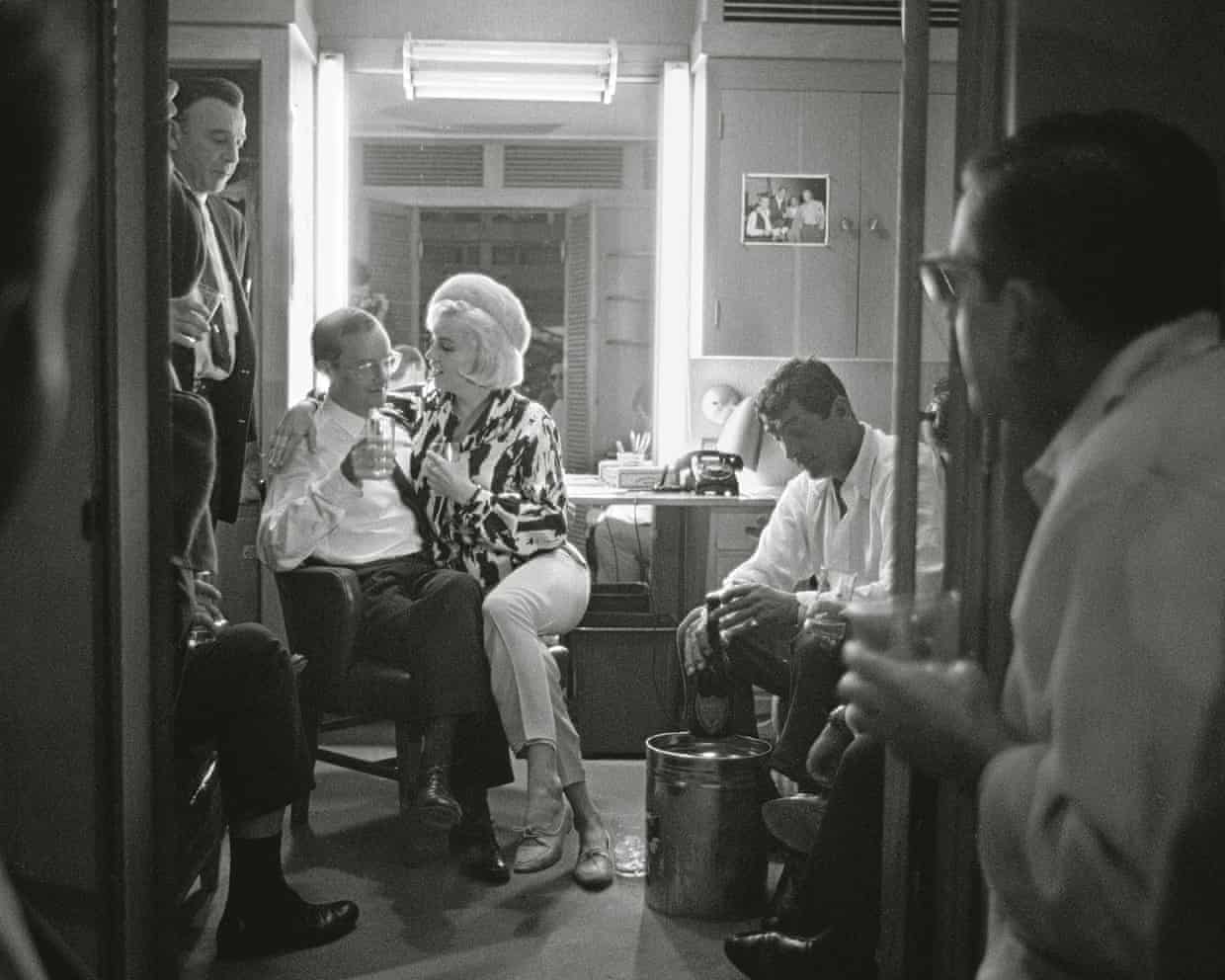
Away from the still camera, however, it was a different story. In June, just a few days after Schiller photographed her grinning radiantly with her 36th birthday cake, Monroe was found in a depressed state having consumed many prescription pills. Five days later, Twentieth Century Fox fired Monroe for repeated absences and sued her for $750,000 for “breach of contract”. The film Something’s Got to Give, about a woman who returns after being lost at sea, was never completed.
Conversing with Schiller, I sense his reluctance to overplay the time he spent with the star so near to her death. “In front of the lens,” he says, “she was somebody for me to capture.” Yet he does say there was always something distant, fragile and more elusive. “She was like a deer out in the woods. You wanted to capture it before somebody shot it. You wanted to get it alive before it no longer existed.” He felt this on their final shoot. “You wanted to photograph her before some tragedy entered her life again.”
The day before Monroe died, on 4 August 1962, Schiller visited her home in the Brentwood neighbourhood of Los Angeles. She was “just out there with the flowers”, he recalls, and they spoke about a possible Playboy cover. “Then at five in the morning, I got a call from my friend that Marilyn was dead. I thought it was a joke.” It wasn’t. “I got in the car at about 7am and drove back. By then, the media had surrounded the house, the glass to her bedroom window was broken, and they were removing her body, covered on a gurney.”
It was a tragic death, Schiller says – and one he felt compelled to pay testimony to. “Photography is part of the texture of my life,” he ponders. And so, it would seem, was this woman. She still is. “Marilyn Monroe came into my life in 1960,” he wrote in his 2021 memoir Marilyn & Me, “and she is still a living, breathing, extraordinary presence.” Her magic has still not dimmed.
-
Marilyn Monroe: A Portrait is at the National Portrait Gallery, London, from 4 June to 6 September.
-
Lawrence Schiller’s Marilyn & Me is published by Taschen (£60). To support the Guardian, order your copy at guardianbookshop.com. Delivery charges may apply.