





‘Everything already written, everything already said,” – the words Blixa Bargeld chose to open Rampen, the latest Einstürzende Neubauten record, released in 2024 to comparatively little fanfare, felt ominous. Would this mark the end of the band that has defined German music, at least to the outside world, for close to five decades?
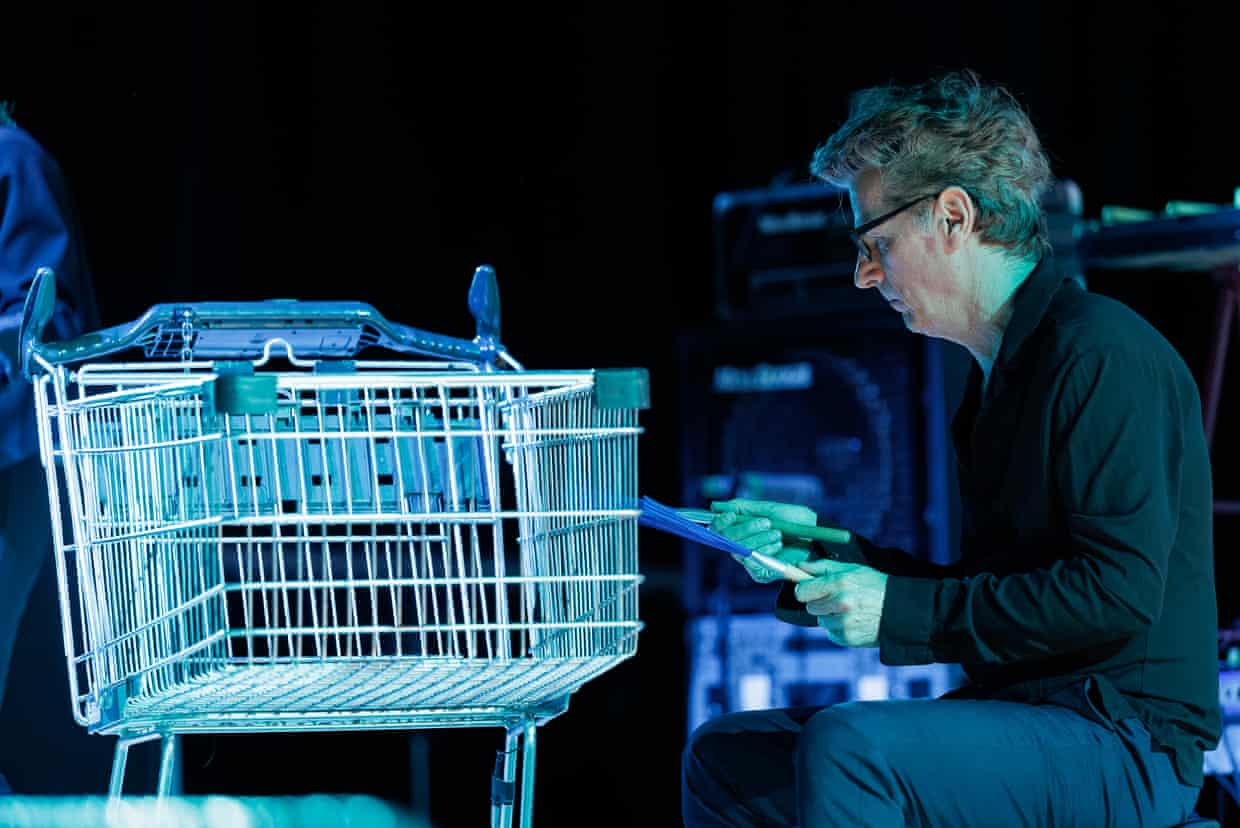
“No!” Bargeld replies, his voice thundering across the small dressing room backstage at the National Theatre of the Netherlands in The Hague. “Take it for granted – we’ll make another record.” Later that night, Einstürzende Neubauten (“Collapsing New Buildings”) are at the Amare concert hall, the closing act of the Rewire festival’s 15th edition, an anniversary for the city’s celebration of experimental music and art. It is the third stop on a short festival run the band has embarked on this spring and summer, and true to form, they have lugged a shopping trolley all the way from Berlin, along with pipes, drills and metal sheets.
Known for an intense noise sound, created using building materials and scrap metals, Neubauten are seen as pioneers of the industrial genre, influencing later bands such as Nine Inch Nails or Swans, even if that abrasive edge gave way to something more melodic in the early 00s.
This time, there is a new addition to the stage – a new member: bassist Josefine Lukschy, who is now sitting on the sofa next to Bargeld, in the first interview he has given alongside another band member in years. New chapters afford new routines.
Lukschy, born in 1989, is the first new member since Jochen Arbeit and Rudolph Moser joined in 1997. “When Josefine was born, we had just released Haus der Lüge,” Bargeld says, referring to the band’s fifth studio album. The catalyst for this new chapter was the departure of Alexander Hacke – who joined Einstürzende Neubauten shortly after their founding in 1980 and had been with them ever since – who announced last April that he was leaving. The exact reasons remain unclear. In a statement, Hacke cited a divergence of “basic standards, personally and professionally, on every level” and said he was stepping away to uphold his “core value of integrity”.

Bargeld, for his part, points to Hacke’s growing focus on his own projects – among them hackedepicciotto, a duo with his wife, the artist and Love Parade co-founder Danielle de Picciotto – and the resulting diminishing commitment to Neubauten. “Alexander kept saying he didn’t have the time when we wanted to make a new record,” he says, explaining why the band turned to improvised passages from their 2022 live shows as the foundation of Rampen. In Bargeld’s telling, the end of the collaboration seems to have come naturally.
After a discreet search for a replacement – Hacke had served as the band’s musical director during live performances – Neubauten invited four musicians to audition. “We rehearsed with all of them and our decision was unanimous,” Bargeld says. “With Josefine, it felt as if they’d always been with us. It’s crazy.”
Einstürzende Neubauten announced their new member publicly in late March 2026, roughly a year after the split. Lukschy, who uses they/them pronouns, was unlikely to be a household name even to the band’s devoted fanbase: as an independent musician, they had been involved in a number of underground projects in Berlin, among them the sludge-rock band Crashpad, where they play bass and share vocal duties. Their route into one of Germany’s most influential cultural exports was, by their own telling, almost accidental. One day they received a call from an acquaintance mentioning that Neubauten were looking for a new bassist; a few days later, they were rehearsing songs the band had sent over. “I was very much looking forward to finally playing with them,” says Lukschys, “after rehearsing by myself, in front of the computer.”
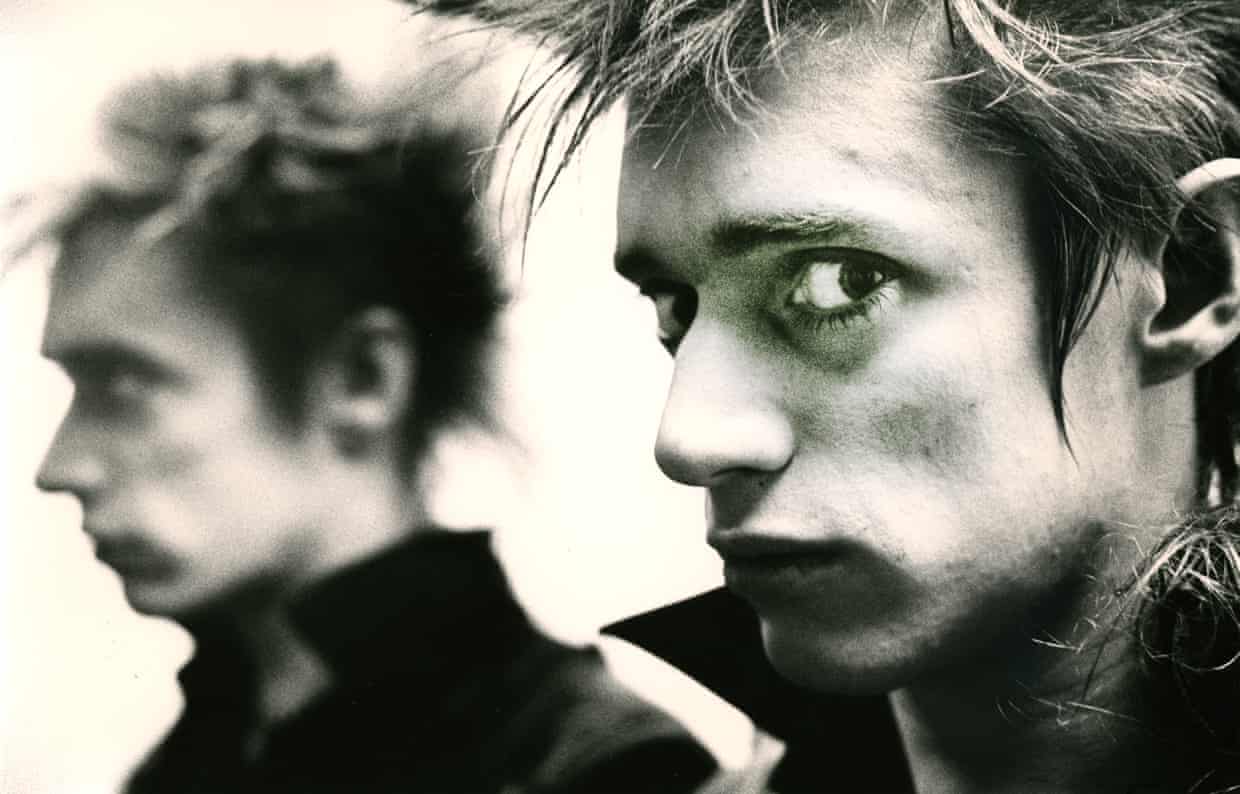
And now here they are, sitting next to Bargeld: a figure of near-mythic status in German cultural life, an erstwhile school dropout from the petit-bourgeois West Berlin neighbourhood of Tempelhof, co-founder of Einstürzende Neubauten and of Nick Cave’s Bad Seeds, of which he was a member until 2003. In a sign of how much has changed, Bargeld was awarded the Order of Merit of the Federal Republic of Germany last year, the country’s highest federal honour, recognising him as a role model for creative minds across the nation. An accolade that would have surely been unimaginable to his younger self, squatting buildings in the rubble-strewn playground of postwar West Berlin.
How does a musician so much younger than their bandmates find their footing within a band older than they are? As the first non-male member since co-founders Beate Bartel and Gudrun Gut left shortly after its inception, how do they carve out space as a genuine equal? “That’s a question for Josefine,” Bargeld says – before proceeding to answer it himself. “They obviously know our work.” “Obviously,” Lukschy adds. “I’m from Berlin, after all. The band is an institution in the city.” As the conversation continues, Lukschy grows visibly more at ease in this new role, sitting next to Bargeld and representing a younger generation of Berlin’s music scene – one that is nonetheless deeply rooted in the history Einstürzende Neubauten have contributed to.
The band is a living relic of a near-mythical era in Berlin: one that began with David Bowie and Iggy Pop’s years in the divided city in the 1970s and ended, in the most cinematic terms possible, with David Hasselhoff singing I’ve Been Looking for Freedom on the breached Wall in 1989. That era continues to inspire generations of musicians, and underpins the city’s global image as a haven for counterculture, a place where history, DIY art-making and hedonism collide.
That Berlin, however, is said to be dying. A slew of essays and think pieces published in recent months in German newspapers and magazines has mourned the city’s perceived decline – the result of savage budget cuts to culture, social institutions and sanitation, and a broader disillusionment that Berlin’s dream of becoming a global metropolis on the scale of London or New York never quite came true. But perhaps the city is simply changing, just as its most iconic band is changing too.
It is not too great a stretch to map the arc of Einstürzende Neubauten on to that of Berlin itself: from broke kids banging on scrap metal salvaged from building sites after selling their instruments for survival, to artistic icons, to reluctant members of the cultural establishment. Bargeld bristles at that last part. “We were the counter-counter culture, the double negation of everything,” he says. “With that, you can never truly become part of the establishment.” Like the city that made them, they have spawned movements they regard with considerable ambivalence: “We aren’t blameless for the emergence of something as horrible as Rammstein,” Bargeld says, a remark that is, at most, only half in jest. And despite their considerable international reputation, commercial riches have largely eluded them, as Bargeld hints when alluding to the search for new ways to fund their next record.
But as long as there are stages to play, Einstürzende Neubauten will keep lugging their shopping trolleys across the world. After the interview, Bargeld and Lukschy walk back to their hotel across the street, passersby turning to look as they recognise Bargeld. The pipes, the drills and the metal sheets are already waiting on the other side of the street. There is, after all, still a show to play.
Einstürzende Neubauten play Wave Gotik Treffen, Leipzig, on 22-25 May, and Primavera Sounds, Barcelona, on 5 June. Then touring.