







‘Every part is an education,” says Linda Bassett. “That’s the glory of being an actor. You learn about human feelings and frailty and rottenness. The writer puts their soul on the page, and you inhabit that. I’ve always felt I was a writer’s actor.”
She’s not wrong. Never showy, Bassett’s understated magic has enhanced plays by Timberlake Wertenbaker, Wallace Shawn, Ayub Khan Din and, notably, Caryl Churchill, of whom she is a peerless interpreter.
“Auditioning for Caryl was enormous, because that got me started on a trajectory,” she says. From Fen in 1983 to 2021’s What If If Only, her disconcerting clarity has suited Churchill’s plays, work that some audiences find forbidding. “They’re not hard to watch,” Bassett protests.
We’re chatting at the Young Vic, where Bassett is rehearsing Care by Alexander Zeldin, another exacting author. Her dog snoozes nearby and I’m showing her my “terrible rage” tote bag, quoting Bassett’s direful monologue from Churchill’s apocalyptic Escaped Alone, where the phrase is said 25 times in succession. “It was the only thing to say at that point. The words fed the feeling, and it was the audience who felt it, not me, which is ideal.”
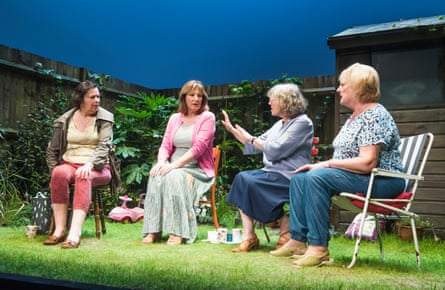
In rehearsal, Churchill is “wonderful, completely non-invasive, but very generous”. Her plays are famously short on stage directions, offering a multiverse of choices. “It’s so distilled, no excess baggage,” Bassett considers. “But there’s only one way to play them, and you’ve just got to find the way.”
Theatre wasn’t an obvious path for Bassett (“we weren’t that kind of family”), but the seed was planted at an Easter play at her Sunday school. An older girl couldn’t go on, but four-year-old Linda knew all the lines, was shoved into a daffodil hat and “went down a storm because I was only little. I was in bliss.”
Teenage Linda spent two years ushering at the Old Vic during Laurence Olivier’s glory days of landmark work: “I saw it over and over again, except for the bit just before the interval, when I had to go and get the ice cream.” She recalls Peter Brook’s production of Seneca’s Oedipus. “Ronald Pickup’s messenger speech – people fainted every night. You didn’t see anything, his voice was enough. That’s the power of theatre, isn’t it?”
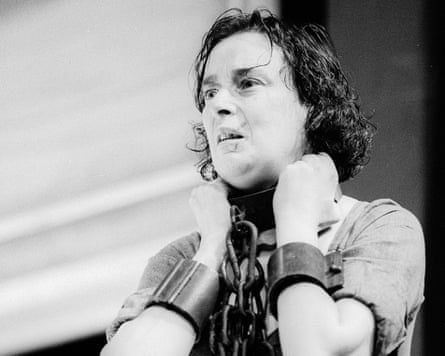
She then studied English at Leeds University, for just a year. “I spent my whole time doing plays” – meaty stuff such as Beckett’s Play and Edward Bond’s Lear. “There was a very nice doctor. I went to her and said I was terrified of these exams and hadn’t done the work. She said: ‘Do you want to stay?’ I thought, No, I’m only here for my dad. She said: ‘In that case, just make sure you go in, write your name so that you don’t lose your grant, and I’ll give you Librium to cope with the fear.’ I got a first in my drama paper, and nothing in anything else.”
Instead, in Leeds and Coventry, she created devised work which, she suggests, “made me a bit gobby. When I’m working on a new play – not with Caryl or Alex, but other writers – I make suggestions, and then realise it’s not actually wanted.”
Bassett hasn’t done as many classics as she hoped – “I think I’m seen as a working-class actress” – but her CV is remarkably free of crap. “I don’t think I make conventional choices,” she says. “I’ve turned down loads.”
Despite notable film roles (East Is East, Calendar Girls), many know her as stern nurse Phyllis in the BBC’s Call the Midwife. “Complete strangers come up and say, I love you. My wife loves you, my mother loves you. It’s extraordinary.” Despite swerving storylines (“they suddenly made me an atheist, when in my head, I’d been a Unitarian Methodist. That was a shock”), she sat with Phyllis for over a decade. “I kept thinking, 12 years is too long to play one character, I’ve got to get out. But there was always something to find. I didn’t much identify with her – she was much more matter of fact and practical than I am. It was refreshing to learn how to be that.”
Care involves both a pressing social concern and a common personal experience. Bassett plays Joan, who after helping her family, shows signs of dementia and needs care herself. “She’s convinced, as many people are, that she’s just in for respite. She never loses the idea that she’s going home.”
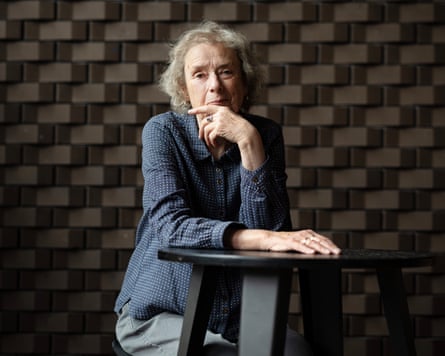
Zeldin’s plays are quietly devastating. Joan’s story might seem domestic, but, Bassett insists, “it is on the Shakespearean [scale], because she’s raging against the world. If you’re sat in a chair, you’re living with whatever’s in your head, and that can be epic.” Is dementia difficult to play? “What’s difficult is remembering the lines because they’re disconnected.”
She had a foretaste of Joan’s distress when, following a heart attack, she spent two weeks recuperating in a care home in her Kentish village. “It gave me an insight into what it’s like when you become helpless.” Staying in London for the play also makes her “familiar with what it’s like to be uprooted. It’s really hard leaving my home.”
Zeldin directs his own play: “He wants absolute truthfulness, which suits me down to the ground,” Bassett says. “Every new part you’re starting again. It’s a bit scary, but I think we’ll be all right.”
-
Care is at the Young Vic theatre, London, until 11 July