






The character actor David Burke, who has died aged 91, turned in his best television performance as Dr Watson, the retired army doctor assisting Arthur Conan Doyle’s Victorian detective, in ITV’s acclaimed series The Adventures of Sherlock Holmes (1984-85).
While television critics widely applauded Jeremy Brett for giving the definitive portrayal of Holmes, Burke brought his own refreshing take on the sleuth’s long-suffering sidekick, transforming him from the bumbling “dozy doc” of previous screen versions to a lively, intelligent John Watson.
This came from the Granada Television producer Michael Cox’s desire to recreate the look and tone of the original Holmes stories, illustrated by Sidney Paget, in the Strand magazine. His idea was to bring dark drama to the screen with a wild-eyed, haunted Holmes, complete with mood swings and cocaine addiction, and a sense of mischief from his humble, loyal friend, Watson. The look was enhanced by a Victorian Baker Street set built at Granada’s Manchester studios.
Cox was determined to cast Burke as Watson, having worked with him on Holly (1972), a six-part psychological thriller in which the actor played a disturbed man fixated on, then stalking and abducting, a young art teacher played by Brigit Forsyth.
But Burke had to be convinced that he could do something with a character, essentially the narrator in the novels, noted for uttering few words. “How to play the role of a man who is perhaps the most ordinary character in English literature?” he ventured. His wife, the actor Anna Calder-Marshall, responded humorously: “Watson is your perfect portrait!” She added that “it takes an extraordinary man to play an ordinary man”.
When filming began, Burke cast aside the image of Watson as inept and the butt of jokes, notably present in Nigel Bruce’s performances opposite Basil Rathbone in a series of Sherlock Holmes films in the 1930s and 40s – his way of making the character more prominent. Despite Granada’s scriptwriters giving extra texture to Watson, Burke was still frustrated by his lack of lines. In The Speckled Band story, he counted just 43 words.
He pulled out at the end of the two series, comprising 13 adventures, refusing to sign a contract to appear in The Return of Sherlock Holmes, the first of three sequels and two specials continuing the Conan Doyle canon.
Instead, he accepted an offer for him and his wife to perform with the Royal Shakespeare Company, considering it preferable to filming in Manchester while she stayed at home in Kent looking after their young son, Tom, who grew up to be an actor himself.
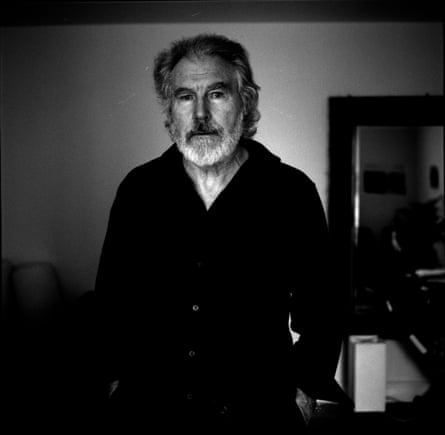
He also felt he had exhausted all means of conveying Watson’s amazement at Holmes’s genius, later saying he was tired of repeating in every conceivable tone: “Good heavens, Holmes!” He recommended his friend Edward Hardwicke to take over as Watson, having helped to create a template that would serve his replacement and the production well for another 28 adaptations.
Burke was born in Liverpool to Irish parents, Mary (nee Walsh) and Patrick Burke, a ship’s steward. In his teens, he fell in love with the stage through weekly visits to the city’s Playhouse theatre.
Wanting to become a writer, he studied English at St Catherine’s College, Oxford, but he was bitten by the acting bug when he appeared in stage productions there. Then, he went on a scholarship to train at Rada (1958-60), where his contemporaries included Forsyth, Tom Courtenay and John Thaw, and he won the Ronson award for most promising male actor.
He gained repertory theatre experience in Bristol and Farnham before making his West End debut as Geoffrey Jackson in the Alan Ayckbourn play Absurd Person Singular (Criterion theatre, 1973), with Calder-Marshall playing his volatile wife. (They had met in Henrik Ibsen’s tragicomedy The Wild Duck on tour in 1969 and married two years later.)
Classical roles followed, first at the Young Vic as Duke Senior in As You Like It (1976). Then, over almost 30 years on and off with the National Theatre company (1980-2009), his parts included the ghost in Daniel Day-Lewis’s Hamlet (1989) and Kent, alongside Ian Holm, in King Lear (1997), a portrayal described by the Independent as “impressively pugnacious”.
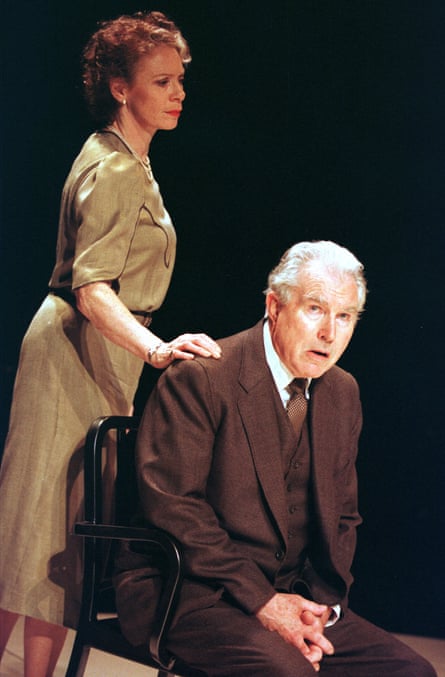
But his standout National Theatre role was as the Nobel prize-winning Danish physicist Niels Bohr in Michael Frayn’s second world war play Copenhagen (1998). During its run, Burke, known as a prankster, adopted the guise of a Chiswick housewife to undertake a long correspondence with Frayn. It began with documents purportedly revealing a “secret history” of Werner Heisenberg, the German nuclear physicist meeting Bohr in the play. Frayn fell for the hoax and later collaborated with Burke on a book about it, Celia’s Secret (2001), adapted by Martin Jarvis for a BBC Radio 4 play this year.
During the first of two stints with the RSC (1985-86 and 1994-95), Burke played the doomed warrior Hector in Troilus and Cressida (in both Stratford-upon-Avon and London), a “beautifully poised and weighted” performance, according to the critic Michael Coveney.
On television, Burke regularly popped up in crime and adventure series early in his career, from Z Cars (three roles, 1963-69) and The Avengers (1963) to Dixon of Dock Green (three roles, 1965-68) and The Champions (1968).
In 1965, he had his first taste of performing Conan Doyle on screen, playing the rakish thief Sir George Burnwell in The Adventure of the Beryl Coronet, in the BBC’s Sherlock Holmes series. He also appeared in Coronation Street as a teacher at Bessie Street school (1964) and Jack Benjamin, the boss of Elliston’s raincoat factory, who had an affair with Bet Lynch (1966).
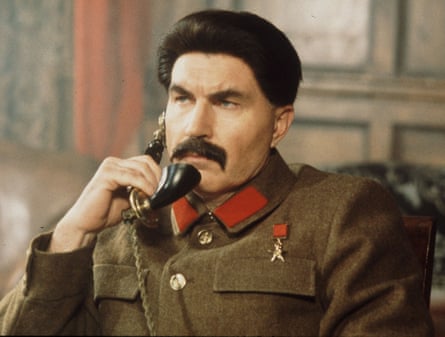
His other television roles included the tragic suitor Giles Winterborne in a serialisation of Thomas Hardy’s novel The Woodlanders (1970), Joseph Stalin in Reilly: Ace of Spies (1983) and Lord Reith in the George VI royal romance Bertie and Elizabeth (2002).
He appeared on TV with his son several times, finally in 2014, playing a priest in The Musketeers, in which Tom was one of the swashbuckling stars.
Burke’s wife and son survive him.