




The dawn chorus at RSPB Northward Hill in Kent is a riot of sound: the melodic robin, the two-tone cuckoo, the whitethroat’s scratchy warble. Even the garbling geese and mooing cows from the neighbouring Thames marshes add to the symphony.
Dawn chorus
Dawn chorus
00:00:00
00:01:46
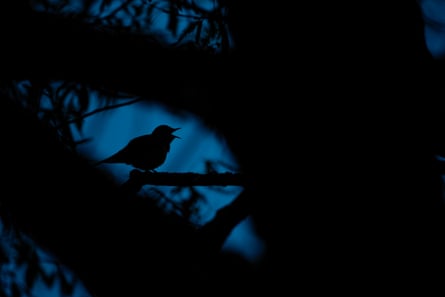
But in late April one energetic singer hogs the limelight. For a few weeks after arriving from West Africa, the nightingale spends the night – and early morning – in complex song. As it searches for a mate and marks its territory, its song is at times as sweet and tuneful as a soul singer, at others as frantic as a car alarm.
Nightingales are perhaps the most celebrated of Britain’s woodland birds, beloved by artists and poets, and appearing on the BBC’s first wildlife broadcast in 1924. But populations have tumbled 90% since the 1970s, with the bird’s range contracting to the south and east of England.
Several factors have contributed. Nightingales favour dense thicket and scrub, habitat that has suffered degradation from the likes of a decrease in coppicing and a rise in deer populations. The decline of insects, their main food source, and a heating climate have also contributed.
Nightingales
Nightingales
00:00:00
00:01:43
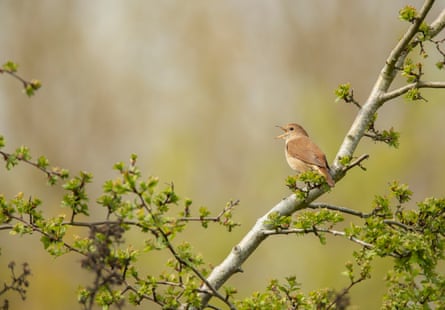
Today there are 5,500 singing males and the small, brown songbird has been on the Birds of Conservation Concern’s Red List since 2015. You are now more likely to spot a street named after the nightingale than the real thing.
But, according to the British Trust for Ornithology, there was an 8.9% increase in singing males between 2014 and 2024. In 2025, the RSPB recorded the second highest total on its reserves for more than a decade, and Northward Hill has the largest population with 47 singing males (the primary way to determine numbers, with the secretive nightingale almost impossible to spot).
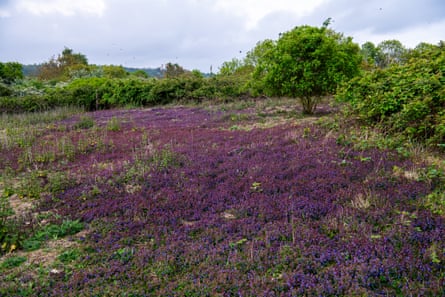
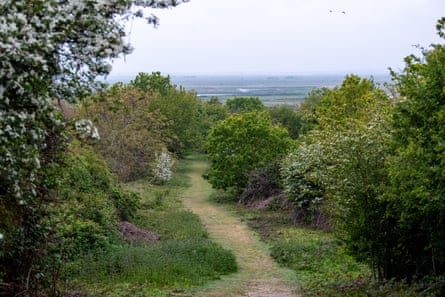
Walking through the reserve it is easy to see why the bird is comfortable here. There is plenty of dense vegetation, ideal for sheltering, nesting and finding food. What was arable land as recently as the 1990s has been converted, through planting and natural regeneration, into a mix of woodland and scrub. It is also home to important populations of whitethroat, egrets and butterflies, including the white-lesser hairstreak.
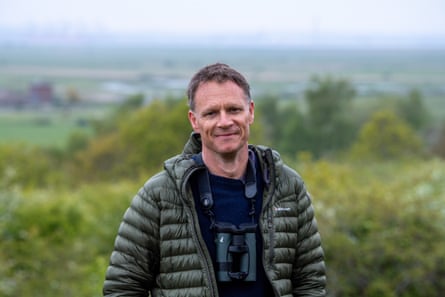
Alan Johnson, the RSPB’s manager for Kent and Essex, said the nightingale was “doing really well” at Northward Hill. “It used to have around 15 birds, now it’s up to nearly 50,” he said, pointing out he could hear five separate individuals singing.
Coppicing and the creation of low-growing scrub were key factors in the bird’s recovery, Johnson explained, adding that most visitors would struggle to spot one. “I haven’t seen one in the open for about five years– it’s a red letter day when you see one. I’ve never seen one fly. If you put birds on a spectrum in the UK of how secretive they were, you’d put nightingale right at the far end.”
Johnson warned that overall numbers remained low and long-term threats persisted. Their low nests make them vulnerable to predation by domestic cats, with potential new housing developments near nightingale sanctuaries, including at Lodge Hill nearby, and at Highnam Woods, in Gloucestershire, of concern. Rising deer numbers were also a worry. “We don’t have deer here, but they’re coming,” said Johnson.
As nightingales are a migratory bird there is only so much conservationists in the UK can do. Last year, a BTO study found that Britain’s nightingales spent their winter isolated from European counterparts in a region around the Gambia, making them particularly vulnerable to environmental conditions or habitat loss. According to Chris Hewson, the BTO’s senior research ecologist, improved conditions in West Africa may be behind the slight improvement of late, although data is yet to emerge. The RSPB is working with counterparts in the region.
Back at Northward Hill, Johnson said a healthy population of nightingales was “a proxy for the health of the wider countryside. Nightingales are an indicator of what’s happening in these woodland scrub habitats. This walk today is telling me this is in pretty good nick, it’s working for nightingales, there’s loads of them in here. It’s the most common bird that I can hear at the moment. It’s not often you can say that. Normally you’d wander round and hear one or two, but we’re surrounded.”
But Johnson warned long-term woodland bird declines remained a concern. “This population is increasing quite dramatically, but that’s not the wider picture,” he said, citing insect decline, agricultural intensification, changes of land use and climate change. According to the BTO, the dawn chorus was becoming a “much-diminished event”, as overall bird numbers continued to fall.
Yet Johnson remains optimistic. “There’s an increased understanding of what nightingales need, and there’s a lot of good habitat around the Thames. If we can create habitat around the Thames and create a stronghold, they might have a secure future.”