









A Greenlandic woman whose newborn baby was forcibly removed by Danish authorities as a result of controversial parenting competency tests has won a landmark case in the high court ruling that their actions were illegal.
Keira Alexandra Kronvold’s daughter Zammi was taken away from her when she was two hours old and placed in foster care in November 2024 after Kronvold was subjected to so-called FKU (parental competence) psychometric tests. At the time she was told that the test was to see if she was “civilised enough”.
The Danish government abruptly banned the tests on people with Greenlandic backgrounds last May after years of criticism, and amid international pressure after Donald Trump’s threats to the former Danish colony, which remains part of the Danish kingdom.
But despite the law change, dozens of Greenlandic parents living in Denmark, including Kronvold, remain separated from their children having undergone the tests.
In Friday’s ruling, the western high court found that the removal of Zammi, now 18 months old and living with a Danish foster family, was illegal and in breach of Kronvold’s fundamental legal rights according to the International Labour Organization (ILO) Indigenous and tribal people’s convention of 1989. It also ruled that the tests used to inform the decision were outdated.
Kronvold’s lawyer, Gert Dyrn, said the ruling had “great significance”. He said: “When the state made this new law last year they recognised they were in breach of the convention on Indigenous peoples and maybe of the European convention on human rights, which – in my opinion – the ruling today confirmed. This is a major victory for the Greenlandic community in Denmark.”
Although the ruling will not directly lead to the reunification of Kronvold and her daughter, because she has since been reassessed under a new system, it marks the first time the Danish high court has ruled on the matter and is expected to have substantial repercussions for Greenlandic parents and their separated children dating back as far as 1996, when Denmark ratified the ILO convention.
Dyrn said: “There may be other women who have not been examined again according to the new law and they will probably be able to use this ruling to get their decisions nullified.”
He also said it could be used by adult Greenlandic people who were removed from their parents as children to get an apology from the Danish state or compensation.
The Danish government is under growing pressure over the tests, which are deemed to be culturally unsuitable for Greenlandic people and other minorities. Last week the Guardian learned that the United Nations had told Denmark that authorities’ treatment of Kronvold “may amount to ethnic discrimination”.
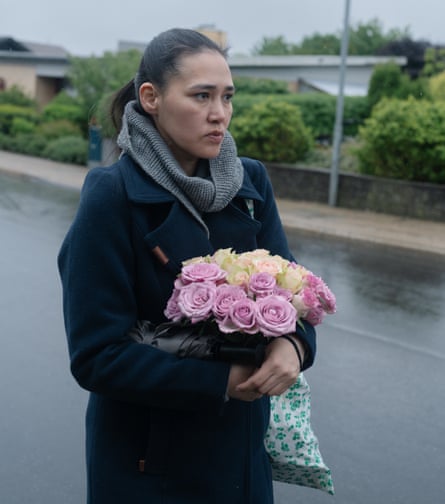
Dyrn said Kronvold’s case had been an eye-opener for Danish politicians over the treatment of Greenlandic people and Denmark’s overall care and forced adoption system. “Something is happening and that is a good thing,” he said.
Earlier in the week, Kronvold lost a case in a lower court to be reunited with her daughter. Her lawyers now plan to also take that case to the high court in the hope of overturning it.
Sila 360, a group that works on Inuit legal rights monitoring, said Kronvold’s case was “the tip of the iceberg” but nevertheless a significant moment for the fight to reunite Greenlandic parents with their children.
After receiving the news that she had won in the high court, Kronvold said: “I feel so amazing, I’m having a hard time to describe with words. I am trying to calm myself down. This is going to change every case in Denmark for Greenlandic people.”
While her own fight is not finished, she vowed to continue until there is a new law for Greenlandic people. “I am still working to make sure there is change coming in for my children,” she said. “This is for life, that’s it. I’m not backing down.”
While the UN intervention is unconnected to the high court ruling, both add to overall pressure on the Danish government to take action.
Reem Alsalem, the UN special rapporteur on violence against women and girls, has written to the government, along with the UN special rapporteur on the rights of Indigenous peoples and the special rapporteur on contemporary forms of racism, asking it to answer questions about the treatment of Kronvold and other families with a Greenlandic background.
The UN officials said the decision to remove Kronvold’s children from her without consent “may be discriminatory and disproportionate”, citing the “apparent disrespect to her decisions regarding procreation and contraception choices over the years and which clearly has caused her enormous psychological suffering”.
They also reminded Denmark of its “binding human rights obligations”.
Denmark held a general election in March and parties have not yet formed a government.
In response to the UN intervention, the Danish ministry of social affairs said in a letter it was ready to “engage constructively on the matters referred to in your letter” and proposed a meeting to discuss the issues in person.
The Danish ministry of social affairs and Thisted Kommune, which made the decision to separate Kronvold from her daughter, have been contacted for comment.