


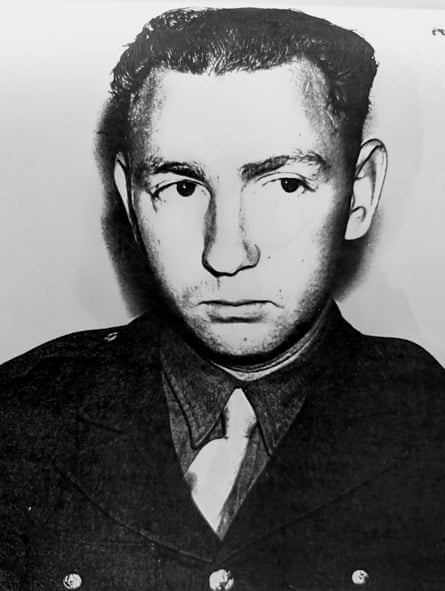
On the afternoon of 25 September 1944, William Harrison, a US soldier stationed in Northern Ireland, visited the cottage of the Wylie family in Killycolpy, County Tyrone, and offered to buy treats for the children.
He had visited before and was, if not a friend, at least known to the family. Mary Wylie let him take her seven-year-old daughter, Patricia, better known as Patsy, across the fields to the shops.
Even for an era accustomed to war, what happened next was sickening. Harrison raped, beat and strangled Patsy. He left her body behind a haystack and went to the pub. He later confessed and was tried, convicted and executed.
The crime entered Northern Ireland folk memory and US military records as a footnote to the second world war, a case that was harrowing but, at least, closed.
More than eight decades later however, new research has shed fresh light on the story – and revealed that it did not end when the hangman pulled the lever. Annie Kalotschke, Patsy’s niece, gathered testimonies, mined family lore and combed archives, including the 660-page trial transcript, to piece together a tragedy that still echoes on both sides of the Atlantic.
“I’ve been investigating this case, on and off, for 31 years,” Kalotschke said this week from her home in New York. “I decided early on that this horrible story needed to be written down so that the truth can be known to all. The worse part for our family, the leading cause of generational trauma, has been the myths that still exist today.”
The result is a yet-to-be published book, titled Never Speak of Rope, and a new understanding of the murder and its consequences.
An abusive and dysfunctional family in Ohio – Harrison’s mother was a drinker and he fought with his foul-tempered father – produced a “sad sack little guy” with alcohol dependency.
After enlisting in the US army, he was disciplined for drunkenness and treated for amnesia, but instead of being discharged was posted to a reserve combat unit at Cluntoe airfield in Ardboe, County Tyrone, one of the more than 2 million US personnel based in the UK during the war.
In the summer of 1944 Patrick Wylie, a farmer, met the 22-year-old soldier in a pub. Noting his loneliness, he invited him to the family home for a cup of tea. Harrison stayed two days, an unauthorised absence from base that earned three months detention.
On 25 September 1944, Harrison drank heavily before going to the Wylie home and leaving with Patsy, ostensibly to buy minerals and sweets. The pair met Patsy’s nine-year-old sister, Sadie, who was running an errand and declined an invitation to join them.
Harrison later said he killed Patsy because she threatened to tell her mother about the sexual assault, making him “white hot mad”.
The atrocity was extremely rare – one of four murder rapes in the UK attributed to US personnel, said Alan Freeburn, a Northern Ireland historian. “Private William Harrison was the only American who was convicted of child murder and one of three hanged for child rape in the European Theatre of Operations in the second world war.”
Kalotschke discovered that Harrison’s parents petitioned the White House in vain to save their son – and that the executioner, Thomas Pierrepoint, botched the job. Instead of a snapped spinal cord and swift death, those present at Shepton Mallet prison in Somerset on 7 April 1945 watched the rope strangle Harrison for 20 minutes. Pierrepoint was close to retirement and perhaps infirm but Kalotschke suspects vengeance. “Was it because he knew what Harrison was guilty of?”
In Northern Ireland, rumours spread that the murderer had been spared and sent to fight in France, or that he had been spotted on a ship bound for the US, said Kalotschke.
Some locals blamed the Wylies for what had happened. “There was such a stigma about the crime. Men on a bus said to my grandmother: ‘It’s a shame about that wee girl, but that’s what you get when you’re a Yankee lover.’ Utterly devastating.”
Depression consumed Mary until her murdered daughter appeared in a dream and urged her to carry on for the sake of the other four children.
However Sadie, afflicted by survivor’s guilt, could not bear to pass the field where her sister died. She emigrated to New York and seldom spoke of the crime but the trauma affected her and her own children, including Kalotschke, who links that “shadow” to her decision to become a mental health therapist.
Last month, Kalotschke gave a talk at Shepton Mallet and, with relatives, entered the execution chamber. They felt triumphant, she said. “I help my clients to find closure amidst trauma. Well, I can tell you we feel closure. We gave Patsy justice and her voice back. She’s not just a name on a tombstone any more.”