

惯性聚合 高效追踪和阅读你感兴趣的博客、新闻、科技资讯
阅读原文 在惯性聚合中打开

推荐订阅源

T
Troy Hunt's Blog
cs.AI updates on arXiv.org
T
Threat Research - Cisco Blogs
K
KPMG report finds enterprise disconnect between AI and its ROI | CIO
Schneier on Security
Scott Helme
Scott Helme
L
LINUX DO - 热门话题
Help Net Security
Help Net Security
cs.CL updates on arXiv.org
P
Palo Alto Networks Blog
P
Privacy International News Feed
AWS News Blog
AWS News Blog
Forbes - Security
Forbes - Security
N
News and Events Feed by Topic
L
LINUX DO - 最新话题
A
Arctic Wolf
Hacker News: Ask HN
Hacker News: Ask HN
P
Proofpoint News Feed
N
News and Events Feed by Topic
S
Security @ Cisco Blogs
Cyberwarzone
Cyberwarzone
Google Online Security Blog
D
Darknet – Hacking Tools, Hacker News & Cyber Security
PCI Perspectives
PCI Perspectives
Know Your Adversary
Know Your Adversary
The Hacker News
The Hacker News
www.infosecurity-magazine.com
T
Tenable Blog
S
Security Affairs
P
Privacy & Cybersecurity Law Blog
W
WeLiveSecurity
Jina AI
Jina AI
The GitHub Blog
The GitHub Blog
S
Securelist
AI
AI
Latest news
Latest news
T
The Blog of Author Tim Ferriss
Application and Cybersecurity Blog
C
Cybersecurity and Infrastructure Security Agency CISA
月光博客
月光博客
酷 壳 – CoolShell
酷 壳 – CoolShell
C
CXSECURITY Database RSS Feed - CXSecurity.com
美团技术团队
G
GRAHAM CLULEY
cs.CV updates on arXiv.org
Simon Willison's Weblog
Hacker News - Newest:
Hacker News - Newest: "LLM"
C
Cisco Blogs
V
Visual Studio Blog
L
LangChain Blog

The Guardian

Rory McIlroy surges into six-shot Masters lead with stunning second-round flourish ‘That’ll be the end’: actor Sam Neill joins fight to stop controversial goldmine near his New Zealand vineyard Roberto De Zerbi targets ‘Ange-ball’ revival to save Spurs from relegation Bath hit back to reach semi-final after stunning Northampton in 11-try epic Secret Garden to Outcome: the week in rave reviews Zebras, wealth and power: Hungary’s election tests Orbán’s grip on power ‘TikTok effect’ brings sellout crowds and younger fans to Grand National meeting The war over Omagh’s gold: the £21bn mine plan tearing a community apart Britain’s shadow workforce is paid as little as 65p an hour. Who cares for the carers? From You, Me & Tuscany to Euphoria: your complete entertainment guide to the week ahead Six great reads: the man who let snakes bite him, masked heavy metal and the brutal reality for foreign students in the UK American Classic review – I defy you not to fall in love with Kevin Kline and Laura Linney’s tender comedy Cuba’s doctors were a lifeline for the world. Now the Caribbean is shamefully complicit in the US drive to expel them An environmental disaster in Moldova has Russia’s fingerprints all over it RMIT drops misconduct case against student who accused university of being ‘complicit in Gaza genocide’ Ichiro Suzuki statue unveiling goes awry as bronze bat snaps during ceremony Survivors of Epstein’s abuse accuse Melania Trump of ‘shifting burden’ on to victims European football: Real Madrid held at home by Girona to extend winless run Arne Slot insists he is ‘aligned’ with Liverpool board and fans as squad is rebuilt Kamala Harris ‘thinking about’ running for president again in 2028 JD Vance warns Iran against trying to ‘play’ the US in peace talks West Ham double up twice to thrash Wolves and put Spurs in relegation zone Trump administration releases new renderings of so-called ‘Arc de Trump’ Crispin Odey drops £79m libel claim against FT over sexual misconduct allegations Bafta apologises for events surrounding John Davidson’s Tourette’s outburst Cocktail of the week: Bar Shrimp’s la rosita – recipe New drug may extend survival in aggressive ovarian cancer, trial shows One dead and 27 injured after bus with British passengers crashes in Canary Islands Pope adds to Smith’s mass of Surrey runs with England woes a world away OpenAI CEO Sam Altman’s home targeted with molotov cocktail Reform UK local election candidate was twice disciplined by Tories over ‘racist comments’ Remaining in Nato is in best interests of US, says Keir Starmer Prince Harry sued for defamation by charity he co-founded Anthropic’s new AI tool has implications for us all – whether we can use it or not Concerns raised about motorbike tourist trail after death of British teenager in Vietnam The Guardian view on Trump’s civilisational threats: the words that fuel war must be condemned The Guardian view on dystopias for our times: the American nightmare Doctors’ leader claims new reduced pay offer killed chances of ending strikes in England Netanyahu-ism has achieved nothing for Israelis – and come at a monstrously high price Deborah Levy: ‘CS Lewis’s White Witch terrified me – but I wanted to meet her’ How I Shop with Michelle Ogundehin: ‘We grownups have enough stuff already’ Trump’s war and Melania’s Epstein statement, with US editor Betsy Reed – The Latest We have to stop killer motorists on Britain’s roads UK starts crackdown on EU citizens’ post-Brexit rights Londoners aren’t unfriendly – but don’t compare us to New Yorkers The religious right and the perversion of faith Artemis II images reignite moon mission memories Orbán and Magyar trade accusations in last days of Hungary election campaign Reckonwrong: How Long Has It Been? review | Safi Bugel's experimental album of the month Martin Rowson on Middle East peace talks – cartoon Masters magic, the Grand National and Premier League drama – follow with us Fears of UK and EU flight cancellations as airports warn of jet fuel shortages Reform’s petulance over slavery reparations shows it just doesn’t grasp Britain’s place in the modern world Peers vote to ban pornography depicting sex acts between stepfamily members Starbucks’s retail arm gets £13.7m tax credit even as sales increase Flyby review – interstellar musical is a voyage of epic strangeness Grand National preview: Jagwar can deny Irish cohort in Aintree classic Week in wildlife: an ostrich on the lam, a tortoise crossing a road and surfing seals Anger as swifts’ nesting holes in Derbyshire rail viaduct ‘blocked up’ Peter Mandelson faces fixed-penalty notice for urinating in public ‘There’s no shortage of terrifying technology’: how AI became TV drama’s new go-to villain ‘Fresher than anything in a shop’: the best recipe boxes and meal kits for time-poor foodies, tested Who was Hilma? Af Klint exhibition to highlight exclusion of women from abstract art Critics assemble! Here’s my list of the greatest superhero movies of all time US inflation soars in March as war on Iran drives economy into uncertainty Amazon to finally launch Leo satellite internet in ‘mid-2026’, says CEO Grand National 2026: horse-by-horse guide to all the runners Pete Hegseth’s holy war: the militant Christian theology animating the US attack on Iran Add to playlist: the beautifully dazed, countrified indie-rock of Tracey Nelson and the week’s best new tracks Not just about Gaza: the Muslim voters turning from Labour to the Greens ‘I’m worried there’s too much of me,’ says a birch: inside the interspecies council giving nature a voice Why is anyone surprised by the US and Israel’s latest war? It’s only what the world allowed them to do in Gaza Tori Amos review – fans hang on every note of this dramatic deep dive into her back catalogue Coachella 2026: Justin Bieber launches a major comeback in the desert Super Mario what?! The seven best obscure Mario games ‘An abomination’: the Lancashire town kicking up a stink over reopened landfill Pillion to Roofman: the seven best films to watch on TV this week Holly Humberstone: Cruel World review – Taylor Swift fave trades gothic melancholy for pop glow-up Thrash review – cursed shark thriller sinks like a stone on Netflix Gulf states rethink security in light of US-Israel war on Iran Go Gentle by Maria Semple review – a joyfully clever New York romcom Welcome to Y’all Street: bullish Dallas aims to steal New York’s financial crown Margo’s Got Money Troubles to Beef: the seven best shows to stream this week I baulked at the idea of ‘friction-maxxing’. But there’s more to it than meets the eye Reich: The Sextets album review – Colin Currie celebrates the minimalist master’s joy of six Benjamina Ebuehi’s sweet and salty chocolate chip cookies recipe Experience: my house was taken over by 70,000 bees Malcolm in the Middle: Life’s Still Unfair review – the TV magic they’ve created here is absolutely miraculous Lava bursts forth as Hawaii’s Kilauea volcano erupts Sonos review: Are these the best portable speakers that money can buy? I tested to find out Buy bread in the evening, hit the sales on a Tuesday: retail workers’ top tips to cut your shopping bill The best water flossers in the UK, tested for that dentist-clean feeling Where to start with: Muriel Spark You be the judge: should my girlfriend stop mixing gold and silver jewellery? The best carry-on luggage in the UK, tested on an assault course How games capture the awe and terror of cosmic isolation I never text back – and it’s ruining my relationships The pet I’ll never forget: Beau, the labrador who saved my life Life Is Strange: Reunion review – a decade-long story comes to an impassioned close Why is gaming becoming so expensive? The answer is found in AI
Just what the doctor ordered: how Brazil’s hospital staff are becoming foodies
David Cox in · 2026-05-20 · via The Guardian

Every month a few dozen staff from some of São Paulo’s leading hospitals take time out of their busy schedules to visit food fairs where stallholders from more than 50 local farms display their produce. The aim is to strike deals that will supply the hospitals with organic vegetables, homemade bread and other locally made foods.

Started in October 2023, the fairs are part of a revolutionary scheme in São Paulo state to phase out ultra-processed foods (UPFs) from hospital menus in favour of healthier alternatives. “It’s not only cooks, nutritionists, meal planners and hospital management who attend the fairs but also nurses and doctors,” says Weruska Davi Barrios, a specialist in hospital nutrition at the University of São Paulo, the institution that has initiated the project.

These events represent an opportunity for hospitals to fill their order books for vegetables, fruits, herbs and spices, and also to sample artisanal delicacies made from lesser-known plant species unique to Brazil’s remarkably diverse ecosystem. Many of them have been threatened by the degradation of rainforests and saved by the farmers.

While Brazil’s hospitals have always attempted to use fresh vegetables and natural foods where possible, UPFs have increasingly worked their way into hospital menus in recent decades, despite accumulating evidence that they actively worsen health. One 2019 study estimated that 57,000 premature deaths in Brazil every year were being caused by UPFs.
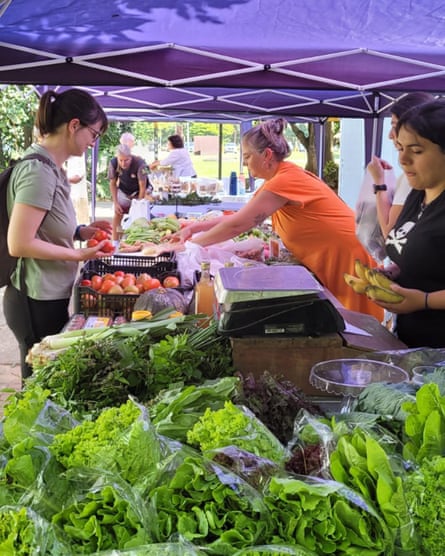
A stall with lettuce and vegetables
As well as selling fruit, vegetables and spices, the food fairs give hospital staff a chance to sample foods made from plant species unique to Brazil. Photograph: Núcleo ECCCo USP

In the eyes of Ana Duran, an epidemiologist and associate professor at the University of Campinas, the availability of UPFs in hospitals is troubling. “We’re using our money from the national health system to buy ultra-processed foods,” she says. “It shouldn’t be something that we accept.”

Yet it’s also a complex problem to address. Transitioning to freshly grown foods requires building hospital kitchens, investing in cold storage, creating transportation networks to deliver the food from farms, and running educational programmes to explain the benefits to overworked staff and bemused patients. Some of this has already begun, but it remains a work in progress. “Change is gradual, and as more local foods become part of the purchasing plan, fewer ultra-processed foods will be needed to compose patients’ diets,” says Barrios.

The idea has now gained political backing in other states. Speaking at the recent Partnership for Healthy Cities conference held in Rio de Janeiro, Daniel Soranz, the secretary of health for Rio de Janeiro, said that the city is aiming to completely eliminate processed foods in all of its hospitals over the next eight years.

“From now on, we will hire people [to prepare on site], we will buy food – and as the contracts expire between hospitals and [outside contract] companies, we will replace with this new logic. In two years, 30% of our hospitals will no longer use ultra-processed food,” Soranz says.
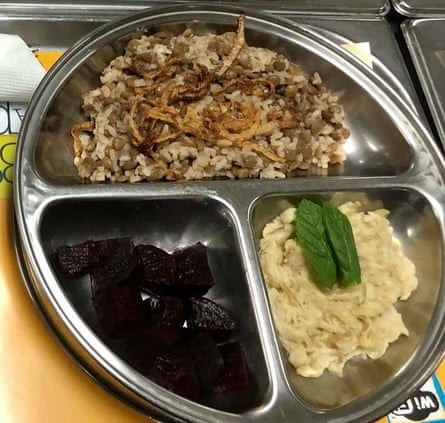
A metal tray divided into three parts, with rice in the top section and sliced beetroot in one, and hummus topped with a garnish in another.
Moujaddara, a dish of lentils and rice, served with hummus and beetroot at Hayek hospital in Sin El Fil, Lebanon. Photograph: Hayek hospital

Such measures could soon be enshrined in federal law. A new bill prohibiting the offering of UPFs in hospital meals is working its way through the senate.

While hospitals in other countries, such as Hayek hospital in Beirut, Lebanon, have replaced UPFs with a plant-based diet, this would represent one of the first examples of such a policy being implemented on a national scale. Doing so would require overcoming immense logistical challenges, quelling opposition from the food industry and winning over the public.

But there are reasons to be optimistic. Over the last few years, Brazil has already implemented one world-leading food policy, which is drastically reshaping the nutritional intake of the nation’s children.

Beginning in 2020, both federal and local governments progressively enforced increasingly stringent restrictions on the availability of UPFs in schools – a new law introduced last year requires 45% of school funding to be used for purchasing food from local farmers. As of 2026, UPFs must comprise no more than 10% of any school menu, while in Rio de Janeiro and the state of Ceará, their use has been completely banned.

A few years ago, the standard meals at EDI Gabriela Mistral primary school featured packaged cookies and bread, along with ready-made chocolate milk. Now, according to Marluce Fortunato, who coordinates the Brazilian National School Feeding Program (PNAE) in Rio, pupils are fed a mixture of rice and beans, fruit, oatmeal and homemade bread. “We have a vendor who comes and cooks the bread on site, and it’s served to the whole network of schools [in Rio],” says Fortunato.

As with hospitals, the move was not universally popular. Renata Couto, executive director of the Desiderata Institute, a non-profit dedicated to tackling child obesity in Brazil, describes conversations with school principals concerned about the costs and practicalities of storing fresh food for several days.

A woman in a green t-shirt kneels on the ground by rows of plants, with a line of children next to her.
Laura Ribeiro, an educator at the EDI Gabriela Mistral School teaches students about the importance of nature, food and ecology. Photograph: EDI Gabriela Mistral

According to Duran, school cooks argued that children would refuse to eat anything that didn’t have the palatability and intense flavours they were accustomed to – an outcome the UK is currently grappling with as it tries to transition to healthier school meals. Surprisingly, the most intense opposition came from parents themselves, who were concerned that healthier school meals would create expectations of healthy food at home.

Duran’s explanation is that the marketing, easy availability and low cost of UPFs have seen them become entrenched in the minds of parents as an everyday solution. “We’ve heard a lot of mothers saying: ‘I don’t have time to cook and create meals,’” she says.

Couto believes that perceptions in Brazil that being overweight is a positive thing for child health are also playing a part. “Brazil has a recent history of hunger and malnutrition,” she says. “So while obesity is a major public health issue, people can’t see the urgency.”

But despite the pushback, there are already positive signs. Duran’s research suggests that children who attend schools that comply with the regulations are more likely to consume fewer UPFs overall, even at home. While it’s still too soon to know whether this is beginning to improve child health, Soranz says that officials in Rio will commence an initial assessment later this year.

A woman with curly hair sits at a microphone.
Paula Johns of ACT Health Promotion. Photograph: ACT

According to Carlos Monteiro, the nutrition professor at the University of São Paulo who coined the term ultra-processed foods in the early 2000s, it has arisen out of necessity. Brazil was grappling with a rising tide of diet-related chronic diseases, with a study revealing that the numbers of overweight five- to nine-year-olds had risen from 13.4% in 1989 to 33.4% in 2008.

“My colleagues and I were observing this transformation in real time and trying to make sense of what traditional nutrient-based approaches could not fully explain,” says Monteiro.

Paula Johns, co-founder and director of the Rio-based non-profit ACT Health Promotion, believes that more can be done to reduce the consumption of UPFs among the Brazilian population. In particular she would like to restrict their marketing, but implementing this would be highly politically challenging as it would have an impact on the profits of many industries – television networks, advertising agencies and newspapers all receive a considerable portion of their income from food adverts.

“It’s a huge market,” Johns says. “No one’s advertising broccoli. Our ambition would be for any ultra-processed food to have marketing restrictions – that would be our gold standard. But it would require a very strong parliamentarian [to get such a bill passed] – a powerful one that has a lot of influence in congress. So far we haven’t really found a champion that could take it.”

Instead Johns and others are hoping to further limit the exposure of children to UPFs through other means. Couto’s organisation is attempting to force through a law in Niterói, a municipality adjacent to Rio, which would prohibit any UPFs from being exhibited on supermarket shelves below a height of 1.5 metres.

“They are always at children’s eye level, and there’s a reason for that,” she says. “To create a healthy food environment, we have to push back against all of this manipulation. Why don’t they expose fresh fruit in these shelves?”

As with Brazil’s schools and now hospitals, she is not anticipating that it will be easy, but she believes it’s another step which can make a big difference to public health.

“We’re starting in Niterói because it’s a small city,” she says. “And then if we can get it approved, we can move to Rio, and say: ‘How come the capital of the state hasn’t approved this yet?’ Politicians and governors have pride – they want to keep up with the latest policies. Vanity is something that we have to use.”