







The bombing began the morning after Vadym Lietunov arrived on the frontline. It went on for six or seven hours each day. The Russians hit the dugout where he was sheltering with kamikaze drones and mortars. After every strike, Lietunov and another Ukrainian soldier, Sasha, repaired the damage, extinguishing fires with bottles of urine and shoving clay-filled sacks back into position. “The enemy knew we were there. It was trying to kill us,” he said.
In late February Russian drone operators tried a new tactic. They sent in a Molniya drone carrying an anti-tank mine. It exploded next to the entrance, leaving the two soldiers concussed and shaking. There were several similar attacks before Lietunov heard an ominous buzz. This time, a mine fell on top of their foxhole. “I look up and we’ve got no roof. It blew everything up,” he recalled.
The blast tore off Sasha’s legs. “I’m fading,” he said. Lietunov realised that a second drone would soon finish off both of them. He tried to dig Sasha out but realised he was dead and scrambled to the surface. Adrenaline pumping and still in his socks, Lietunov started running in the direction of other Ukrainian soldiers. He kept going and spotted a fortified position among the trees. A blanket covered a doorway.
“I started shouting. I thought my guys were inside. Then I heard a rustling. I went into the dugout and saw a bloke in uniform aiming an automatic rifle at me,” he said. “I told him I was with such and such a brigade and had been bombed. The bloke said: ‘Come inside.’ Well, I went in. And then I heard his accent. He was Russian,” Lietunov said. “I said: ‘You are not one of us, are you? Please don’t kill me.’”
Over the next two weeks a surreal and astonishing story of wartime survival took place underground, as the two soldiers got to know each other. Russian and Ukrainian soldiers rarely sit and talk during their long and bitter war. As drones fly further and the kill zone gets bigger, stretching 25km in both directions, there is little direct contact or gunfire. Virtually all injuries and deaths are caused by remote explosions.
The Russian soldier, Nikita, ordered Lietunov into a tiny underground chamber, telling him: “You are unarmed. I won’t shoot you.” He showed the Ukrainian a Christian cross he had made from two wooden planks. Written on it were the words “save and protect”. His captor said he would let him go the next morning. He didn’t. Lyetunov awaited a bullet at any moment.
The Ukrainian – a 34-year-old corporal from the southern city of Odesa – realised his only chance of survival was to manipulate his captor. As a teenager he had read books on psychology, and Nikita, he discovered, was a drug addict and petty criminal who had been freed from jail to fight in Ukraine. He ran away from battle, got captured and was sent back to the front. His commander, a Chechen, barked commands from a radio.
Nikita told Lietunov to strip and searched his clothes and belt in the hope of finding drugs, believing Kremlin propaganda that Ukrainian servicemen were “narco-maniacs” fitted with secret GPS trackers. On the walls of the dugout were pasted letters from Russian schoolchildren. All were identical.
He insisted Russia’s army was the best in the world but in reality, Nikita was cold, hungry and alone. Once a day a Mavic drone dropped 250 grams of rations: a packet of porridge, jam and a small bottle of water.
He suffered from extreme mood swings. “He would turn into a maniac, put a gun to my forehead and say: ‘I’m going to kill you right now,’” Lietunov recalled. “I started praying […] then there is silence. I hear him put the gun down to one side. He just changed his mind in a second. How can I explain it?”
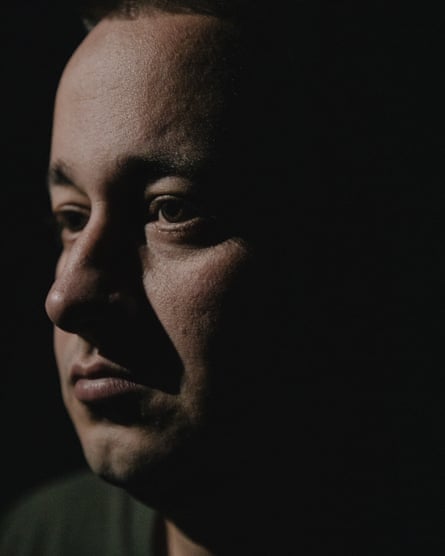
Lietunov decided to play dumb. “I could see Nikita was a bit thick but I gave the impression I was the stupid one. I could have run away but I didn’t so he would trust me more,” he said. Lyetunov said he “started to lose it” when one of his toes went black with gangrene and asked Nikita to shoot him outside so his body would be seen and returned to his family. “He got angry and refused. He was afraid to go out because he knew it was dangerous,” the Ukrainian explained.
Meanwhile, Lietunov’s brigade – the 118th – thought he was most likely dead. His commander broke the news to his mother, Mariia, and said it was “95% certain” her son wouldn’t come back. She fainted. “My mother is small and frail. She just froze up completely,” he said.
By contrast Lietunov’s wife, Alesya – the couple have a five-year-old son, Andriy – believed he was still alive. Her husband was an experienced fighter who signed up with the army hours after Vladimir Putin’s February 2022 invasion, served in an air defence platoon and taken part in the liberation of Kherson. She continued to send him messages via Telegram.
Inside the shelter, Nikita gave his prisoner one square of chocolate a day and a bottle cap of water. The Russian started complaining about his miserable conditions: the lack of food, and the fact that he and his fellow soldiers were forced to collect rainwater and “drink their own piss”. “One morning he said to me: ‘Maybe I should surrender to you?’” Lyetunov said. “I replied: ‘No need.’ But I told him the terms were good: three meals a day, cigarettes, the Geneva convention.”
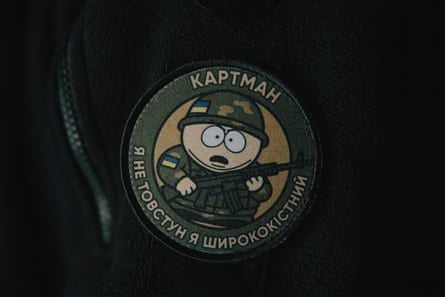
This conversation happened five times, Lietunov said. “Then one day we ran out of water. Nikita was really thirsty and said: ‘I know a spot.’ We went out in the fog and heard a drone buzzing above us. It was Ukrainian. We hung a sign next to a tree. It had my call-sign on it – Cartman [from the cartoon South Park] – and brigade number. I got down on my knees, pointed to the sign, and called out that I was a Ukrainian dude.”
But his brigade assumed both were Russians and sent another drone to kill them; it crashed. A second kill drone was cancelled only after the commander pulled up Lietunov’s social media accounts and realised the emaciated figure was their lost comrade. Half an hour later another drone appeared. “I thought: ‘Either this is bang right now, the end, or the start of a new life,’” he recalled.
A radio then fell from the drone. “I told them about Nikita and they started asking questions,” Lietunov said. “I tried to hint that they should stop, that I’m the prisoner, not him, and that my life depends on his mood. We ordered food and water straight away.”
A drone dropped four boil-in-the-bag meals. He told Nikita he was unable to swallow and gave him his share. “Was this manipulation again? Yes. He’d told me that when he was full he was kind,” he explained. There were further deliveries of “nasty” cigarettes. Meanwhile, a Russian drone delivered a booby-trapped bomb – a log with TNT hidden inside. Nikita was ordered to place it in the forest.
Up until the last moment, Lietunov said he was unsure if Nikita would actually surrender, or blow him and the dugout up. One Friday fog rolled into their position and a Ukrainian armoured vehicle suddenly appeared. The two men jumped in the back, Lietunov still bootless. “I didn’t believe until the last moment I would get out of there,” he said.
Previously Nikita has suggested he might try to capture the Ukrainian vehicle and drive it back to his base. In the end, he meekly surrendered and destroyed his phone. When they arrived at the brigade’s HQ, Lietunov said his “people” hugged and congratulated him, amazed at his return. He told his senior officer he had promised the Russian he would be well treated.
Lietunov said the Kremlin had successfully brainwashed Russian soldiers, convincing them they were fighting “fascists” paid for by the US and Europe and did not understand Ukrainians were defending their homeland.
Nikita was given coffee, adding condensed milk and six spoonfuls of sugar. Two hours later Ukraine’s SBU security service came and took him away. He is likely to be swapped for Ukrainian prisoners of war. Typically, returning Russians are sent back immediately to the frontline. Lietunov had lost a toe and is now on crutches, receiving treatment at a rehabilitation centre after being reunited with his family in Odesa.
He said he had been extremely lucky to survive. “It’s a miracle. A one-in-a-million chance, they tell me. I was a prisoner. But in the end I came out with a prisoner, the other way round. It’s rare.”