





As Stephen King points out, compiling a list of the greatest novels of all time is an impossible task. King is one of more than 170 novelists, critics and academics the Guardian polled for their top 10, ranked in order, which we tallied to compile an overall 100. But, as he argued, 10 books is “not enough!” On King’s list there is, he’s sorry to say, “not a single Dickens”; he wishes he’d found space for David Copperfield or Oliver Twist.
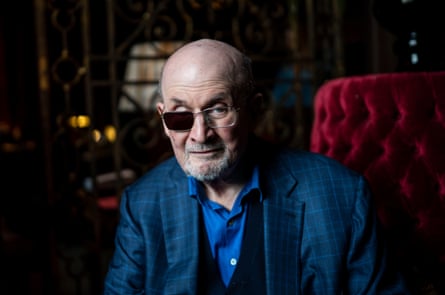
One Day author David Nicholls’s choices are “definitely skewed towards novels I read at an impressionable age”, he says. Bernardine Evaristo listed “some of my all‑time favourites, including several classics of the past 100 years”. Salman Rushdie, Anne Enright, Yiyun Li, Elif Shafak, Ian McEwan, Maggie O’Farrell, Colm Tóibín, Lorrie Moore, Katherine Rundell and many more have all cast their votes.
Never has such a list been more needed. Dwindling attention spans, screens, Netflix; whatever we blame, reading for pleasure is a dying pursuit. Half of adults in the UK say they never read, and levels among children and young people are at their lowest in 20 years. This year has been declared the National Year of Reading to address this crisis. “Read the best books first, or you may not have a chance to read them at all,” Henry David Thoreau advised. We are here to help.
“Lists procreate; they give rise to other lists,” Margaret Atwood observed. In 2003, the Observer’s then literary editor Robert McCrum compiled a list of the 100 greatest novels of all time, itself inspired by the BBC’s Big Read earlier that year, which asked the nation to choose its favourite novels. McCrum’s more informal polling – “roaming the office for a week and buttonholing colleagues about their favourite fiction” – resulted in a list that was, as he admitted, “partial and highly personal”. But it got people talking about books. So he repeated the exercise again in 2015, this time limiting his choice to novels written in English, by which time social media had arrived to amplify the debate.
Our list includes any book published in English, but originally written in any language. It is still partial – all lists are. Neither can we make a claim to being definitive – this is literature, not science. Is the best novel one that changes the genre, society or the individual? One that captures the zeitgeist, or has an afterlife far beyond its pages. Or a novel that scorches itself so deeply into your soul you can remember exactly when and where you were when you first read it? None of these criteria on their own is enough. My Proustian madeleine will be your raw potato. My Mrs Dalloway your Mrs Bridge. But we hope that in asking those who devote their days to the craft and understanding of fiction from around the globe, the result is as authoritative, ambitious and far-reaching as possible.
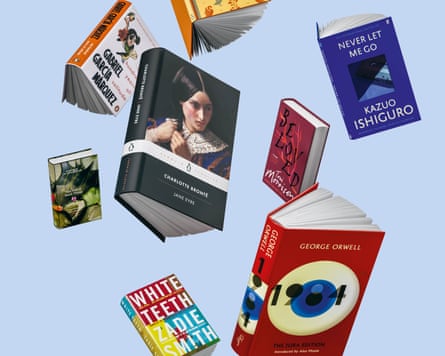
The most striking difference between this list and its predecessors is an increase in female writers: 36 out of 100 compared with 21 in 2015 and a paltry 16 in 2003, with only Jane Austen’s Emma and Mary Shelley’s Frankenstein in the top 10 of both previous lists. The number of women rises as the decades go by; half of the contemporary writers are female. This might not announce the decline of the great white male, but it does signal a much-needed reset.
Spoiler alert: top spot goes to George Eliot’s Middlemarch, a vast cathedral of a novel taking in love, faith, friendship, betrayal, science, politics, morality and power, but never losing sight of its provincial inhabitants. As one of our panellists wrote, “anyone who reads this novel cannot come out of it unchanged”. Virginia Woolf famously declared it “one of the few English novels written for grown-up people”. OK, it is not as obviously passionate as Wuthering Heights (it is never going to have a soundtrack by Charli xcx), at No 20 on our list, or as fun as Pride and Prejudice (at nine). But all human life is here.
Another undisputed masterpiece is Toni Morrison’s 1987 novel Beloved at No 2. Just as Eliot wanted to make the lives of ordinary people real, so Morrison set out to make personal the experience of enslaved people. Beloved confirmed her as the great American novelist of her time. This devastating novel will haunt you for life.
Woolf is the surprise winner of our list, coming in at No 4 with To the Lighthouse, just after her arch‑rival James Joyce and his modernist epic Ulysses. With five novels on the list, she is the most voted for writer – beating even Austen and Dickens, with four each. Everyone loves Aunt Jane, but snobby Virginia was always a harder sell. Who could resist Mrs Dalloway’s Clarissa stepping out to buy flowers, though: “What a lark! What a plunge!” Great to see the mercurial Orlando and The Waves in there, too. Bluestockings, rejoice!
In Search of Lost Time at No 5 (a whopping seven volumes and 4,000 pages), War and Peace, Bleak House, Moby-Dick, Tristram Shandy; many of the leviathans are here – and that’s just the top 20. This is not a list for the literary faint-hearted. The top end is indisputably canon‑heavy (but the 2015 list had that famous page‑turner The Pilgrim’s Progress in first place). Thank goodness for F Scott Fitzgerald’s slender American masterpiece The Great Gatsby – a shot of perfection at No 11.
Salman Rushdie is the highest-ranking living author with Midnight’s Children, his 1981 magical realist tour de force opening on the eve of Indian independence (it was awarded the Booker of Bookers in 1993 and recognised again in a public vote in 2008). Nobel laureate Kazuo Ishiguro follows with the much more restrained but immaculately executed The Remains of the Day. Han Kang, the first Korean writer to be awarded the Nobel, is in for her disquieting cult novel The Vegetarian.
Hilary Mantel’s monumental fictional reimagining of Thomas Cromwell in Wolf Hall had to be there. As did Atwood’s horribly prescient The Handmaid’s Tale, climbing up the list, no doubt helped by the hit TV series and world events; so did the numinous Marilynne Robinson, whose fans include Barack Obama, with Housekeeping. And what joy to see Elena Ferrante’s My Brilliant Friend, the first in her Neapolitan quartet about two girls, which transports the reader so powerfully into its world you can almost smell the streets of Naples. It wasn’t No 1 in the New York Times list of the 100 best books of the 21st century for nothing.
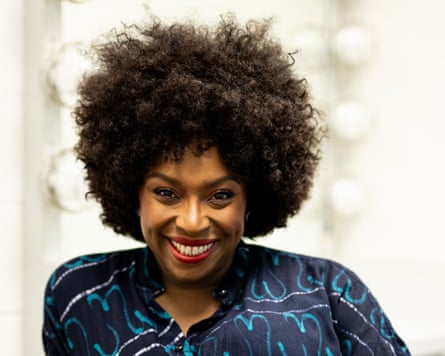
Chimamanda Ngozi Adichie’s Half of a Yellow Sun, a love story set against the Biafran war, was voted the Women’s prize “winner of winners” in 2020, and affirmed the arrival of one of the most talented writers today. And while Zadie Smith may be dismissive of her precocious debut White Teeth (she called it “the literary equivalent of a hyperactive, ginger-haired tap-dancing 10-year-old”), critical opinion disagrees. Published in the earliest days of the new millennium, it heralded a fresh new era for British fiction.
Along with Morrison’s novels, other cornerstones of Black American literature including Ralph Ellison’s 1952 Invisible Man, James Baldwin’s Go Tell It on the Mountain and Zora Neale Hurston’s Their Eyes Were Watching God are joined by lesser-known works such as Edward P Jones’s Pulitzer prize-winning The Known World, set 20 years before the start of the civil war.
VS Naipaul’s 1961 A House for Mr Biswas is there, but so, too, is 1988’s Nervous Conditions, the first in a trilogy by Zimbabwean writer Tsitsi Dangarembga. The presence of Arundhati Roy’s debut, The God of Small Things, shows the impact it made on readers when it surprised everyone by beating established names to win the Booker in 1997.
As with all prize lists, the real fun is spotting who is out. Noticeably absent are the big beasts who stalked the late-20th century literary landscape in the US – Mailer, Updike, Roth – and their British descendants. Perhaps this reflects a post-#MeToo discomfort at so much female objectification, no matter how dazzling the prose. However, the morally contentious Lolita by Vladimir Nabokov, long hailed the supreme stylist of English prose, survives even the toxic endorsement of Jeffrey Epstein, who, we can safely assume, missed its dark ironies.
Updike, who succeeded in “giving the mundane its beautiful due”, will be missed by many. And as one born under the mark of Martin Amis, I can’t help but think there should be a place for an era-defining novel like Money. There’s a pang, too, for McEwan’s Atonement, which held me in its spell as fervently as LP Hartley’s 1953 The Go-Between (to which it owes a debt), which scrapes in at 99. Maybe these writers are just too recent: Amis only died in 2023, after all.
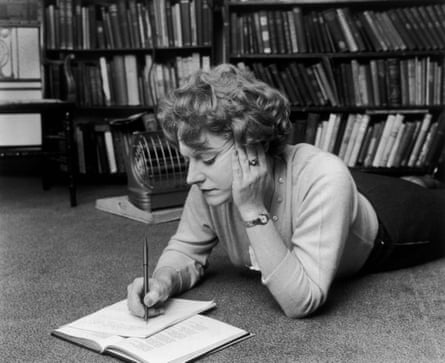
The same might be true of the now unfashionable postwar writers: there’s no CS Lewis, William Golding or Tolkien (The Lord of the Rings was the nation’s favourite in the BBC’s Big Read). No Angela Carter, Penelope Fitzgerald or Iris Murdoch. But this is bearable because Muriel Spark’s peerless The Prime of Miss Jean Brodie and Graham Greene’s The End of the Affair – two sticks of dynamite – both make the grade. As does Australian Shirley Hazzard’s The Transit of Venus, which took her 27 drafts, apparently, and may take as many readings to fully understand.
But where is Nancy Mitford’s glittering 1945 The Pursuit of Love, which deserves a place for its last two lines alone? The comic novel, like science fiction and crime, rarely fares well in bookish horse races. Patricia Highsmith makes the cut, but not John le Carré – or Stephen King, for that matter. Happily, for her devoted fans, Ursula K Le Guin is recognised for The Left Hand of Darkness, with which, according to the critic Harold Bloom, “Le Guin, more than Tolkien, has raised fantasy into high literature, for our time”. There are no children’s novels, either – no Wind in the Willows, Charlotte’s Web or Harry Potter. It is a very grown-up list.
“Best” demands not just excellence but supremacy, “surpassing all others” (OED). Is The Handmaid’s Tale better than Little Women (not in), both seminal feminist texts? Is The Color Purple better than To Kill a Mockingbird (another surprise omission)? Is David Copperfield better than The Catcher in the Rye (ditto)? Clearly there is no right answer.
Who might be on a list in 2036? A writer from the past who deserves more recognition – Nella Larsen, perhaps; someone who is rejuvenating the form for a modern readership – Sally Rooney, say; or those rewriting history from a different perspective, such as Colson Whitehead and Percival Everett. And perhaps an as yet unknown Mary Ann Evans (George Eliot’s real name), toiling over a Middlemarch for our century.
Until then, this is a list of the best novels of all time, chosen by many of the best writers of our time. I hope your favourites are here. Lists are designed to inspire and enrage. And if you hate them all, don’t blame me, blame David Nicholls or Stephen King.