








The Labour MP Tony Worthington, who has died aged 84, served as a minister in the Northern Ireland Office at a crucial time – in the run-up to the Good Friday agreement – and won widespread respect for his campaigning on behalf of victims suffering from asbestos-related diseases.
Having been an opposition spokesperson under Mo Mowlam, he was appointed to her ministerial team when Labour came to power in 1997, with community relations as part of his portfolio. With a personality that exuded calm reasonableness, Worthington was well qualified to earn trust in that role.
In the early months of the new government, he took through legislation that formally abolished internment without trial, describing this as “an important statement of political principle that does honour to the government and to this country”. He had responsibility for legislation to establish a Parades Commission, which brought order to a subject of perpetual conflict.
Although well regarded across the political spectrum in Northern Ireland, Worthington fell victim to Tony Blair’s first ministerial reshuffle in 1998 and served the rest of his time in the Commons on the backbenches as an active and effective campaigner on subjects to which he was deeply committed.
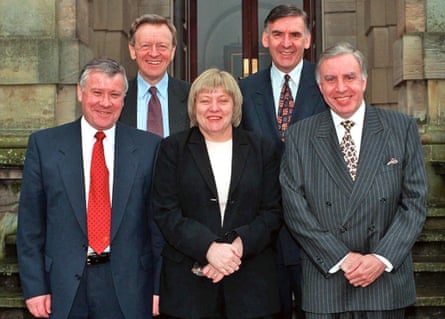
Prominent among these was his work on behalf of asbestos victims, which started as an issue in his Scottish consituency and developed into a national campaign. The shipbuilding history of the town of Clydebank, which formed the major part of Worthington’s constituency of Clydebank and Milngavie, had left thousands of workers suffering, or at risk, from the consequences of exposure to asbestos.
In 1992, this led to the creation of the Clydebank Asbestos Group, which became a national leader in campaigns for recognition of the material as the cause of these diseases as well as for compensation. Tony contributed to these over a long period as an MP and during his retirement. Significant changes in the law were secured as a result of these campaigns, in the teeth of resistance from companies that had used asbestos.
One particularly pernicious aspect was that social security payments had been reclaimed from any compensation received, even where the victims’ condition was terminal, often wiping out the value of any successful claim secured through long legal struggles.
The Clydebank group recalled that “Worthington was responsible for the [issue of the] recovery of benefits taking on a national profile and this was the first time that a successful outcome for asbestos victims was achieved.”
Tony was the son of Monica (nee Wearden) and Malcolm Worthington, a shopkeeper. Born in Lemsford, Hertfordshire, he attended the City school, Lincoln, and graduated from the London School of Economics before gaining a master’s degree in education at Glasgow University.
From 1962 to 1966, he lectured in sociology at HM Borstal, Dover. He then taught in Sunderland – where he joined the Labour party – before making the move, in 1971, to Scotland as a lecturer at Jordanhill College of Education. Soon immersed in Labour politics, he was elected in 1974 to Strathclyde regional council, a powerful local authority which became a thorn in the side of the Thatcher government.
When Hugh McCartney, the veteran MP for Clydebank and Milngavie, retired before the 1987 election, Worthington was narrowly selected to replace him as candidate. His diligence made him a popular local MP and he held the seat through four general elections, with his share of the vote never falling below 50%.
Always an energetic campaigner, he struck lucky in 1989 when he came second in the private members’ ballot and introduced a right of reply bill that would have created a statutory Press Commission to replace the discredited Press Council, with powers to force newspapers to print corrections. It was blocked by the Conservatives after its second reading.
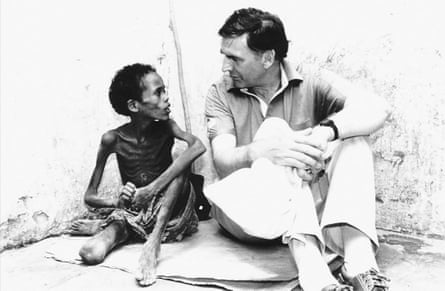
Worthington joined Labour’s frontbench in 1989, covering education and employment in the Scottish Office shadow team. John Smith moved him to overseas development. He pursued a particular commitment to the plight of Somalia as a strident critic of the west’s lack of commitment to relieving the famine which gripped the east African country.
In 1994, he was briefly detained by rebels in Somalia along with a Conservative MP, Mark Robinson, who had joined him on a fact-finding mission organised by ActionAid. This made headlines at home and drew the ire of Labour whips, who had not authorised the trip. Worthington resigned from his position but the following year was reinstated by Blair to the Northern Ireland team, becoming parliamentary under-secretary of state in 1997.
After leaving government, he chaired the all-party parliamentary group on overseas development for five years from 2000, and retired from the Commons in 2005. He remained extremely active as an international development consultant. “I went to work full-time on what I am thinking about full-time – the fulfilment of the millennium development goals and the ending of world poverty,” he explained.
In recent years, he suffered from vascular dementia, but this, too, became a campaigning challenge that he embraced with vigour. Involvement in Alzheimer Scotland, he said, did not only give him support “but allows me to play a part as Tony the former MP, not just Tony the person who has dementia. Helping drive policy and striving for change connects deeply to me. I find myself attending meetings, having structure to my life again and sharing my own experiences to help shape the future for someone else.”
Tony married Angela Oliver in 1966. She survives him, with their son, daughter and three grandchildren.