








As a giant glittering ferris wheel dissolves into a closeup of Michael Jackson’s face, legendary producer Quincy Jones explains to him that what people want is “pure escapism”. Michael, a new biopic about Jackson’s rise to fame directed by Antoine Fuqua, is certainly that: a fantastical greatest hits playlist scrubbed clean of the darkness that tarnished the singer’s reputation. The songs, which were licensed by Sony and the Jackson estate, remain glorious, transporting and indelible.
Michael is the latest addition to a new canon of authorised music biopics including films about and featuring the official music of Elton John, Aretha Franklin, Elvis Presley, Whitney Houston, Amy Winehouse, Bob Marley, Robbie Williams, Bob Dylan and Bruce Springsteen. The genre was revived by the success of the 2018 Freddie Mercury biopic Bohemian Rhapsody, which was made with Queen’s involvement and took home four Oscars and $911m at the box office. Never mind that it was dismissed by critics; the boost it gave to the band’s streaming figures set a new precedent for hungry estate holders keen to cash in – and to control the narrative.
Biopics are tasked with making sense of creative choices in hindsight, of grafting on meaning. Sometimes it works well: A Complete Unknown smartly focuses on Bob Dylan’s folk music beginnings, a choice that allows it to tell a bigger story about celebrity, and the culture that was shifting around him. Springsteen: Deliver Me from Nowhere is about how the Boss’s 1982 album Nebraska was born from a low ebb: it suggests that inspiration does not materialise out of thin air, but that artists might have to search for what they want to say.
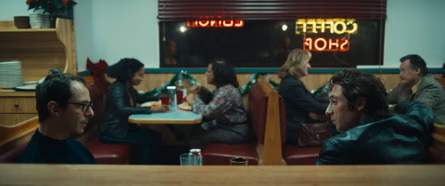
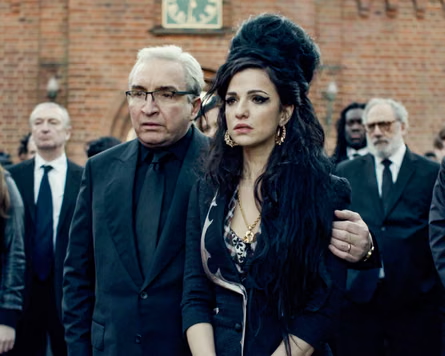
Then there are the less successful examples, such as Sam Taylor-Johnson’s Back to Black, which is built around scenarios described in Amy Winehouse’s much-loved second album of the same name. This narrative constraint ends up reducing the singer to her most tragic romantic relationship instead of looking at how that intersected with her craft. Its sympathetic portrayal of Winehouse’s father, Mitch, (who was depicted much less favourably in Asif Kapadia’s 2015 documentary Amy) may have something to do with the fact that he owns and manages her estate.
Estate-approved biopics such as Bohemian Rhapsody, Whitney Houston: I Wanna Dance with Somebody and now Michael are easy, ready-made IP for studios, full of familiar faces and uplifting musical moments. But it’s hard to avoid the fact that these films feel as if they obscure the complexity of the people at their centre: Mercury’s sexuality; the extent of Houston’s drug use. In doing so, they flatten the humanity that underpinned the controversies they’re trying to avoid. At their worst, they feel like blatant, even unethical, efforts to clean up artists’ legacies in order to extract the highest amount of money from audiences.
Michael tracks 20 years of Jackson’s life, slamming the history book shut well in advance of the multiple allegations of child sexual abuse that dogged him from 1993 and resurfaced after the 2019 documentary Leaving Neverland (which was removed from HBO’s streaming platform after the Jackson estate pursued legal action). It’s so allergic to making audiences consider Jackson’s desires – a strange choice given the sexuality of his breakout adult solo albums and of his dancing – that in scenes of the star’s personal life, the character is completely neutered, eating strawberry ice-cream, reading children’s books and watching classic movies at home with his mum. The film never questions this. A bolder director might have invited audiences to draw their own conclusions about the adult environments he was exposed to as a child star, or the maturity of the lyrics he was expected to sing as a kid. “His story continues” promises a title card at the end of the film, an understatement if there ever was one.
At this point, it’s obvious what certain estates and studios are getting out of their revisionist histories. It’s less clear for the fans. Hardcore admirers are likely to be riled by any historical inaccuracies inserted to add tension (such as the invented girlfriend character in the Springsteen film); casual fans of the biggest hits, curious about where they came from, are unlikely to find answers in formulaic montages of screaming fans and inspired studio sessions, or painstaking recreations of beloved music videos and famed stadium performances. If you like the music, you might get more nostalgic pleasure from pulling up a live performance on YouTube.
Audiences looking for deeper insights into their favourite artists – the spirit, conflicts and motivations that produced their defining works – should demand braver films. Elton John biopic Rocketman took flight into fittingly magical realist fantasias. A Complete Unknown was unafraid to make Dylan look like an arrogant prick and didn’t suffer for it. Even less flatteringly, Robbie Williams biopic Better Man cast the singer as a performing monkey. Directed by The Greatest Showman’s Michael Gracey and created with Williams’ involvement, it brilliantly utilised his extensive hits to explore darker themes such as the singer’s low self-esteem, addiction and daddy issues, resulting in an audacious, weird, moving film.
When Michael opens this weekend, it’s on track to make $150m, according to projections reported by Deadline. Its success comes nailed on. For now, the estate-sanctioned music biopic is too big to fail, no matter how they reduce history-defining iconoclasts to boilerplate stories of triumph and tragedy. In a way, they’re the perfect films for our time, when factual nitty-gritty doesn’t matter as much as the strength of the story you’re selling; when misinformation reigns and publicists exert more control than ever; when delicious, insubstantial cultural nostalgia puts contemporary and complex work in the shade.
Michael will probably do its job as an advert for Jackson’s back catalogue, and then be promptly forgotten. It’s ironic that so many of these biopics centred on musicians who changed culture will have next to no impact on it themselves.