

惯性聚合 高效追踪和阅读你感兴趣的博客、新闻、科技资讯
阅读原文 在惯性聚合中打开

推荐订阅源

Last Week in AI
Last Week in AI
D
DataBreaches.Net
腾讯CDC
Recent Announcements
有赞技术团队
有赞技术团队
A
About on SuperTechFans
Cyber Security Advisories - MS-ISAC
Google DeepMind News
Microsoft Security Blog
云风的 BLOG
云风的 BLOG
罗磊的独立博客
月光博客
月光博客
MyScale Blog
MyScale Blog
U
Unit 42
Martin Fowler
Martin Fowler
Stack Overflow Blog
Stack Overflow Blog
T
Tailwind CSS Blog
Engineering at Meta
Engineering at Meta
N
Netflix TechBlog - Medium
G
Google Developers Blog
博客园 - 【当耐特】
D
Docker
I
InfoQ
雷峰网
雷峰网

The Guardian

Rory McIlroy surges into six-shot Masters lead with stunning second-round flourish ‘That’ll be the end’: actor Sam Neill joins fight to stop controversial goldmine near his New Zealand vineyard Roberto De Zerbi targets ‘Ange-ball’ revival to save Spurs from relegation Bath hit back to reach semi-final after stunning Northampton in 11-try epic Secret Garden to Outcome: the week in rave reviews Zebras, wealth and power: Hungary’s election tests Orbán’s grip on power ‘TikTok effect’ brings sellout crowds and younger fans to Grand National meeting The war over Omagh’s gold: the £21bn mine plan tearing a community apart Britain’s shadow workforce is paid as little as 65p an hour. Who cares for the carers? From You, Me & Tuscany to Euphoria: your complete entertainment guide to the week ahead Six great reads: the man who let snakes bite him, masked heavy metal and the brutal reality for foreign students in the UK American Classic review – I defy you not to fall in love with Kevin Kline and Laura Linney’s tender comedy Cuba’s doctors were a lifeline for the world. Now the Caribbean is shamefully complicit in the US drive to expel them An environmental disaster in Moldova has Russia’s fingerprints all over it RMIT drops misconduct case against student who accused university of being ‘complicit in Gaza genocide’ Ichiro Suzuki statue unveiling goes awry as bronze bat snaps during ceremony Survivors of Epstein’s abuse accuse Melania Trump of ‘shifting burden’ on to victims European football: Real Madrid held at home by Girona to extend winless run Arne Slot insists he is ‘aligned’ with Liverpool board and fans as squad is rebuilt Kamala Harris ‘thinking about’ running for president again in 2028 JD Vance warns Iran against trying to ‘play’ the US in peace talks West Ham double up twice to thrash Wolves and put Spurs in relegation zone Trump administration releases new renderings of so-called ‘Arc de Trump’ Crispin Odey drops £79m libel claim against FT over sexual misconduct allegations Bafta apologises for events surrounding John Davidson’s Tourette’s outburst Cocktail of the week: Bar Shrimp’s la rosita – recipe New drug may extend survival in aggressive ovarian cancer, trial shows One dead and 27 injured after bus with British passengers crashes in Canary Islands Pope adds to Smith’s mass of Surrey runs with England woes a world away OpenAI CEO Sam Altman’s home targeted with molotov cocktail
Austria expels three Russian embassy staff after ‘forest ...
Jon Henley · 2026-05-04 · via The Guardian

Austria has expelled three Russian embassy staff on suspicion of spying after determining that a “forest of antennae” on the diplomatic mission in Vienna, Europe’s espionage capital since the cold war, was being be used for illicit data collection.

“It is unacceptable that diplomatic immunity be used to commit espionage,” Austria’s foreign minister, Beate Meinl-Reisinger, said on Monday. She added that the three embassy staff – whose expulsions bring the number of Russian diplomats sent home by Vienna to 14 since 2020 – had already left the country.

“We have communicated this to the Russian side in no uncertain terms, including as regards the forest of antennae at the Russian mission,” Meinl-Reisinger said. Spying was a problem for Austria, she continued, but the government had embarked on a “change of course” and was “taking consistent action”.

Austria’s foreign minister, Beate Meinl-Reisinger, attends a press conference in Vienna last week
Austria’s foreign minister, Beate Meinl-Reisinger, said spying was a problem for the country. Photograph: Lisa Leutner/Reuters

The Russian embassy in Vienna described the decision as “outrageous”, “unjustified”, “politically motivated” and “categorically unacceptable”. It promised “harsh” retaliation in return.

According to a report by the Austrian public broadcaster ORF, data from international and national organisations using satellite internet was being systematically siphoned off by equipment installed on the roofs of the embassy and diplomatic compound.
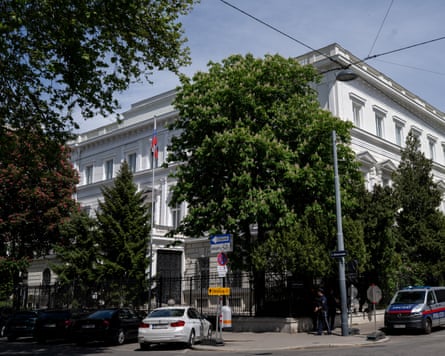
An outside shot to the Russian embassy in Vienna.
Austria said a ‘forest of antennae’ on the Russian embassy in Vienna was being be used for illicit data collection. Photograph: Joe Klamar/AFP/Getty Images

Leading multilateral institutions hosted by Vienna include the Organization of the Petroleum Exporting Countries, the International Atomic Energy Agency, and the Organization for Security and Co-operation in Europe.

The Austrian government has promised to take steps to tackle its longstanding espionage problem by closing a loophole in Austria’s criminal code that in effect allows spies to operate freely in the country as long as their activities are not directly targeting Austria’s interests.

View of a Moving Chain Swing Ride at Dusk, Prater Amusement Park, Vienna
A ride at Prater amusement park in Vienna. A loophole in Austria’s criminal code has made the city an international espionage hub. Photograph: George Oze/Alamy

The loophole has made Vienna an international espionage hub, with estimates putting the number of secret agents among the city’s 17,000 accredited diplomats as high as 7,000 and many foreign embassies believed to base their European undercover activities in the Austrian capital.

“The very limited legal options available to counter espionage lead to an extremely high incidence of foreign intelligence and secret services in the country,” the now former Austrian domestic intelligence agency the BVT acknowledged in one of its annual reports.
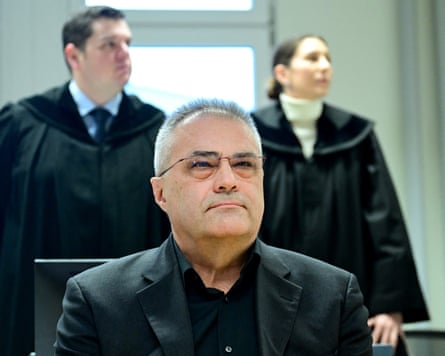
Former Austrian intelligence official Egisto Ott sits with his lawyers Anna Mair and Michael Ofner (L) behind him in the courtroom at the start of his tria in Vienna in January 2026
Egisto Ott is accused of having handed information to Russian intelligence officers. Photograph: Roland Schlager/APA/AFP/Getty Images

Pressure has been growing for a crackdown since the arrest in 2024 of Egisto Ott, a former Austrian counter-espionage official who went on trial last January accused of having handed information to Russian intelligence officers in one of the country’s biggest spy cases in decades.

Austria’s three-party coalition government of the conservative People’s party (ÖVP), Social Democrats (SPÖ), and the Meinl-Reisinger’s liberals (Neos) has reportedly drafted legislation that would make it illegal to spy against the EU and Vienna-based international organisations and expand the list of activities characterised as espionage against Austria.

Ott, 63, who ran multiple undercover agents, is accused of helping Russia hunt down opponents of Vladimir Putin and selling government phones and secure laptops to Moscow at the behest of Jan Marsalek, the fugitive Austrian-born former chief operating officer of Wirecard, a collapsed German payments firm.
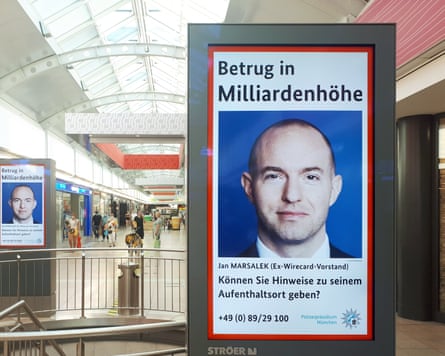
Posters of Interpol red notice for the fugitive Jan Marsalek in a shopping centre in Germany in 2020.
Posters of Interpol red notice for Jan Marsalek in a shopping centre in Germany in 2020. Photograph: Action Press/Rex/Shutterstock

Marsalek, who is thought to have fled Germany via Austria to Moscow, is believed to have been secretly working for Russian military intelligence for a decade. His alleged spying operations include running a ring of Bulgarians in London – three of whom were convicted by a UK court last year.

Prosecutors accuse Ott, who worked for the BVT until its dissolution in 2021, of making unauthorised searches in police and other databases to locate people Moscow was hunting for, as well as handing over mobile phones and a laptop containing sensitive government and personal data to Russian intelligence. He has denied all charges.