






An influential government adviser close to Keir Starmer and Rachel Reeves held 16 undisclosed meetings with top US tech executives, the Guardian can reveal.
The No 10 business aide Varun Chandra discussed regulatory changes, AI and Donald Trump’s second administration with tech corporations during confidential meetings between October 2024 and October 2025. In one meeting he offered to help a top executive meet the prime minister directly.
Chandra’s dealings with six major technology companies – Google, Microsoft, Amazon, Oracle, Apple and Meta – took place as the government developed policies to secure investment from Silicon Valley, including multimillion-pound energy subsidies and preferential planning approval for datacentres in what ministers have called AI growth zones.
While largely unknown outside Westminster, Chandra, who ran a corporate intelligence firm founded by former British spies before joining government, is a central figure in Downing Street and is a key champion of the government’s push for economic growth.
Chandra’s role as chief business adviser to the prime minister was expanded this year to include the remit of US trade envoy, in which he offers advice on trade negotiations, including AI investment.
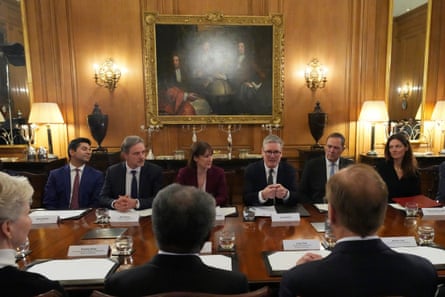
Unlike senior civil servants and ministers, political advisers do not have to declare their interactions with private firms and lobbyists although meetings are recorded by civil servants. It took 12 months to get confirmation of Chandra’s engagements under freedom of information rules.
The meeting logs obtained by the Guardian are the first glimpse into the working schedule of a powerful political operative who can link business executives to the prime minister and the chancellor. They raise questions about what a democracy campaigner described as “lobbying behind closed doors”.
A Downing Street spokesperson said Chandra had helped secure a UK-US trade deal as well as “record” inward investment from American companies. The spokesperson added: “Meeting businesses is a core and entirely expected part of the prime minister’s business adviser’s role.”
‘Removing barriers for businesses’
Chandra, who was appointed by Starmer shortly after Labour won the 2024 election, met 13 senior executives, including Siobhan Wilson, the top UK executive for Oracle, which was founded by the Trump ally Larry Ellison, and David Zapolsky, Amazon’s chief global affairs officer.
Redacted minutes of those meetings suggest Chandra agreed to help Wilson meet Starmer and prepared the ground for Starmer to meet the Amazon chief executive, Andy Jassy, who replaced the company’s founder, Jeff Bezos, in 2021.
Labour’s push for AI-driven growth was a frequent talking point. Executives from Meta, Microsoft and Oracle raised AI, datacentres and AI growth zones with Chandra.
The government believes promises by US tech firms to invest £150bn will turbocharge the UK economy. The Guardian found last month that many of the deals were “phantom investments”, with existing datacentres presented as new builds and a site earmarked for a supercomputer left undeveloped. OpenAI paused a multibillion-pound plan for a North Tyneside datacentre last month, blaming energy costs and regulation.
Regulatory reform was covered in at least four meetings. Meta’s vice-president, Joel Kaplan, a former Republican official who replaced the former Liberal Democrat leader Nick Clegg in the role, provided feedback to Chandra on the “UK regulatory landscape”.
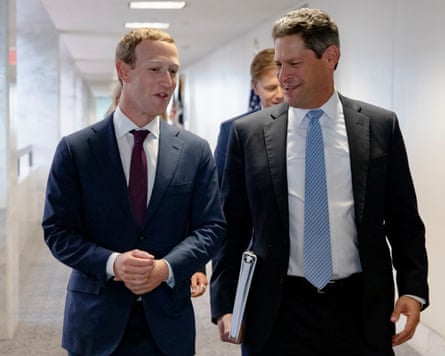
At the beginning of 2025, Chandra discussed the government’s “commitment to removing barriers for businesses” with three Apple executives including Matt Browne, who oversees the company’s relations with governments in Europe.
On the same day that Chandra met the Apple executives, the chancellor, Rachel Reeves, ordered business watchdogs to reduce anti-growth regulations as part of an overhaul reportedly inspired by the No 10 business aide. The shake-up led to the removal of the Competition and Markets Authority (CMA) chair, Marcus Bokkerink, who was preparing to use new powers to break up tech duopolies and monopolies.
Afterwards, Reeves said she had received positive feedback since “she got rid” of Bokkerink, adding: “Previously businesses, all the time – especially in tech – had been raising concerns about the CMA. That has changed a lot.”
Trump’s presidency came up in two meetings with the Microsoft vice-chair, Brad Smith. The pair discussed Trump’s priorities during a meeting at the exclusive gathering of political and business elites in Davos at the start of last year. Chandra then briefed Smith about Trump’s unprecedented second state visit to the UK.
Rose Zussman, a senior advocacy manager at the anti-corruption watchdog Transparency International, said the meetings should be treated as lobbying and raised serious questions about accountability: “Lobbying behind closed doors enables outside interests to influence our politics without public scrutiny.”
A rising star in government
Chandra is one of Labour’s best-connected business advisers, with a contact book few can match. His former firm Hakluyt does not disclose its client list but boasts that it advises some of the world’s largest corporations. He left the London-based company, which has been jokingly referred to as a retirement home for secret service agents, to join the government two years ago, but he still owns more than 300,000 shares in the company, according to accounts published on Companies House in April.
Starmer hired Chandra soon after his general election victory to deepen the party’s ties with corporate executives and international investors.
Chandra is highly regarded by Starmer, and his stock has risen further since he helped negotiate a trade deal with the Trump administration. He is one of the few survivors of the relentless internal upheavals in No 10 – and was even interviewed by the prime minister for the US ambassador vacancy. The job went to a career diplomat in the end but Starmer did reward Chandra with the additional role of trade envoy to the US.
Chandra’s links to the corporate world have sometimes led to controversy. He was criticised after it came to light he was involved in trying to find a private sector buyer for Thames Water even though Hakluyt was advising the company.
The Guardian submitted four freedom of information requests over 12 months asking for details of Chandra’s external meetings with the six top US tech companies.
The Cabinet Office refused to reveal if Chandra had held meetings with other companies, claiming the Guardian’s request for all his external meetings was “vexatious” requiring a “burdensome amount of resources” to answer.
Transparency International’s Zussman said it should not take multiple FoI requests to uncover who is trying to influence government decision-making. She said: “We need a comprehensive lobbying register that is fit for purpose, and for outside meetings with special advisers and other senior officials to be brought into the definition of lobbying activity.”
Chandra declined to comment, as did Google and Amazon. The other tech companies did not respond to the Guardian’s requests for comment.