


惯性聚合 高效追踪和阅读你感兴趣的博客、新闻、科技资讯
阅读原文 在惯性聚合中打开

推荐订阅源

G
Google Developers Blog
Google DeepMind News
Hugging Face - Blog
Hugging Face - Blog
D
Docker
F
Fortinet All Blogs
博客园 - 三生石上(FineUI控件)
Project Zero
Project Zero
Engineering at Meta
Engineering at Meta
J
Java Code Geeks
CTFtime.org: upcoming CTF events
Simon Willison's Weblog
S
Security Affairs
NISL@THU
NISL@THU
T
Tor Project blog
A
About on SuperTechFans
宝玉的分享
宝玉的分享
腾讯CDC
S
Schneier on Security
Cyber Security Advisories - MS-ISAC
P
Privacy & Cybersecurity Law Blog
cs.CL updates on arXiv.org
Stack Overflow Blog
Stack Overflow Blog
P
Privacy International News Feed
雷峰网
雷峰网
C
Cyber Attacks, Cyber Crime and Cyber Security
Vercel News
Vercel News
Cisco Talos Blog
Cisco Talos Blog
D
DataBreaches.Net
让小产品的独立变现更简单 - ezindie.com
Google Online Security Blog
Recorded Future
Recorded Future
L
LINUX DO - 热门话题
Microsoft Security Blog
Latest news
Latest news
C
Check Point Blog
有赞技术团队
有赞技术团队
T
The Exploit Database - CXSecurity.com
cs.AI updates on arXiv.org
云风的 BLOG
云风的 BLOG
SecWiki News
SecWiki News
Application and Cybersecurity Blog
爱范儿
爱范儿
月光博客
月光博客
V
Vulnerabilities – Threatpost
T
Threat Research - Cisco Blogs
P
Palo Alto Networks Blog
T
The Blog of Author Tim Ferriss
C
Cisco Blogs
Webroot Blog
Webroot Blog
S
Security @ Cisco Blogs

The Guardian

Rory McIlroy surges into six-shot Masters lead with stunning second-round flourish ‘That’ll be the end’: actor Sam Neill joins fight to stop controversial goldmine near his New Zealand vineyard Roberto De Zerbi targets ‘Ange-ball’ revival to save Spurs from relegation Bath hit back to reach semi-final after stunning Northampton in 11-try epic Secret Garden to Outcome: the week in rave reviews Zebras, wealth and power: Hungary’s election tests Orbán’s grip on power ‘TikTok effect’ brings sellout crowds and younger fans to Grand National meeting The war over Omagh’s gold: the £21bn mine plan tearing a community apart Britain’s shadow workforce is paid as little as 65p an hour. Who cares for the carers? From You, Me & Tuscany to Euphoria: your complete entertainment guide to the week ahead Six great reads: the man who let snakes bite him, masked heavy metal and the brutal reality for foreign students in the UK American Classic review – I defy you not to fall in love with Kevin Kline and Laura Linney’s tender comedy Cuba’s doctors were a lifeline for the world. Now the Caribbean is shamefully complicit in the US drive to expel them An environmental disaster in Moldova has Russia’s fingerprints all over it RMIT drops misconduct case against student who accused university of being ‘complicit in Gaza genocide’ Ichiro Suzuki statue unveiling goes awry as bronze bat snaps during ceremony Survivors of Epstein’s abuse accuse Melania Trump of ‘shifting burden’ on to victims European football: Real Madrid held at home by Girona to extend winless run Arne Slot insists he is ‘aligned’ with Liverpool board and fans as squad is rebuilt Kamala Harris ‘thinking about’ running for president again in 2028 JD Vance warns Iran against trying to ‘play’ the US in peace talks West Ham double up twice to thrash Wolves and put Spurs in relegation zone Trump administration releases new renderings of so-called ‘Arc de Trump’ Crispin Odey drops £79m libel claim against FT over sexual misconduct allegations Bafta apologises for events surrounding John Davidson’s Tourette’s outburst Cocktail of the week: Bar Shrimp’s la rosita – recipe New drug may extend survival in aggressive ovarian cancer, trial shows One dead and 27 injured after bus with British passengers crashes in Canary Islands Pope adds to Smith’s mass of Surrey runs with England woes a world away OpenAI CEO Sam Altman’s home targeted with molotov cocktail Reform UK local election candidate was twice disciplined by Tories over ‘racist comments’ Remaining in Nato is in best interests of US, says Keir Starmer Prince Harry sued for defamation by charity he co-founded Anthropic’s new AI tool has implications for us all – whether we can use it or not Concerns raised about motorbike tourist trail after death of British teenager in Vietnam The Guardian view on Trump’s civilisational threats: the words that fuel war must be condemned The Guardian view on dystopias for our times: the American nightmare Doctors’ leader claims new reduced pay offer killed chances of ending strikes in England Netanyahu-ism has achieved nothing for Israelis – and come at a monstrously high price Deborah Levy: ‘CS Lewis’s White Witch terrified me – but I wanted to meet her’ How I Shop with Michelle Ogundehin: ‘We grownups have enough stuff already’ Trump’s war and Melania’s Epstein statement, with US editor Betsy Reed – The Latest We have to stop killer motorists on Britain’s roads UK starts crackdown on EU citizens’ post-Brexit rights Londoners aren’t unfriendly – but don’t compare us to New Yorkers The religious right and the perversion of faith Artemis II images reignite moon mission memories Orbán and Magyar trade accusations in last days of Hungary election campaign Reckonwrong: How Long Has It Been? review | Safi Bugel's experimental album of the month Martin Rowson on Middle East peace talks – cartoon Masters magic, the Grand National and Premier League drama – follow with us Fears of UK and EU flight cancellations as airports warn of jet fuel shortages Reform’s petulance over slavery reparations shows it just doesn’t grasp Britain’s place in the modern world Peers vote to ban pornography depicting sex acts between stepfamily members Starbucks’s retail arm gets £13.7m tax credit even as sales increase Flyby review – interstellar musical is a voyage of epic strangeness Grand National preview: Jagwar can deny Irish cohort in Aintree classic Week in wildlife: an ostrich on the lam, a tortoise crossing a road and surfing seals Anger as swifts’ nesting holes in Derbyshire rail viaduct ‘blocked up’ Peter Mandelson faces fixed-penalty notice for urinating in public ‘There’s no shortage of terrifying technology’: how AI became TV drama’s new go-to villain ‘Fresher than anything in a shop’: the best recipe boxes and meal kits for time-poor foodies, tested Who was Hilma? Af Klint exhibition to highlight exclusion of women from abstract art Critics assemble! Here’s my list of the greatest superhero movies of all time US inflation soars in March as war on Iran drives economy into uncertainty Amazon to finally launch Leo satellite internet in ‘mid-2026’, says CEO Grand National 2026: horse-by-horse guide to all the runners Pete Hegseth’s holy war: the militant Christian theology animating the US attack on Iran Add to playlist: the beautifully dazed, countrified indie-rock of Tracey Nelson and the week’s best new tracks Not just about Gaza: the Muslim voters turning from Labour to the Greens ‘I’m worried there’s too much of me,’ says a birch: inside the interspecies council giving nature a voice Why is anyone surprised by the US and Israel’s latest war? It’s only what the world allowed them to do in Gaza Tori Amos review – fans hang on every note of this dramatic deep dive into her back catalogue Coachella 2026: Justin Bieber launches a major comeback in the desert Super Mario what?! The seven best obscure Mario games ‘An abomination’: the Lancashire town kicking up a stink over reopened landfill Pillion to Roofman: the seven best films to watch on TV this week Holly Humberstone: Cruel World review – Taylor Swift fave trades gothic melancholy for pop glow-up Thrash review – cursed shark thriller sinks like a stone on Netflix Gulf states rethink security in light of US-Israel war on Iran Go Gentle by Maria Semple review – a joyfully clever New York romcom Welcome to Y’all Street: bullish Dallas aims to steal New York’s financial crown Margo’s Got Money Troubles to Beef: the seven best shows to stream this week I baulked at the idea of ‘friction-maxxing’. But there’s more to it than meets the eye Reich: The Sextets album review – Colin Currie celebrates the minimalist master’s joy of six Benjamina Ebuehi’s sweet and salty chocolate chip cookies recipe Experience: my house was taken over by 70,000 bees Malcolm in the Middle: Life’s Still Unfair review – the TV magic they’ve created here is absolutely miraculous Lava bursts forth as Hawaii’s Kilauea volcano erupts Sonos review: Are these the best portable speakers that money can buy? I tested to find out Buy bread in the evening, hit the sales on a Tuesday: retail workers’ top tips to cut your shopping bill The best water flossers in the UK, tested for that dentist-clean feeling Where to start with: Muriel Spark You be the judge: should my girlfriend stop mixing gold and silver jewellery? The best carry-on luggage in the UK, tested on an assault course How games capture the awe and terror of cosmic isolation I never text back – and it’s ruining my relationships The pet I’ll never forget: Beau, the labrador who saved my life Life Is Strange: Reunion review – a decade-long story comes to an impassioned close Why is gaming becoming so expensive? The answer is found in AI
‘We can’t give up on Afghans’: Lyse Doucet on the remarkable ‘people’s history’ that won her the Women’s prize
Emma Loffhagen · 2026-06-12 · via The Guardian

Lyse Doucet first checked into Kabul’s Intercontinental Hotel on Christmas Day 1988, as Soviet troops were withdrawing from Afghanistan at the end of a decade-long occupation. She expected to stay briefly. Instead, she remained for almost a year, and the hotel became her first Afghan home.

More than three decades later, it became the subject of her first book, The Finest Hotel in Kabul, which has now won the Women’s prize for nonfiction. But while the prize recognises a remarkable work of reportage and history, the BBC’s chief international correspondent is more interested in what it might do for the country that inspired it.
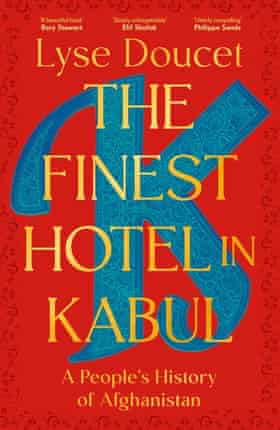
The Finest Hotel in Kabul – A People’s History of Afghanistan by Lyse Doucet
Photograph: PR

“Afghanistan has largely slipped from the headlines,” Doucet says. “Perhaps this win will bring some attention to the country. None of us should be ready to accept a situation in which we live in a world where there is a country where girls cannot be educated after they’re 16, where women cannot go to university, where women are barred from so many jobs. This is something we should all be angry about.”

Afghanistan was not ever thus. After nearly four decades reporting from the country, primarily for the BBC, Doucet, 67, has watched it pass through almost every political experiment of the modern era: Soviet-backed communism, civil war, Taliban rule, western-backed democracy, and now the Taliban again.

“I was conscious that Afghanistan has a very difficult and violent history,” Doucet says. “I needed to find something that would draw people in rather than push them away. I didn’t want people to close the book and say: ‘It’s too dark. It’s too bloody.’ So a hotel was a device to tell the story in a way people could recognise.”

The Intercontinental Hotel – known simply as the Intercon – offered the perfect lens to tell a people’s history of the country. Built by the British in the late 1960s, it was once a symbol of a different Afghanistan. In the 1960s and 70s, Kabul was known as the “Paris of the east”, a vibrant hub of fashion, jazz, miniskirts and apres-ski resorts. Afghan pop star Ahmad Zahir – known as the “Elvis of Afghanistan” – performed at the hotel; Gloria Gaynor was a guest. Foreign travellers passed through on the hippy trail.

As the following decades saw immense political upheaval, the Intercon remained open. “Politics, like hotel guests, checked in and out,” Doucet writes. “As Afghanistan lurched through decades of trial and terror, laced with bright but brief beginnings, the Intercon was an unbreakable constant.”
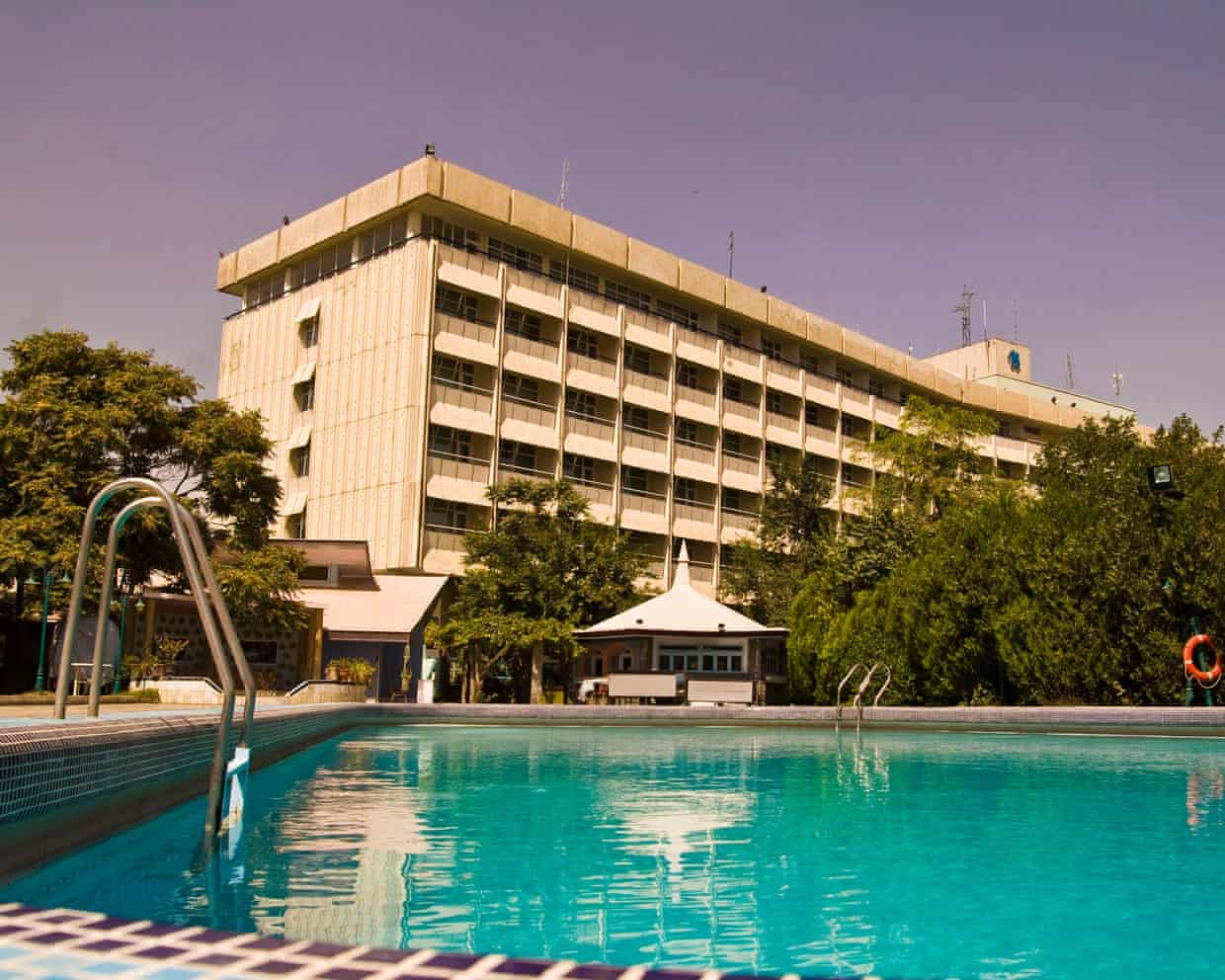
Intercontinental Hotel in Kabul.
‘Politics, like hotel guests, checked in and out’ … Intercontinental Hotel in Kabul. Photograph: Theodore Liasi/Alamy

The hotel staff who remained through those changes are at the heart of her story: Hazrat, the housekeeper who worked there from the hotel’s opening; Abida, the hotel’s first female chef; Amanullah, the engineer; and Malalai, one of the first female waiters.

“I have to pay tribute to the Afghans who helped me and spoke to me for the book, because in Afghanistan even sharing stories can have risks,” Doucet says.

Doucet began her career in journalism as a freelance reporter in west Africa for the BBC. She went on to cover conflicts across the world, eventually becoming chief international correspondent in 2012. Her book opens with the fall of Kabul in August 2021, and the disastrous American withdrawal, which remains one of the defining moments of Doucet’s career. She recalls watching the evacuation from the airport: military transport planes, helicopters and Afghans carrying only one bag as they fled.

“There was this fear at the end. People kept talking about Vietnam – that image of the people clinging to the last helicopter rising from the roof of the embassy in Saigon,” she says. “In fact, it was a hundred times worse – Afghans racing to the airport, clinging to the underbelly of planes. It’s been a really traumatising experience.”

Since returning to power, the Taliban have systematically erased women from public life through a series of draconian measures. Girls have been entirely banned from secondary education and university, women have been forced out of many workplaces and banned from public spaces, and strict adherence to the burqa is required. Last month, an official decree was passed effectively legally recognising child marriage. And just this week, a rare protest that erupted in the western city of Herat against arrests of women accused of violating hijab rules ended with two people killed, including a child.
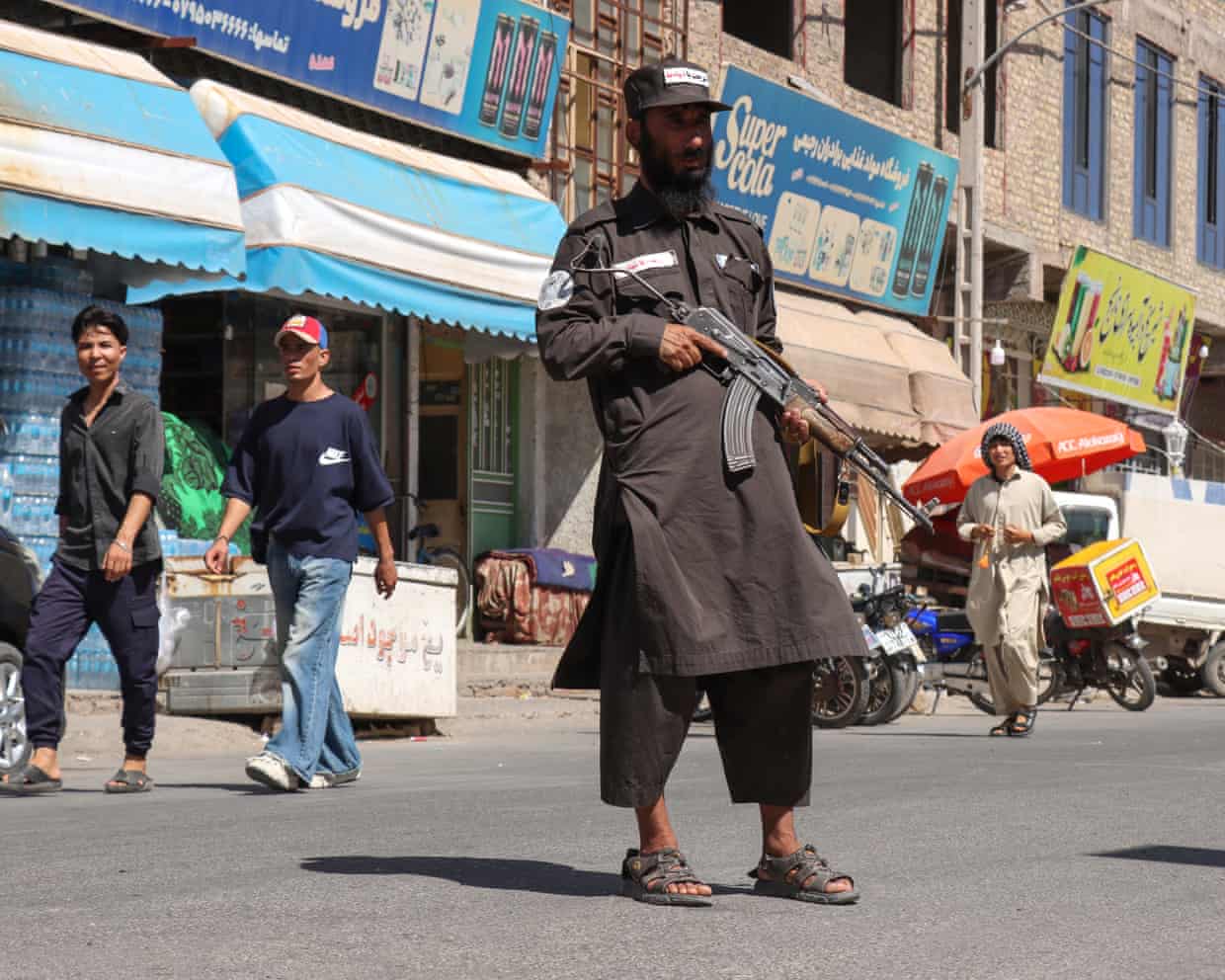
A member of Taliban security stands guard outside a mosque in Shahrak-e-Almahdi, Jebrail district of Herat province yesterday.
A member of Taliban security stands guard outside a mosque in Shahrak-e-Almahdi, Jebrail district of Herat province yesterday. Photograph: Mohsen Karimi/AFP/Getty Images

“Five years in and it is getting worse. It is a stain on our world,” Doucet says. “But the courage of Afghan women is extraordinary.”

Doucet is also frustrated that the barriers facing Afghan women go beyond those inside the country. “There are Afghan women getting scholarships, but there are no visas now to allow Afghan women to come and study in Britain and in many other places,” she says. “They are meeting obstacles everywhere. We live very privileged lives here, and it’s not our privilege to give up on Afghans.

“People who were somebody in Afghanistan – activists, world-class journalists – find themselves having to start again from scratch,” she continues. “It’s something none of us would want to do.”

Doucet believes, though, that the world must be careful not to dismiss the achievements of the post-2001 period. “People often say: what did 20 years of international engagement achieve? Was it all for nothing? I always say it wasn’t for nothing. There were many mistakes, but that period helped create the most educated, the most connected generation in Afghan history,” she says. “When you see girls saying: ‘I want to get online, can you help me get a scholarship, can you help me get some kind of education?’ … They know their rights now.”

This month, for the first time, the EU is preparing talks with Taliban representatives in Brussels, despite concerns that engagement risks legitimising a bloody and despotic regime. Doucet is cautious about prescribing a solution.

“I’m a BBC journalist,” Doucet says. “My job is to explain, not advocate. But [some] mediators would say that it’s better to negotiate than isolate. The only change is going to have to come from within the Taliban.”

For now, there is little sign of change in the country. But Doucet is reluctant to surrender the quality Afghans themselves prize above all others.

“Afghans always used to say: the last to die is hope,” she says. “Afghanistan has possibly lived through every political system the world has tried – the thread through Afghan history is that nothing lasts for ever.”