







A rise in borrowing costs and warnings to avoid a “Liz Truss moment”. As Keir Starmer faces a potential leadership challenge, the spectre of the bond market looms large.
Amid febrile conditions in Westminster, the prospect of Britain switching prime ministers for a sixth time in seven years has fuelled a sharp sell-off in the market for UK government debt.
As Starmer’s grip on power appeared to be slipping away, the yield – in effect the interest rate – on 30-year government bonds, or gilts, briefly reached 5.8% on Tuesday, the highest level since 1998, before slipping back after a challenge failed to immediately materialise.
However, selling pressure has been maintained on the UK government’s bonds relative to its G7 peers, with investors fearing a return to political instability in Britain and a leftwing shift by Labour involving higher levels of borrowing.
“The markets hate uncertainty, but they hate a political vacuum even more,” said Nigel Green, the chief executive of deVere Group. “A cabinet resignation followed by a leadership fight would signal that the government is losing control of itself while investors are already questioning the country’s fiscal direction.
“Markets can cope with ideology of any stripe if it is disciplined and coherent. They recoil from programmes that imply materially higher borrowing without a credible growth engine.”
Within Labour ranks many MPs are sanguine, reflecting frustration at a tight approach to tax and spending under Starmer, despite the party’s plunging poll ratings and dire showing in elections across Britain last week.
The prime minister’s allies have sought to argue that avoiding bond market provocation should be reason enough to save him. Others appear willing to put the City’s warnings to the test.
The Merseyside MP Paula Barker, an ally of Andy Burnham, has suggested financial markets would “have to fall into line” should the Greater Manchester mayor find a route to Downing Street.
Meanwhile, the leftwing grandee Diane Abbott suggested that MPs “might as well go home” if bond market considerations trumped other priorities.
Investors, however, warn that a contest ignoring the fragile state of the public finances and realpolitik of the markets could prove fatal for any candidate to be prime minister – highlighting Liz Truss’s short-lived premiership.
“If the political leadership [were to] change or if the current leaders [were to] opt to call for substantially more fiscal loosening, the risk is high that we would see another Liz Truss moment,” said Reto Cueni, chief economist at Syz Group.
Ahead of any contest, the backdrop is precarious. Government borrowing costs worldwide have risen amid the mounting economic damage from the Iran war. But investors have also singled Britain out, amid the latest political instability following Truss’s market meltdown and the psychodrama of Brexit.

Britain has elevated levels of borrowing and debt. After a succession of economic shocks, years of lacklustre growth, and rising pressure to repair battered public services and to support an ageing population, the UK’s national debt stands at almost 100% of GDP – the highest level since the 1960s.
Meanwhile, with the rise in interest rates worldwide amid the inflation pressures unleashed after the Covid pandemic, the Russian invasion of Ukraine, and now the Iran war, the cost of servicing the country’s debts has also risen.
If someone were to replace Starmer, they would face the same challenges, analysts at Goldman Sachs wrote in a note to clients. “Policy choices will remain constrained by the challenging backdrop of rising spending pressures and an already elevated tax burden irrespective of any changes in leadership.”
Still, investors say further borrowing – on top of planned bond sales worth £252bn to fund the government’s activities this year – would risk driving gilt yields higher. This would add to Britain’s already £100bn-a-year debt interest bill – a sum representing about £1 out of every £10 spent by the Treasury.
Mark Dowding, the chief investment officer at the hedge fund RBC BlueBay, said: “It starts to become a very material element of your overall tax revenues. It becomes a bigger element of government spending; and as that moves higher it starts looking unsustainable.
“As it starts looking unsustainable, you enter a vicious spiral where the fear of it going higher drives borrowing costs even higher. There is almost a tipping point you fear might exist.”
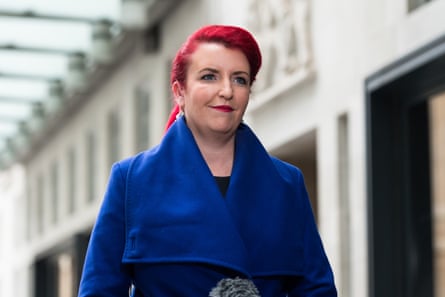
Ahead of any leadership race, most City investors, however, expect those vying to replace Starmer will attempt to strike a balance between shifting direction and keeping the bond market onside.
This week, Louise Haigh, the powerful co-chair of the soft-left Tribune group of Labour MPs, set out a plan for the economy that would involve allowing higher levels of borrowing by overhauling the chancellor Rachel Reeves’s current fiscal rules.
However, the former cabinet minister – viewed as a key leadership race powerbroker – warned any changes would have to wait until after Labour has met Reeves’s main target of balancing day-to-day spending with tax receipts.
“This is not to say we should disregard the bond markets or pursue reckless borrowing – far from it,” Haigh wrote in an essay on how Labour should overhaul its plan for the economy.
Some analysts expect Labour to seek a balance between a “fresh start” and the avoidance of a Truss-style provocation – potentially involving the retention of Reeves as chancellor to benefit from her reputation with City investors.
Jordan Rochester, an analyst at the Japanese bank Mizuho, said: “I suspect the new leadership will attempt to calm down markets with a few words. But the party is shifting to the left and the market will price that in first.”