




惯性聚合 高效追踪和阅读你感兴趣的博客、新闻、科技资讯
阅读原文 在惯性聚合中打开

推荐订阅源

H
Help Net Security
Cyber Security Advisories - MS-ISAC
博客园 - 【当耐特】
Microsoft Azure Blog
Google DeepMind News
Apple Machine Learning Research
有赞技术团队
有赞技术团队
Y
Y Combinator Blog
H
Hackread – Cybersecurity News, Data Breaches, AI and More
爱范儿
爱范儿
L
LangChain Blog
IT之家
IT之家
酷 壳 – CoolShell
酷 壳 – CoolShell
MongoDB | Blog
MongoDB | Blog
Hugging Face - Blog
Hugging Face - Blog
G
Google Developers Blog
T
Tailwind CSS Blog
Engineering at Meta
Engineering at Meta
奇客Solidot–传递最新科技情报
奇客Solidot–传递最新科技情报
宝玉的分享
宝玉的分享
博客园 - 三生石上(FineUI控件)
D
DataBreaches.Net
Recent Announcements
freeCodeCamp Programming Tutorials: Python, JavaScript, Git & More

The Guardian

Rory McIlroy surges into six-shot Masters lead with stunning second-round flourish ‘That’ll be the end’: actor Sam Neill joins fight to stop controversial goldmine near his New Zealand vineyard Roberto De Zerbi targets ‘Ange-ball’ revival to save Spurs from relegation Bath hit back to reach semi-final after stunning Northampton in 11-try epic Secret Garden to Outcome: the week in rave reviews Zebras, wealth and power: Hungary’s election tests Orbán’s grip on power ‘TikTok effect’ brings sellout crowds and younger fans to Grand National meeting The war over Omagh’s gold: the £21bn mine plan tearing a community apart Britain’s shadow workforce is paid as little as 65p an hour. Who cares for the carers? From You, Me & Tuscany to Euphoria: your complete entertainment guide to the week ahead Six great reads: the man who let snakes bite him, masked heavy metal and the brutal reality for foreign students in the UK American Classic review – I defy you not to fall in love with Kevin Kline and Laura Linney’s tender comedy Cuba’s doctors were a lifeline for the world. Now the Caribbean is shamefully complicit in the US drive to expel them An environmental disaster in Moldova has Russia’s fingerprints all over it RMIT drops misconduct case against student who accused university of being ‘complicit in Gaza genocide’ Ichiro Suzuki statue unveiling goes awry as bronze bat snaps during ceremony Survivors of Epstein’s abuse accuse Melania Trump of ‘shifting burden’ on to victims European football: Real Madrid held at home by Girona to extend winless run Arne Slot insists he is ‘aligned’ with Liverpool board and fans as squad is rebuilt Kamala Harris ‘thinking about’ running for president again in 2028 JD Vance warns Iran against trying to ‘play’ the US in peace talks West Ham double up twice to thrash Wolves and put Spurs in relegation zone Trump administration releases new renderings of so-called ‘Arc de Trump’ Crispin Odey drops £79m libel claim against FT over sexual misconduct allegations Bafta apologises for events surrounding John Davidson’s Tourette’s outburst Cocktail of the week: Bar Shrimp’s la rosita – recipe New drug may extend survival in aggressive ovarian cancer, trial shows One dead and 27 injured after bus with British passengers crashes in Canary Islands Pope adds to Smith’s mass of Surrey runs with England woes a world away OpenAI CEO Sam Altman’s home targeted with molotov cocktail
Michael Pennington was an actor of astonishing range, a w...
Michael Billington · 2026-05-11 · via The Guardian

Michael Pennington was what Richard II – a part he played with great distinction – called a “well-graced actor”. He had a resonant voice, a handsome countenance, a security and ease on stage. But looking back over his career, on his death at the age of 82, I am struck by its astonishing variety.

He co-founded, with Michael Bogdanov, the English Shakespeare Company. He toured the world with one-man shows on Shakespeare and Chekhov. He directed here and abroad and wrote 10 books full of practical wisdom. On top of all that, he was witty and delightful company.

His acting career falls into distinctive phases. He spent much of the 1960s and 70s with the Royal Shakespeare Company, where many performances stand out. His Berowne in Love’s Labour’s Lost in 1978 was a man hooked on the sublime rhetoric of love. And for the same director, John Barton, in 1980, he was a brilliant Hamlet: sharp brained, sweet-souled and mellifluous of voice in the Gielgud tradition. He later moved to the National Theatre, where in Venice Preserv’d he and Ian McKellen recaptured a heroic style of acting, and where in Strider: The Story of a Horse he endowed the equine protagonist with a pedigree dignity through a light-stepping walk on the balls of his feet.
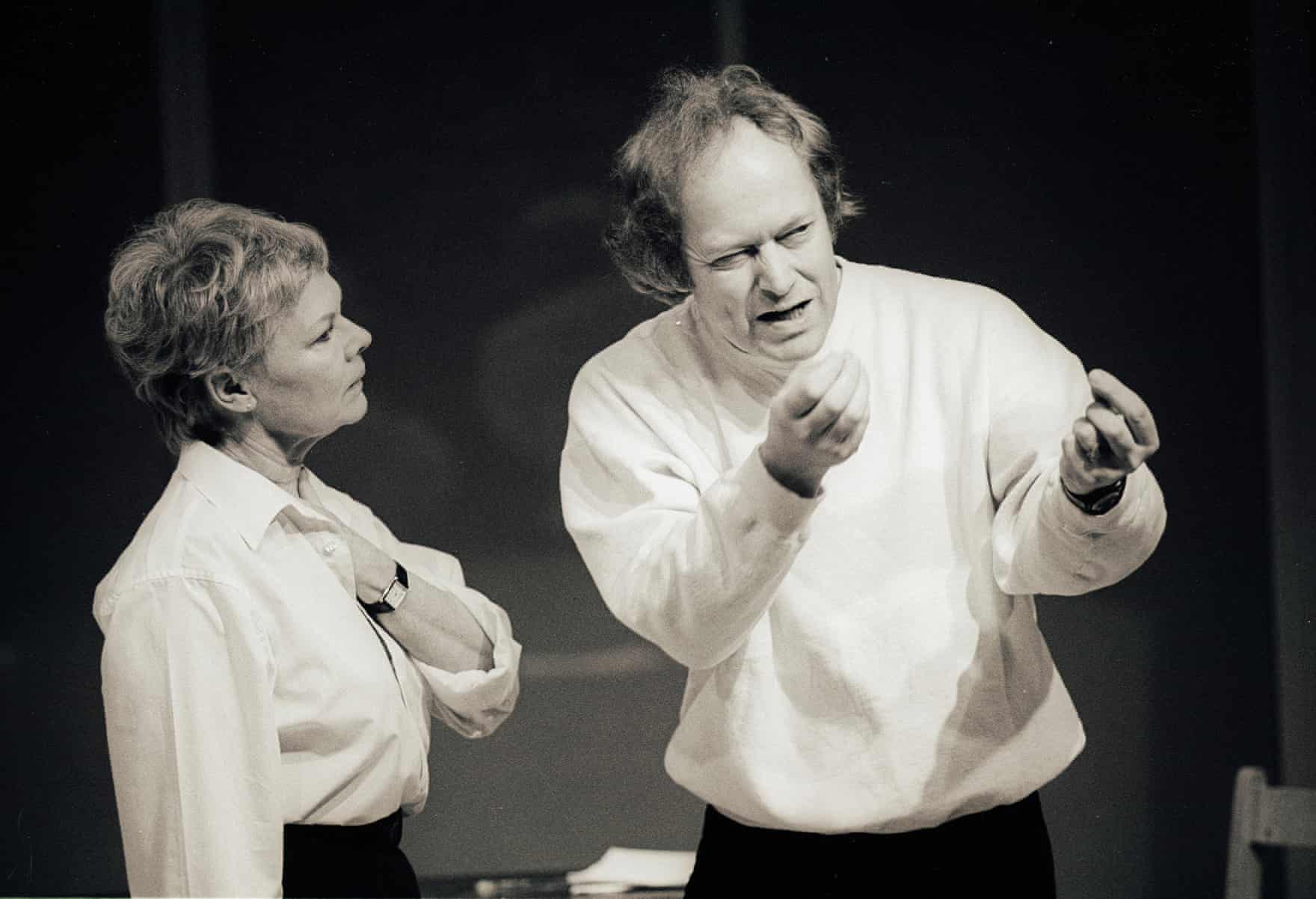
Michael Pennington with Judi Dench in The Gift of the Gorgon by Peter Shaffer at the Barbican in 1992.
Michael Pennington with Judi Dench in The Gift of the Gorgon by Peter Shaffer at the Barbican in 1992. Photograph: Tristram Kenton/The Guardian

Like many intelligent actors Pennington yearned to be something more than a hired hand, which led him to work alongside Bogdanov in forming and running the English Shakespeare Company. He played a huge variety of parts, from Henry V and Coriolanus to Buckingham and Jack Cade. He also helped forge the style of a company that he once described as both progressive and nostalgic: progressive in that each production was grounded in current political argument, but nostalgic in that the company itself were touring rogues and vagabonds, once dubbed a “rock’n’roll” Shakespeare outfit.

But there were multiple facets to Pennington’s kaleidoscopic career. Although associated with the classics, he was highly accomplished in modern drama. He instinctively understood the work of Harold Pinter. As a Cambridge undergraduate he wrote a piece for Granta exploring the parallels between Pinter and Chekhov, and went on in the Gate Theatre Dublin’s 1994 Pinter festival to give memorable performances as the steely interrogator in One for the Road and the disintegrating Deeley in Old Times. In Ronald Harwood’s twin plays about political compromise, Taking Sides and Collaboration, he endowed the conductor Wilhelm Furtwängler with a wounded hauteur and the composer Richard Strauss with a fierce obsessiveness.
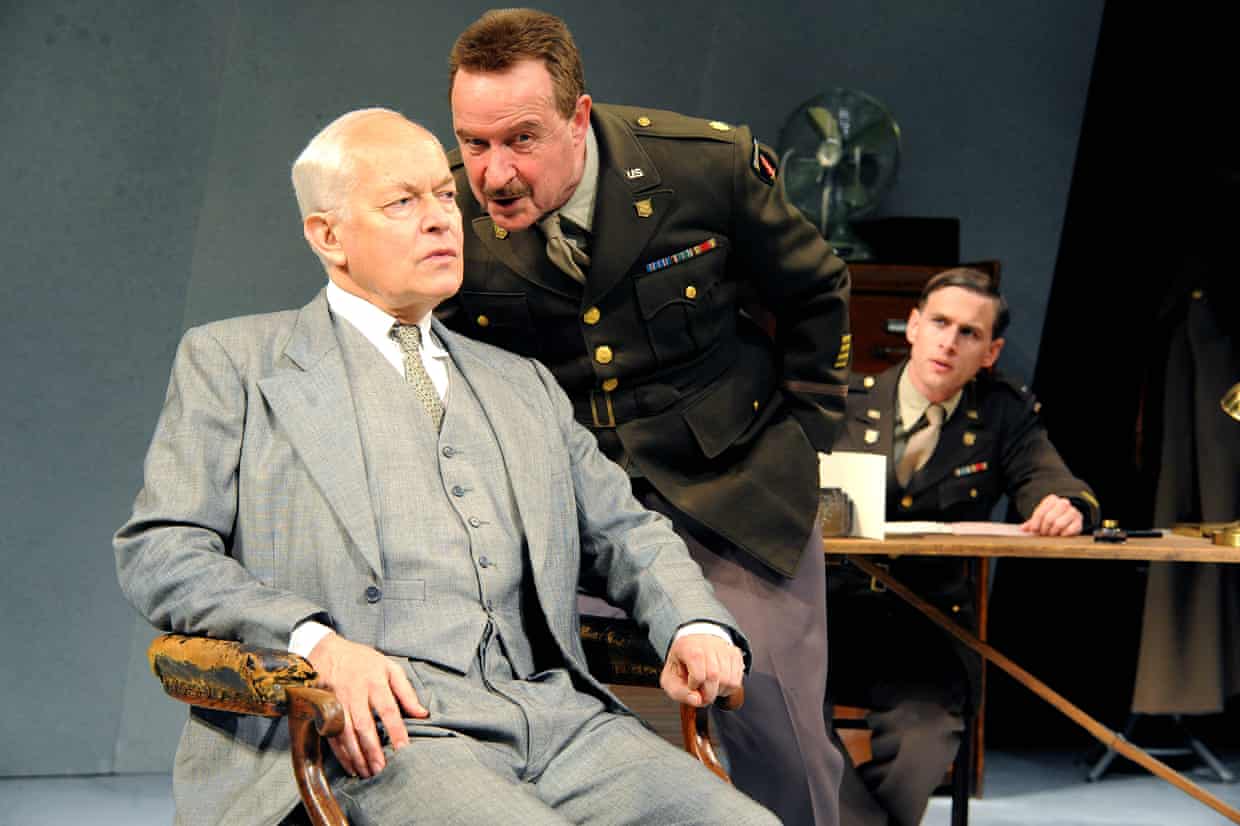
Michael Pennington as Wilhelm Furtwängler with David Horovitch and Martin Hutson in Taking Sides at the Minerva, Chichester, in 2008.
Michael Pennington as Wilhelm Furtwängler with David Horovitch and Martin Hutson in Taking Sides at the Minerva, Chichester, in 2008. Photograph: Tristram Kenton/The Guardian

While very much a company man, Pennington also performed two striking solo shows. As an ardent Russophile, his portrait of Anton Chekhov perfectly caught all the great writer’s contradictoriness, retaining a passionate reverence for life even as he edged slowly towards death. Pennington’s Sweet William was similarly the product of a lifetime’s love of Shakespeare. Combining textual scholarship with performance skills, it offered in two hours a rounded portrait of Shakespeare and his art and his ability to lurch from high poetry to intimate detail.

But there was nothing slavish about Pennington’s passion for Shakespeare. I remember once doing a platform talk at the National Theatre in which I repeated my familiar doubts about King Lear: about its structural problems and its human improbabilities, such as Edgar’s refusal to reveal his true identity to the blinded Gloucester. As I was doing a book signing after the talk, Pennington edged up to me and said “Michael, can I have a quick word with you about Lear?” I hesitantly agreed, expecting a scholarly rebuke. “I’ve been in the play three times and even played Lear himself and I totally agree with you.” How could I not love him after that?