惯性聚合 高效追踪和阅读你感兴趣的博客、新闻、科技资讯
阅读原文 在惯性聚合中打开

推荐订阅源

D
DataBreaches.Net
J
Java Code Geeks
有赞技术团队
有赞技术团队
H
Hackread – Cybersecurity News, Data Breaches, AI and More
The GitHub Blog
The GitHub Blog
T
The Blog of Author Tim Ferriss
Apple Machine Learning Research
量子位
D
Docker
V
Visual Studio Blog
博客园 - 司徒正美
Martin Fowler
Martin Fowler
人人都是产品经理
人人都是产品经理
WordPress大学
WordPress大学
U
Unit 42
M
MIT News - Artificial intelligence
freeCodeCamp Programming Tutorials: Python, JavaScript, Git & More
G
Google Developers Blog
Engineering at Meta
Engineering at Meta
V
V2EX
大猫的无限游戏
大猫的无限游戏
雷峰网
雷峰网
Vercel News
Vercel News
C
Check Point Blog

The Guardian

Rory McIlroy surges into six-shot Masters lead with stunning second-round flourish ‘That’ll be the end’: actor Sam Neill joins fight to stop controversial goldmine near his New Zealand vineyard Roberto De Zerbi targets ‘Ange-ball’ revival to save Spurs from relegation Bath hit back to reach semi-final after stunning Northampton in 11-try epic Secret Garden to Outcome: the week in rave reviews Zebras, wealth and power: Hungary’s election tests Orbán’s grip on power ‘TikTok effect’ brings sellout crowds and younger fans to Grand National meeting The war over Omagh’s gold: the £21bn mine plan tearing a community apart Britain’s shadow workforce is paid as little as 65p an hour. Who cares for the carers? From You, Me & Tuscany to Euphoria: your complete entertainment guide to the week ahead Six great reads: the man who let snakes bite him, masked heavy metal and the brutal reality for foreign students in the UK American Classic review – I defy you not to fall in love with Kevin Kline and Laura Linney’s tender comedy Cuba’s doctors were a lifeline for the world. Now the Caribbean is shamefully complicit in the US drive to expel them An environmental disaster in Moldova has Russia’s fingerprints all over it RMIT drops misconduct case against student who accused university of being ‘complicit in Gaza genocide’ Ichiro Suzuki statue unveiling goes awry as bronze bat snaps during ceremony Survivors of Epstein’s abuse accuse Melania Trump of ‘shifting burden’ on to victims European football: Real Madrid held at home by Girona to extend winless run Arne Slot insists he is ‘aligned’ with Liverpool board and fans as squad is rebuilt Kamala Harris ‘thinking about’ running for president again in 2028 JD Vance warns Iran against trying to ‘play’ the US in peace talks West Ham double up twice to thrash Wolves and put Spurs in relegation zone Trump administration releases new renderings of so-called ‘Arc de Trump’ Crispin Odey drops £79m libel claim against FT over sexual misconduct allegations Bafta apologises for events surrounding John Davidson’s Tourette’s outburst Cocktail of the week: Bar Shrimp’s la rosita – recipe New drug may extend survival in aggressive ovarian cancer, trial shows One dead and 27 injured after bus with British passengers crashes in Canary Islands Pope adds to Smith’s mass of Surrey runs with England woes a world away OpenAI CEO Sam Altman’s home targeted with molotov cocktail
From neat lawns to wild havens: how No Mow May is transfo...
Isaaq Tomkin · 2026-05-03 · via The Guardian

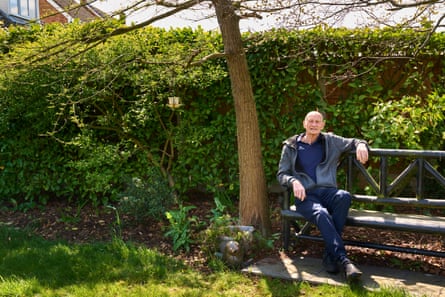
Ian Waddington was crouched in his garden last summer, inspecting loose paving, when he lifted a slab and spotted something extraordinary: a tiny field mouse nestled in a hollow, feeding four babies – each half the size of his little finger. “It was astonishing. Like life in miniature,” he says.

After decades in the construction industry, the 86-year-old has found a new passion in retirement – nature. The discovery of the field mice made him realise his garden could be a thriving habitat for animal and plant life. This year, Waddington joined the No Mow May movement and allowed his garden grow wild through spring.

Now in its ninth year, No Mow May – run by the charity Plantlife – encourages people to stop mowing their lawns during the first month of spring to allow their gardens to become more biodiverse.

In the Cheshire village of Tattenhall, many others have taken part over the years, connecting with nature through their back gardens. Janet Dutton, 69, let her lawn grow wild while caring for her sick partner. Today, aside from a central mown patch for her grandchildren, her garden has become a miniature meadow. “The more it [it grows], the more addicted I get to it – I just like to see what comes up,” she says.
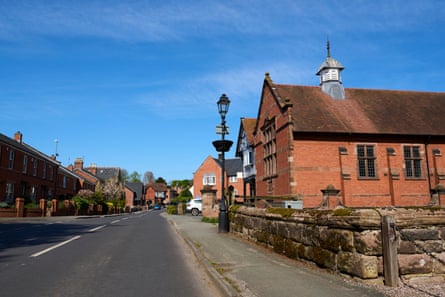
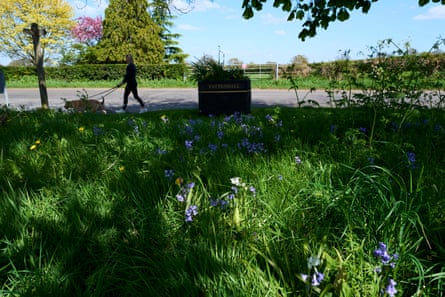
A street in Tattenhall, Cheshire
Tattenhall in Cheshire, where residents are preparing for this year’s No Mow May, Photograph: Christopher Thomond/The Guardian
Wildflowers near a ‘Tattenhall’ sign
Many villagers have given over patches of former lawns to wildflowers and natural plants. Photograph: Christopher Thomond/The Guardian
During No Mow May, natural plants are left all year or cut at the end of the flowering season.
During No Mow May, natural plants are left all year or cut at the end of the flowering season. Photograph: Christopher Thomond/The Guardian

Dutton credits No Mow May with changing her perspective on what a garden should be. She has even entered her garden into a new intervillage “best for nature award” judged by Plantlife ecologists, and says she would be “chuffed” to win.

According to Andy Jennings-Giles, a senior ecologist at Plantlife, plenty of seeds can live underground, waiting for their chance to flower, in even the most keenly mown gardens. “The year that you leave it to grow throughout May, June and July, it will all come up. [You will] suddenly see all these flowers that appear from nowhere,” he says.

Even as they grow, so-called plant blindness means people might not notice that the sprouting plants in front of them are the beginning of a diverse wildflower habitat.

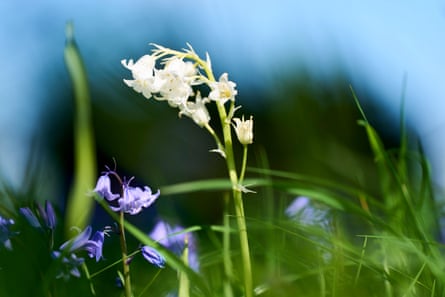
In Gill Friswell’s garden in nearby Tattenhall, there is a small patch of grass that, to the untrained eye, might look overgrown with weeds. However, closer inspection reveals there are at least five flowers and even more grass species that will flourish come summer, including the common spotted orchid, betony (Stachys officinalis), common knapweed, yellow rattle and columbine.
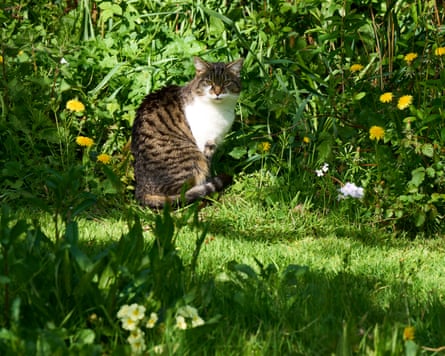
Cat in long grass
Wildlife and humans are not the only ones to benefit from letting the grass grow. Photograph: Christopher Thomond/The Guardian
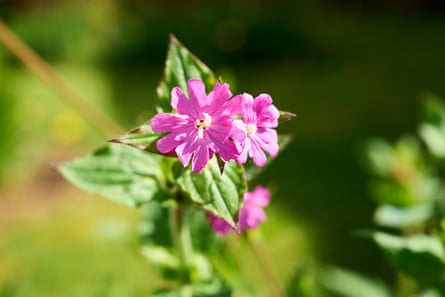
Pink flowers in Janet Dutton’s back garden.
Flowers in Janet Dutton’s back garden. Photograph: Christopher Thomond/The Guardian
Wildflowers
Plantlife says allowing lawns to grow freely is one of the easiest ways to help nature. Photograph: Christopher Thomond/The Guardian
Ian Waddington in his garden
Ian Waddington describes the field mice he discovered nestled in his garden as ‘like life in miniature’. Photograph: Christopher Thomond/The Guardian

Friswell was not initially keen on ditching her lawnmower when her birder husband, Neil, decided to let some patches grow wild. “I liked it neat and tidy,” she says. Now, she appreciates the garden’s wilder appearance and is looking forward to the flowers coming through: “It’s a nice aesthetic.”

Plantlife recommends leaving gardens uncut not just in May but throughout summer to see what flowers, then cutting back in July or August after flowering has finished. Crucially, the cuttings should be removed to keep soil fertility low – while grass thrives on high fertility soil, wildflowers have evolved to become the opposite.

With each passing year, this approach can transform the diversity of a garden: allowing deep-rooted perennials to improve its soil structure, store more carbon and create an ecosystem for plants, birds, butterflies and bees. “It’s just fantastic for nature, from the bottom of the ecosystem,” Jennings-Giles says.
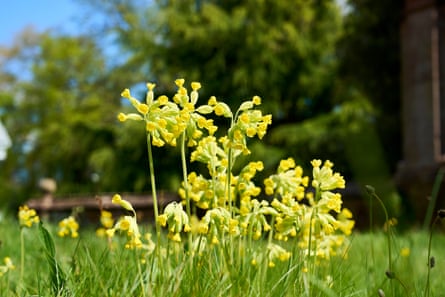
Yellow wildflowers.
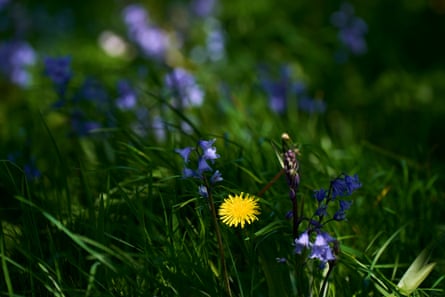
Sprouting plants in gardens may be the first signs of a rich and diverse wildflower habitat. Photograph: Christopher Thomond/The Guardian

By encouraging wildflowers to grow, No Mow May participants are helping to restore pockets of species-rich grassland, also known as wildflower meadow. According to Natural England, agricultural changes in England and Wales since the 1930s have led to a 97% decline in this type of habitat, as swathes of ancient meadow were cleared to make room for arable crops after the second world war.

Historically, a neatly manicured garden was a status symbol enjoyed by the wealthy, many of whom had gardeners to trim their lawns by hand. The rise of mechanical lawnmowers in the 20th century, along with a growing middle class, made that look accessible to many.

Nicola Hutchinson, the interim chief executive of Plantlife, suggests it is time for a rethink. “Your lawn is one of the easiest ways to help nature, yet social pressure still keeps the lawnmower running. No Mow May is the moment to break that cycle,” she says.