


惯性聚合 高效追踪和阅读你感兴趣的博客、新闻、科技资讯
阅读原文 在惯性聚合中打开

推荐订阅源

Cyberwarzone
Cyberwarzone
F
Full Disclosure
V
Visual Studio Blog
freeCodeCamp Programming Tutorials: Python, JavaScript, Git & More
有赞技术团队
有赞技术团队
J
Java Code Geeks
博客园 - 【当耐特】
OSCHINA 社区最新新闻
OSCHINA 社区最新新闻
博客园 - 叶小钗
L
LINUX DO - 最新话题
T
Threatpost
S
SegmentFault 最新的问题
Vercel News
Vercel News
云风的 BLOG
云风的 BLOG
C
Cyber Attacks, Cyber Crime and Cyber Security
Google DeepMind News
Know Your Adversary
Know Your Adversary
S
Schneier on Security
V
Vulnerabilities – Threatpost
D
DataBreaches.Net
G
GRAHAM CLULEY
Latest news
Latest news
P
Privacy International News Feed
D
Darknet – Hacking Tools, Hacker News & Cyber Security
C
CXSECURITY Database RSS Feed - CXSecurity.com
Scott Helme
Scott Helme
L
Lohrmann on Cybersecurity
T
The Exploit Database - CXSecurity.com
Security Latest
Security Latest
G
Google Developers Blog
L
LangChain Blog
MyScale Blog
MyScale Blog
Project Zero
Project Zero
N
News and Events Feed by Topic
Hacker News - Newest:
Hacker News - Newest: "LLM"
大猫的无限游戏
大猫的无限游戏
P
Proofpoint News Feed
Blog — PlanetScale
Blog — PlanetScale
阮一峰的网络日志
阮一峰的网络日志
N
News | PayPal Newsroom
www.infosecurity-magazine.com
cs.AI updates on arXiv.org
SecWiki News
SecWiki News
T
Tor Project blog
C
Check Point Blog
Google Online Security Blog
GbyAI
GbyAI
The Last Watchdog
The Last Watchdog
cs.CL updates on arXiv.org
WordPress大学
WordPress大学

The Guardian

Rory McIlroy surges into six-shot Masters lead with stunning second-round flourish ‘That’ll be the end’: actor Sam Neill joins fight to stop controversial goldmine near his New Zealand vineyard Roberto De Zerbi targets ‘Ange-ball’ revival to save Spurs from relegation Bath hit back to reach semi-final after stunning Northampton in 11-try epic Secret Garden to Outcome: the week in rave reviews Zebras, wealth and power: Hungary’s election tests Orbán’s grip on power ‘TikTok effect’ brings sellout crowds and younger fans to Grand National meeting The war over Omagh’s gold: the £21bn mine plan tearing a community apart Britain’s shadow workforce is paid as little as 65p an hour. Who cares for the carers? From You, Me & Tuscany to Euphoria: your complete entertainment guide to the week ahead Six great reads: the man who let snakes bite him, masked heavy metal and the brutal reality for foreign students in the UK American Classic review – I defy you not to fall in love with Kevin Kline and Laura Linney’s tender comedy Cuba’s doctors were a lifeline for the world. Now the Caribbean is shamefully complicit in the US drive to expel them An environmental disaster in Moldova has Russia’s fingerprints all over it RMIT drops misconduct case against student who accused university of being ‘complicit in Gaza genocide’ Ichiro Suzuki statue unveiling goes awry as bronze bat snaps during ceremony Survivors of Epstein’s abuse accuse Melania Trump of ‘shifting burden’ on to victims European football: Real Madrid held at home by Girona to extend winless run Arne Slot insists he is ‘aligned’ with Liverpool board and fans as squad is rebuilt Kamala Harris ‘thinking about’ running for president again in 2028 JD Vance warns Iran against trying to ‘play’ the US in peace talks West Ham double up twice to thrash Wolves and put Spurs in relegation zone Trump administration releases new renderings of so-called ‘Arc de Trump’ Crispin Odey drops £79m libel claim against FT over sexual misconduct allegations Bafta apologises for events surrounding John Davidson’s Tourette’s outburst Cocktail of the week: Bar Shrimp’s la rosita – recipe New drug may extend survival in aggressive ovarian cancer, trial shows One dead and 27 injured after bus with British passengers crashes in Canary Islands Pope adds to Smith’s mass of Surrey runs with England woes a world away OpenAI CEO Sam Altman’s home targeted with molotov cocktail Reform UK local election candidate was twice disciplined by Tories over ‘racist comments’ Remaining in Nato is in best interests of US, says Keir Starmer Prince Harry sued for defamation by charity he co-founded Anthropic’s new AI tool has implications for us all – whether we can use it or not Concerns raised about motorbike tourist trail after death of British teenager in Vietnam The Guardian view on Trump’s civilisational threats: the words that fuel war must be condemned The Guardian view on dystopias for our times: the American nightmare Doctors’ leader claims new reduced pay offer killed chances of ending strikes in England Netanyahu-ism has achieved nothing for Israelis – and come at a monstrously high price Deborah Levy: ‘CS Lewis’s White Witch terrified me – but I wanted to meet her’ How I Shop with Michelle Ogundehin: ‘We grownups have enough stuff already’ Trump’s war and Melania’s Epstein statement, with US editor Betsy Reed – The Latest We have to stop killer motorists on Britain’s roads UK starts crackdown on EU citizens’ post-Brexit rights Londoners aren’t unfriendly – but don’t compare us to New Yorkers The religious right and the perversion of faith Artemis II images reignite moon mission memories Orbán and Magyar trade accusations in last days of Hungary election campaign Reckonwrong: How Long Has It Been? review | Safi Bugel's experimental album of the month Martin Rowson on Middle East peace talks – cartoon Masters magic, the Grand National and Premier League drama – follow with us Fears of UK and EU flight cancellations as airports warn of jet fuel shortages Reform’s petulance over slavery reparations shows it just doesn’t grasp Britain’s place in the modern world Peers vote to ban pornography depicting sex acts between stepfamily members Starbucks’s retail arm gets £13.7m tax credit even as sales increase Flyby review – interstellar musical is a voyage of epic strangeness Grand National preview: Jagwar can deny Irish cohort in Aintree classic Week in wildlife: an ostrich on the lam, a tortoise crossing a road and surfing seals Anger as swifts’ nesting holes in Derbyshire rail viaduct ‘blocked up’ Peter Mandelson faces fixed-penalty notice for urinating in public ‘There’s no shortage of terrifying technology’: how AI became TV drama’s new go-to villain ‘Fresher than anything in a shop’: the best recipe boxes and meal kits for time-poor foodies, tested Who was Hilma? Af Klint exhibition to highlight exclusion of women from abstract art Critics assemble! Here’s my list of the greatest superhero movies of all time US inflation soars in March as war on Iran drives economy into uncertainty Amazon to finally launch Leo satellite internet in ‘mid-2026’, says CEO Grand National 2026: horse-by-horse guide to all the runners Pete Hegseth’s holy war: the militant Christian theology animating the US attack on Iran Add to playlist: the beautifully dazed, countrified indie-rock of Tracey Nelson and the week’s best new tracks Not just about Gaza: the Muslim voters turning from Labour to the Greens ‘I’m worried there’s too much of me,’ says a birch: inside the interspecies council giving nature a voice Why is anyone surprised by the US and Israel’s latest war? It’s only what the world allowed them to do in Gaza Tori Amos review – fans hang on every note of this dramatic deep dive into her back catalogue Coachella 2026: Justin Bieber launches a major comeback in the desert Super Mario what?! The seven best obscure Mario games ‘An abomination’: the Lancashire town kicking up a stink over reopened landfill Pillion to Roofman: the seven best films to watch on TV this week Holly Humberstone: Cruel World review – Taylor Swift fave trades gothic melancholy for pop glow-up Thrash review – cursed shark thriller sinks like a stone on Netflix Gulf states rethink security in light of US-Israel war on Iran Go Gentle by Maria Semple review – a joyfully clever New York romcom Welcome to Y’all Street: bullish Dallas aims to steal New York’s financial crown Margo’s Got Money Troubles to Beef: the seven best shows to stream this week I baulked at the idea of ‘friction-maxxing’. But there’s more to it than meets the eye Reich: The Sextets album review – Colin Currie celebrates the minimalist master’s joy of six Benjamina Ebuehi’s sweet and salty chocolate chip cookies recipe Experience: my house was taken over by 70,000 bees Malcolm in the Middle: Life’s Still Unfair review – the TV magic they’ve created here is absolutely miraculous Lava bursts forth as Hawaii’s Kilauea volcano erupts Sonos review: Are these the best portable speakers that money can buy? I tested to find out Buy bread in the evening, hit the sales on a Tuesday: retail workers’ top tips to cut your shopping bill The best water flossers in the UK, tested for that dentist-clean feeling Where to start with: Muriel Spark You be the judge: should my girlfriend stop mixing gold and silver jewellery? The best carry-on luggage in the UK, tested on an assault course How games capture the awe and terror of cosmic isolation I never text back – and it’s ruining my relationships The pet I’ll never forget: Beau, the labrador who saved my life Life Is Strange: Reunion review – a decade-long story comes to an impassioned close Why is gaming becoming so expensive? The answer is found in AI
Could the UAE’s shock exit from Opec cause an oil price war?
Jillian Ambr · 2026-04-30 · via The Guardian

The conflict in the Middle East has claimed Opec as the latest casualty of war. The United Arab Emirates’ shock exit from the oil cartel on Tuesday after 60 years is expected to weaken the alliance, which under the leadership of Saudi Arabia has helped to soothe volatility in the global oil market for decades.

Global oil prices reached the highest level in four years on Thursday, rising above $126 a barrel. But as the region grapples with the continuing conflict, a fresh war may be brewing in the international oil markets, which could lead to greater market volatility for years to come.

For now, the UAE’s intention to ignore Opec production quotas and pump as much crude as it wants is notional, owing to Iran’s blockade on the strait of Hormuz. So too is Riyadh’s ability to weaponise its vast oil reserves in response.

But in a postwar standoff between the two Gulf oil heavyweights, there lies the real risk of a price war in which global energy markets could plunge, with unpredictable economic consequences.

“Saudi Arabia will fight back with a vengeance,” said Michael Tamvakis, a commodities professor at Bayes Business School in London. “This decision flies in the face of the kingdom’s authority, and the Saudis will want to teach them a lesson.

“In a world where oil starts flowing again through Hormuz and oil prices start deflating, there will be a race to maximise oil export volumes to keep revenues.”
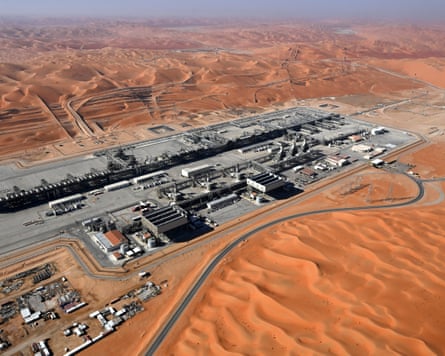
An oil refinery surrounded by desert.
An oil refinery in Saudi Arabia. Photograph: Patrick Hertzog/AFP/Getty Images

In this race, the Saudi kingdom is expected to “aggressively market” its oil to Asian buyers, which also rely on the UAE, by offering discounts on its crude and fuels. While the UAE had typically held the upper hand in marketing refined oil products to Europe, Saudi Arabia may “fight back and try to capture market share”, Tamvakis said.

Saudi Arabia is the world’s largest oil exporter, but in the UAE it has a formidable market rival. The cartel’s third-largest producer held its production at below 3m barrels a day in 2024 at the behest of Opec, but it could raise its production to between 4.5m to 6m barrels a day once flows resume through the strait of Hormuz.

Both countries have some of the lowest production costs in the world, and a fiscal imperative to generate the state revenues needed to prepare their economies for a low-carbon future.

Dieter Helm, a professor of economic policy at the University of Oxford, likened the looming price war to the oil market crashes in the 1980s and 2014, which led to hundreds of thousands of job losses and political instability in oil-rich economies.

“Oil prices are likely to fall further and faster as the war ends,” Helm said. “Higher prices encourage more output and the world is awash with both oil and gas reserves.”

The surge in market prices triggered by the war in Iran is expected to fuel the rise of new oil market challengers in the Americas. The longer the Gulf’s exports are throttled by the conflict, the greater the opportunity for the US, Brazil and Guyana to increase their share of the global market at the expense of the Middle East.

A graph showing the rise in the oil price since 28 February.

Meanwhile, economies are accelerating plans to reduce their reliance on fossil fuels, which could hasten the start of the market’s decline.

A postwar market defined by new oil supplies and uncertain demand would be less than ideal for Gulf states as they resume exports. They are likely to pump as much crude as possible to help repair the war-ravaged economies in the region and reclaim their place in the market, so lower prices over the long term are likely.

The scenario represents the antithesis of Opec’s stated agenda. Since the 1960s the cartel’s power has rested in its ability to respond as a united group to the ebb and flow of the oil market to help stabilise prices.

When oil supplies become tight, Saudi Arabia and its allies have been able to open their taps to cool rising prices. When an oversupply of crude causes prices to plunge, Opec stands ready to curtail its output to prevent a market crash.

But signs that the alliance was beginning to fray had become more apparent in recent years as upheavals in the global market challenged Saudi Arabia’s grip and led to bitter price wars in retaliation.
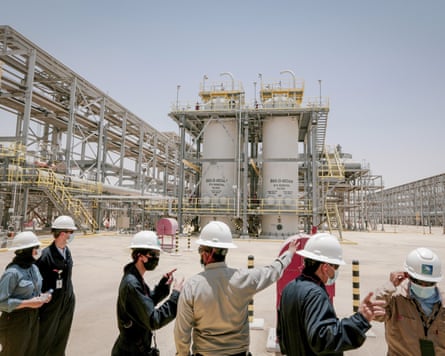
A group of people stand in front of an industrial plant.
Engineers and journalists at the Hawiyah natural gas liquids recovery plant in Saudi Arabia. Photograph: Amr Nabil/AP

In 2020, Opec executed its deepest production cuts months after the Covid-19 pandemic forced the global economy into an unprecedented shutdown that erased millions of barrels of oil demand in a matter of weeks.

The group’s decision to withhold 9.7m barrels of oil a day represented a 10% cut to global oil demand. But the deal was struck only after Saudi Arabia waged a short-lived price war in response to Russia’s refusal to trim its own output, causing prices to collapse to a 20-year low and compounding the economic pain of the pandemic.

It was not the first time that Riyadh had sacrificed market prices to restore its market dominance. In 2014, as the unrestrained flow of oil from the US shale boom threatened to overwhelm the market, Saudi ministers became increasingly frustrated with Opec members that flouted the agreement to hold production in check to steady the market price.

The kingdom responded by increasing its own production, triggering one of the deepest and longest oil price routs in history to drive its higher-cost rivals to the edges of the market. Smaller members of the Opec cartel were collateral damage, and the economic scars could mean some are wary of any postwar limits on their output.

Kim Fustier, a senior analyst at HSBC Investment, said: “The loss of a core Gulf member weakens Opec’s credibility. If the remaining group is unable to compensate for UAE volumes through collective discipline, price management could become harder to enforce.”