


惯性聚合 高效追踪和阅读你感兴趣的博客、新闻、科技资讯
阅读原文 在惯性聚合中打开

推荐订阅源

G
Google Developers Blog
小众软件
小众软件
The Cloudflare Blog
S
SegmentFault 最新的问题
美团技术团队
freeCodeCamp Programming Tutorials: Python, JavaScript, Git & More
让小产品的独立变现更简单 - ezindie.com
阮一峰的网络日志
阮一峰的网络日志
博客园 - 聂微东
V
Visual Studio Blog
奇客Solidot–传递最新科技情报
奇客Solidot–传递最新科技情报
雷峰网
雷峰网
WordPress大学
WordPress大学
T
Tailwind CSS Blog
腾讯CDC
人人都是产品经理
人人都是产品经理
月光博客
月光博客
Microsoft Azure Blog
M
MIT News - Artificial intelligence
D
DataBreaches.Net
Apple Machine Learning Research
P
Proofpoint News Feed
J
Java Code Geeks
宝玉的分享
宝玉的分享

The Guardian

Rory McIlroy surges into six-shot Masters lead with stunning second-round flourish ‘That’ll be the end’: actor Sam Neill joins fight to stop controversial goldmine near his New Zealand vineyard Roberto De Zerbi targets ‘Ange-ball’ revival to save Spurs from relegation Bath hit back to reach semi-final after stunning Northampton in 11-try epic Secret Garden to Outcome: the week in rave reviews Zebras, wealth and power: Hungary’s election tests Orbán’s grip on power ‘TikTok effect’ brings sellout crowds and younger fans to Grand National meeting The war over Omagh’s gold: the £21bn mine plan tearing a community apart Britain’s shadow workforce is paid as little as 65p an hour. Who cares for the carers? From You, Me & Tuscany to Euphoria: your complete entertainment guide to the week ahead Six great reads: the man who let snakes bite him, masked heavy metal and the brutal reality for foreign students in the UK American Classic review – I defy you not to fall in love with Kevin Kline and Laura Linney’s tender comedy Cuba’s doctors were a lifeline for the world. Now the Caribbean is shamefully complicit in the US drive to expel them An environmental disaster in Moldova has Russia’s fingerprints all over it RMIT drops misconduct case against student who accused university of being ‘complicit in Gaza genocide’ Ichiro Suzuki statue unveiling goes awry as bronze bat snaps during ceremony Survivors of Epstein’s abuse accuse Melania Trump of ‘shifting burden’ on to victims European football: Real Madrid held at home by Girona to extend winless run Arne Slot insists he is ‘aligned’ with Liverpool board and fans as squad is rebuilt Kamala Harris ‘thinking about’ running for president again in 2028 JD Vance warns Iran against trying to ‘play’ the US in peace talks West Ham double up twice to thrash Wolves and put Spurs in relegation zone Trump administration releases new renderings of so-called ‘Arc de Trump’ Crispin Odey drops £79m libel claim against FT over sexual misconduct allegations Bafta apologises for events surrounding John Davidson’s Tourette’s outburst Cocktail of the week: Bar Shrimp’s la rosita – recipe New drug may extend survival in aggressive ovarian cancer, trial shows One dead and 27 injured after bus with British passengers crashes in Canary Islands Pope adds to Smith’s mass of Surrey runs with England woes a world away OpenAI CEO Sam Altman’s home targeted with molotov cocktail
Airlines among companies using fuel surcharges to cover s...
Alex Daniel · 2026-05-06 · via The Guardian

Airlines and other companies are increasingly using fuel surcharges to cover soaring costs, a survey has found, in a further sign of Iran war-linked inflation hitting the economy.

A poll of companies in the services sector, which includes airlines, found rising fuel prices had contributed to businesses raising prices at the fastest pace in more than three years in April.

Nearly six in 10 firms surveyed by S&P Global said average costs rose last month, mostly driven by fuel and higher wages, but also in part by metals and plastics getting more expensive.

IAG, the conglomerate that owns British Airways, Iberia, Aer Lingus and Vueling, said last month it would make “some pricing adjustments to reflect these higher fuel costs”, although it stopped short of labelling the move as a surcharge.

Meanwhile, Virgin Atlantic has added a charge of £360 to business class tickets, falling to £50 for economy. Its new chief executive, Corneel Koster, told the Financial Times in April that it would still be “hard to make a profit this year”.

Tim Moore, S&P Global’s economics director, said the rise in costs was “overwhelmingly linked to greater transportation bills and increased salary payments”.

“A number of firms also noted that they had brought in fuel surcharges for their customers, which led to a spike in prices-charged inflation across the service economy to its highest for over three years in April.”
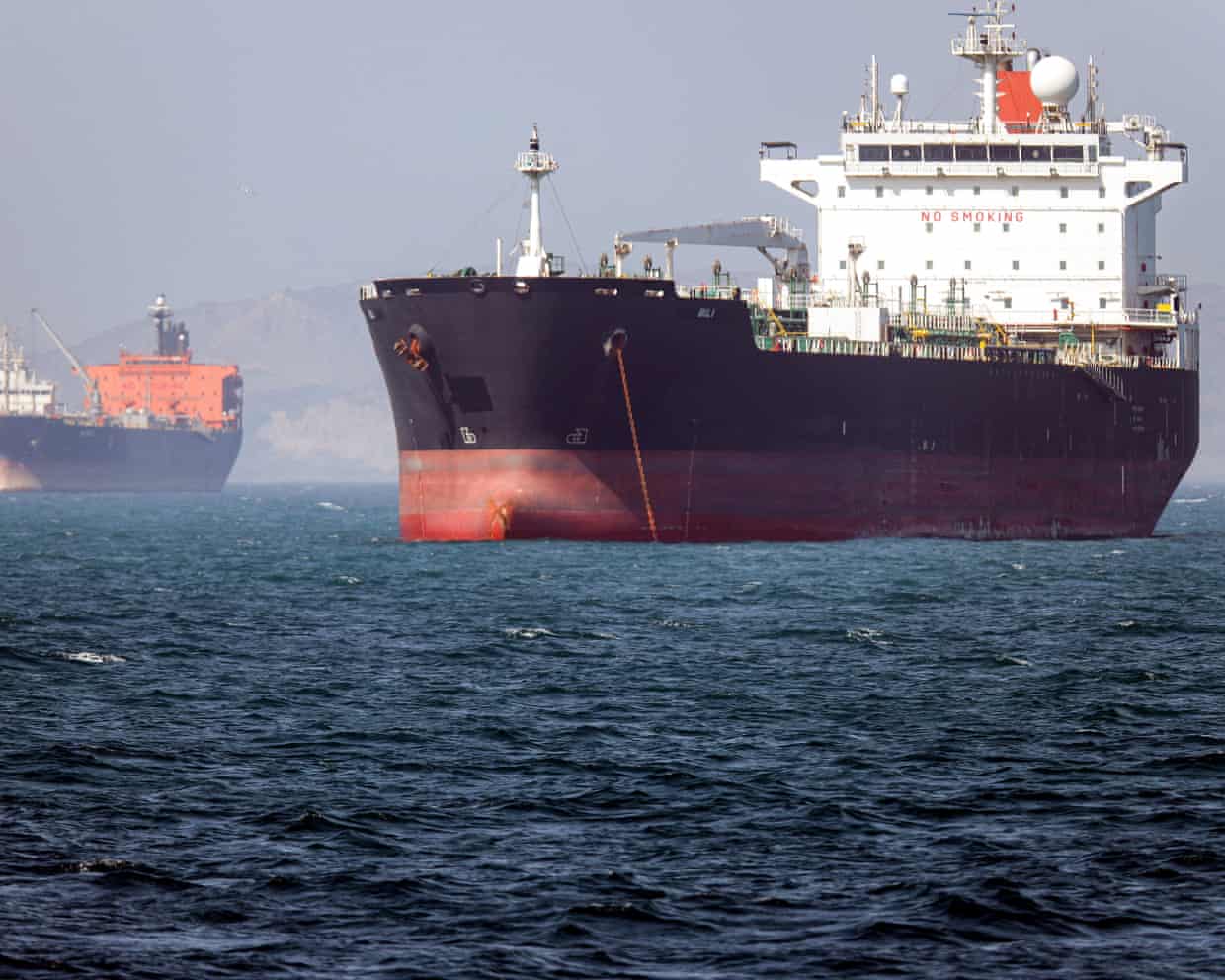
A tanker anchored in the strait of Hormuz off Bandar Abbas in southern Iran.
A tanker anchored in the strait of Hormuz. A blockade of the strait has choked off 20% of the world’s oil supplies. Photograph: Amirhossein Khorgooei/ISNA/AFP/Getty Images

Despite this, firms reported slightly better business than expected last month, with the pollster’s gauge of activity rising to 52.7 across the sector, up from an 11-month low of 50.5 in March.

Britain’s services sector, which includes retailers, finance firms and transport companies, accounts for about 81% of the economy, with activity therefore closely watched by economists.

Moore warned that the improvement “could easily prove short-lived”, however, as new business remained subdued compared with the start of the year, with the Iran war weighing heavily on firms’ confidence to make investment decisions.

Moreover, the widespread price rises will further pressure the Bank of England to raise interest rates – its main weapon in tackling inflation – despite policymakers voting to keep borrowing costs on hold last week.

The Bank’s governor, Andrew Bailey, said last week: “The longer this problem goes on and the longer the disruption to energy supplies goes on, the more difficult the scenario we’re in.”

Brent crude, the global oil price benchmark, fell below $100 a barrel due to fresh hopes that US efforts to reopen the strait of Hormuz could come to fruition.

But prices have swung sharply in recent months amid a fast-changing situation in the Middle East, and analysts said much will hinge on how the war, and its effect on the price of energy, continues to evolve.

Thomas Pugh, the chief economist at the consultancy RSM UK, said: “Obviously, everything depends on how energy prices move going forward, but we still think the ultimate impact of the crisis will be a rising unemployment rate and weaker economic growth, which means any tightening cycle will be short and shallow. But clearly the risk of rate hikes is rising.”