







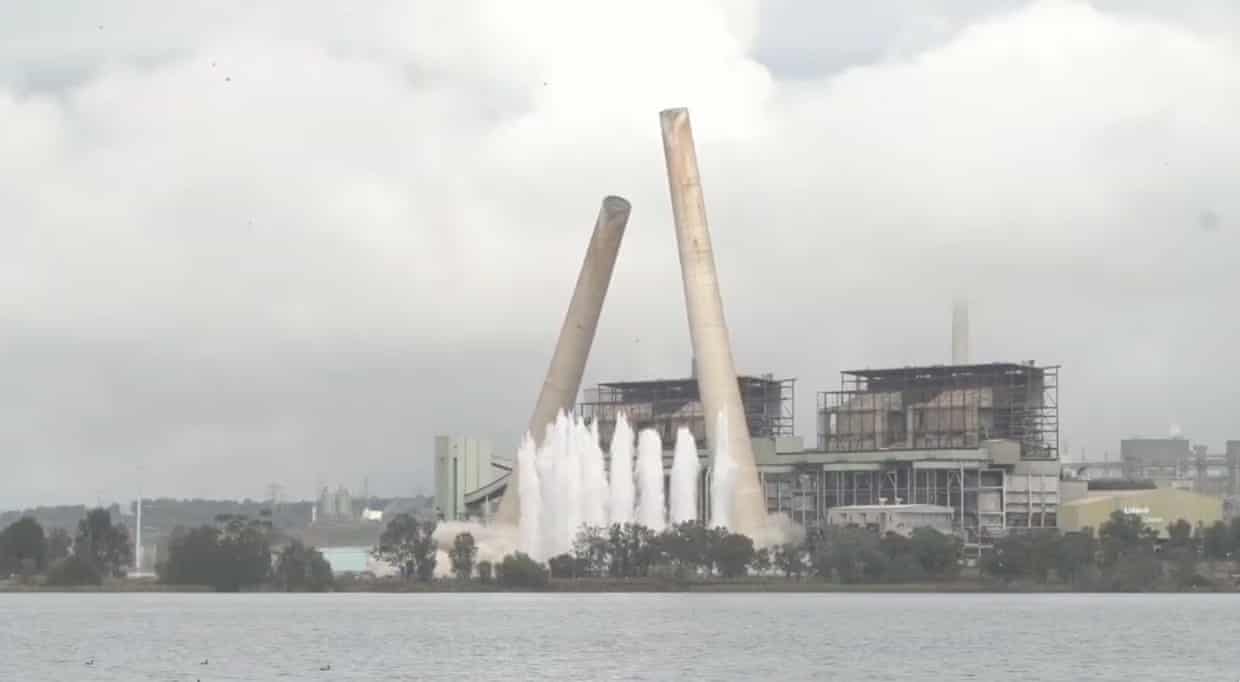
The timing was rich with symbolism. As intense heatwaves pummelled Europe and Asia, and oil markets around the world leapt and sputtered, the two big chimneys of one of Australia’s largest power stations were being demolished. Meanwhile, the Australian energy minister was holding a media conference to hail a fall of up to 10% in the benchmark electricity price in parts of the country.
Quietly, and with surprisingly little fanfare from the rest of the world, Australia is pioneering a revolution in home renewables and battery use, proving what is possible with the right policies. The country was already one of the global leaders in domestic solar power, with panels on one in three homes. It also remains, however, a major contributor to the climate crisis through its vast fossil fuel exports. But it is batteries that are giving Australia a new burst of speed.
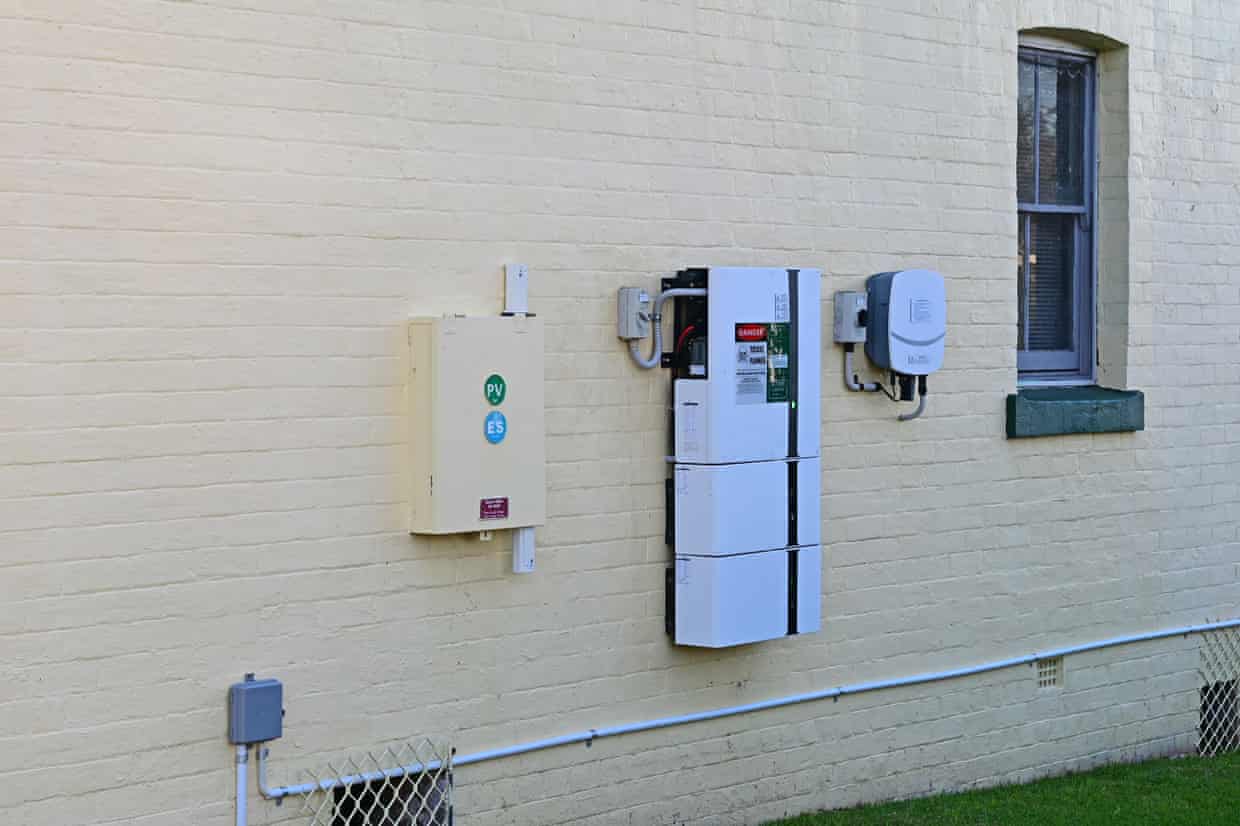
Nearly 60% of the household-scale battery capacity installed across almost 200 countries – every nation except China - this financial year will be in the southern continent, according to a recent analysis. Since July, about 415,000 have been connected. It is roughly one unit for every 25 Australian homes.
Industrial-scale batteries are being built nearly as quickly, with Australia (population: 27 million) trailing only China (1.4 billion) and the US (350 million) in new capacity after connections more than doubled last year. The increase in battery usage big and small is starting to bring down the cost of electricity from the nation’s spindly power grid, which includes more than 40,000km (24,850 miles) of transmission lines and cables between tropical far-north Queensland and the southern island state of Tasmania.
“It’s amazing,” says Tristan Edis, the author of the analysis and a director with the consultancy Green Energy Markets. “It shows again that if you go big with a technology, and you kick it off big from the start, you can make a really significant difference. If you’re a battery manufacturer focused on residential right now you really must be focused on Australia.”
Batteries counter the long-used arguments against renewables – that they are unpredictable and intermittent and therefore put extra burdens on a national grid which must have an expensive backup power source such as gas in place. Instead, batteries mean solar power can be stored and used when it is needed.
From early on in the renewable revolution, batteries were envisaged as a critical part of the puzzle. Homes would be able to install panels on their roofs to capture and convert solar energy, and batteries in their homes to store the energy and use it when they needed it. But while solar panel prices fell rapidly a few years ago, it is only in recent years that batteries have become similarly available and affordable. The US-Iran war and subsequent rise in energy prices has highlighted the advantages of renewable technologies like this, and the number of installations around the world has moved from a trickle a few years ago (Arsenal football ground being an unlikely pioneer) to a growing tide. China is far ahead, spending more on it than every other country combined. But among the rest, Australia has jumped the pack.
Previously, power prices would rocket in the evenings as gas-fired power – the most expensive form of energy generation on the Australian grid – was turned on to meet peak demand. With solar and wind now providing nearly half the electricity, and coal-fired power plants gradually closing, gas has been used to fill gaps after the sun sets.
But batteries are increasingly taking over that role. Total gas-fired generation was 24% lower across three months this summer compared with the year before. Tennant Reed, the climate change and energy director with the Australian Industry Group, representing more than 60,000 businesses, says it has “completely changed how electricity prices are formed”.
“The role of gas used to be in the evening to meet the evening peak and that came at a cost, because gas is not a cheap fuel. But more and more, every day, it is batteries that are surging into the market at 6pm,” he says. “Gas will still play a backup role but, on average, batteries are not as expensive as gas peakers and they are pushing those [gas plants] out even as electricity demand increases.”
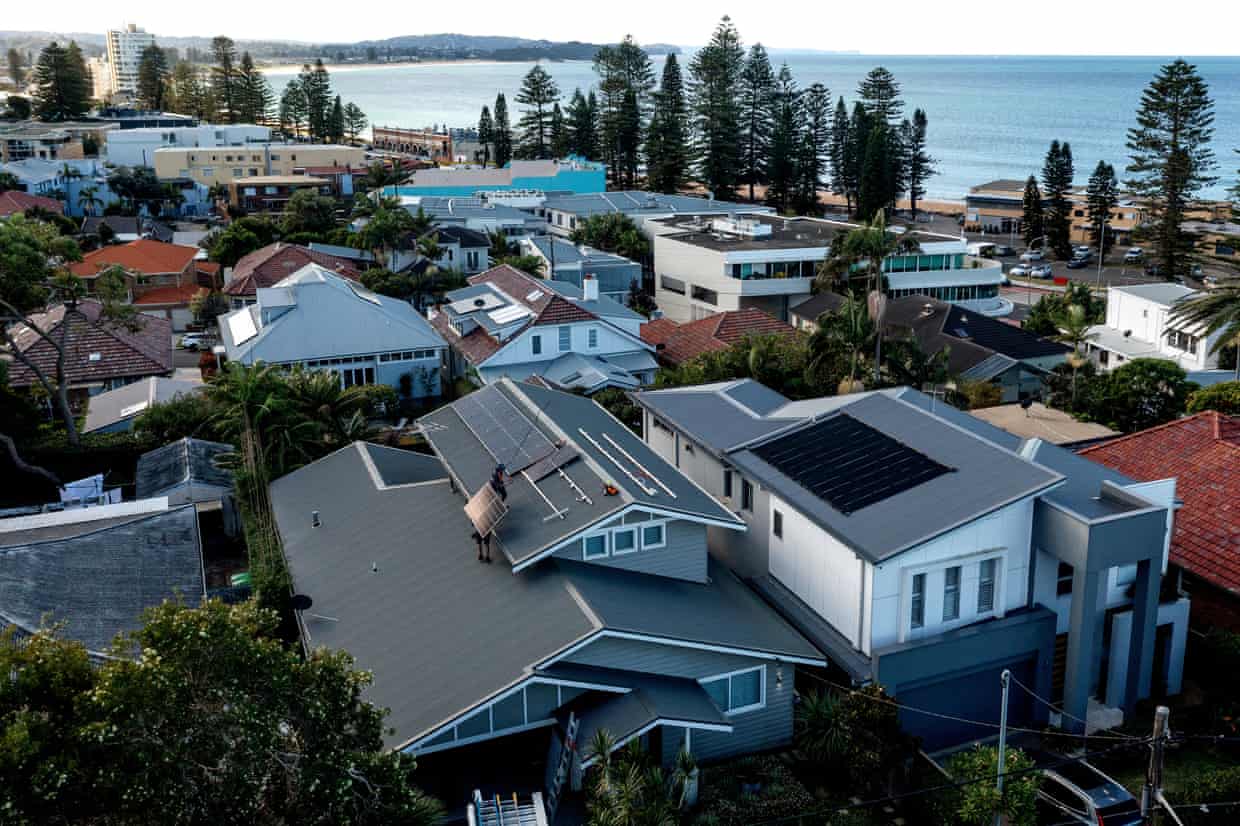
In fairness, the battery usage rise has been possible partly because Australia is a world leader in household solar on per capita terms, though no government set out for this to be the case. More than a third of houses have panels due to a happy accident of uncoordinated policies, simple and quick permitting and widespread public support. Australia is, of course, blessed with lots of sunshine, and solar may not be as productive in more temperate countries.
But it is a global story, according to Dave Jones at the energy analyst organisation Ember. “Home batteries are in the middle of a revolution, large grid-scale batteries have collapsed in price in the last two years, and the quality of them has remarkably improved, with far less critical minerals, a far longer lifetime, and with fire hazard all but eliminated. That is now feeding into the home battery market, and the home battery of today is vastly superior to the home battery of a couple of years ago.
“Already in California, across 2025, there was more solar generation in the early evening than at lunchtime, because of batteries,” Jones said. “Batteries are even good enough now to give 24x365 electricity, with the largest 1GW 24x365 plant under construction.”
The battery revolution has not been free. It was triggered by a generous taxpayer-funded subsidy from Anthony Albanese’s Labor government. Starting last July, it committed A$2.3bn (£1.4bn) over four years to cut the upfront cost for households by 30%.
The rebate was expected to support 1m battery installations by 2030, but it quickly became clear that was unrealistic. With more than 1,000 batteries being installed each day, take-up far exceeded forecasts.
Facing calls from political opponents for the programme to be cut to reduce costs, the government announced in December it would reduce the rebate for bigger batteries, but lift the total funding to A$7.2bn to keep it going to the end of the decade. The overall goal was doubled to 2m batteries.
Some critics saw the revamp as a missed opportunity. Thomas Longden, a senior research fellow at Western Sydney University who has studied where batteries have been installed, says the government should have used it to ensure the rollout targeted all parts of the country, and not favour the wealthy.
“Do we care about where these batteries go? I think we should,” Longden says. “We need to ensure there are batteries across the whole country and not just in pockets in the big cities. If that means the scheme is slower but better-targeted as part of a fast and fair transition then that is something we should consider.”
The climate change and energy minister, Chris Bowen, acknowledges the programme does not reach everyone directly – renters, in particular, are in effect excluded. But he says it has been embraced in and around his western Sydney electorate, which is not a wealthy part of the city, and argues the programme is an investment for the whole country. “When those people [with batteries] aren’t calling on gas at night or are using less gas that’s reducing prices for absolutely everyone.”
The government has also attempted to make use of the surplus solar power – and to quell anger over the rising cost of living – by announcing a “solar sharer” programme under which electricity retailers will have to offer three hours a day of free electricity to all customers, including renters. It has been broadly welcomed, though there are concerns power bill savings may be eroded if electricity companies respond by increasing other charges.
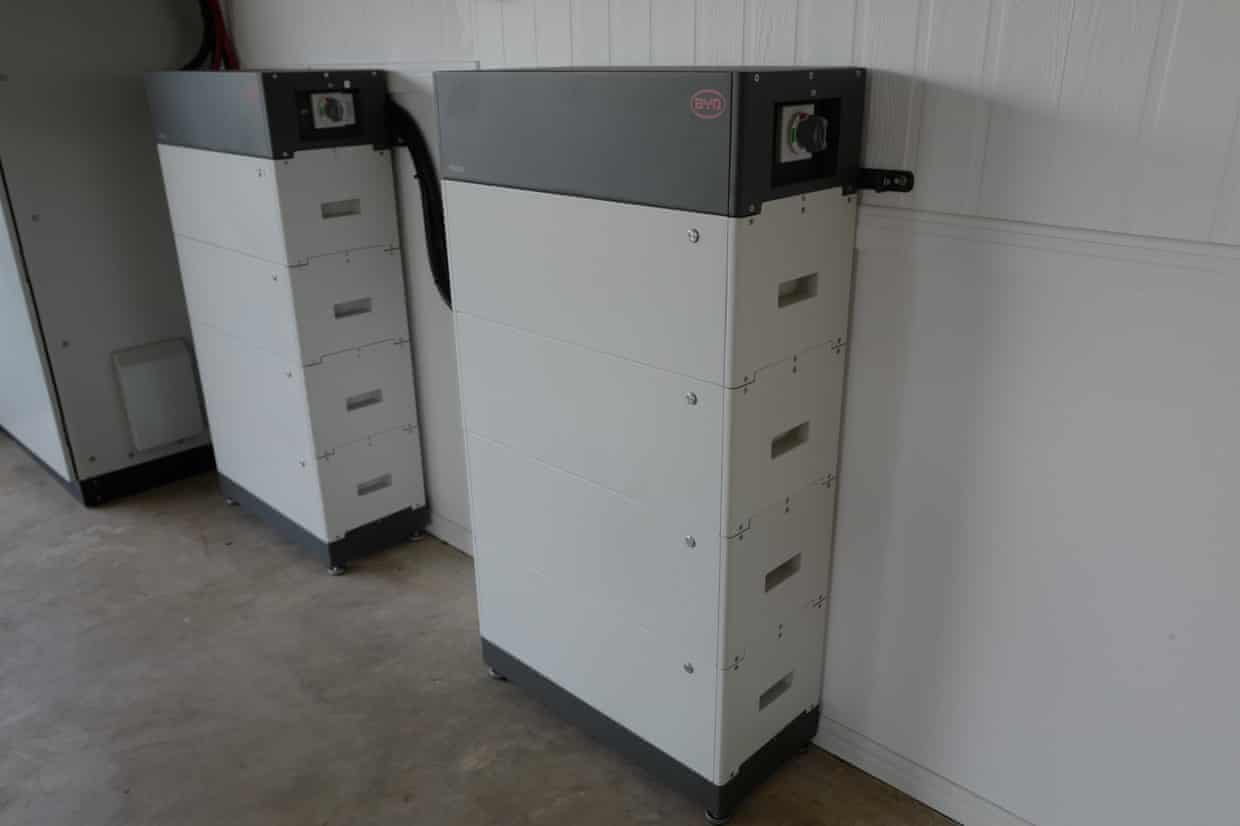
Emma Hewitt is among those to benefit from the battery scheme. A single parent who lives with her seven-year-old daughter south of Perth, she was progressively electrifying her home – solar panels, replacing a gas cooktop, leasing an electric car through her employer – when the subsidy was announced. It prompted Hewitt, a local government worker, to go for an interest-free loan to cover the rest of the cost of a 16kWh storage unit, which has allowed her to cut her reliance on the grid and save hundreds of dollars on her quarterly power bill.
“I don’t have huge amounts of savings but I can afford to pay things off out of my wages,” she says. “It has been something that I’ve wanted to do for a while, largely because I’m worried about the planet that my daughter will inherit and the incredible damage that burning fossil fuels does to that planet.”
The battery revolution has also given solar panels a boost just as some state government subsidies were removed. Against all expectations, a record for Australian solar installations was set in March as people replaced their ageing panels with new, larger ones to make the most of their storage systems. That record was broken again in April.
Australia’s rise as a household energy powerhouse has done nothing to change its ongoing support for fossil fuel expansion. It remains a world-leading exporter of coal and gas, with the Albanese government having approved 36 polluting developments since its election four years ago.
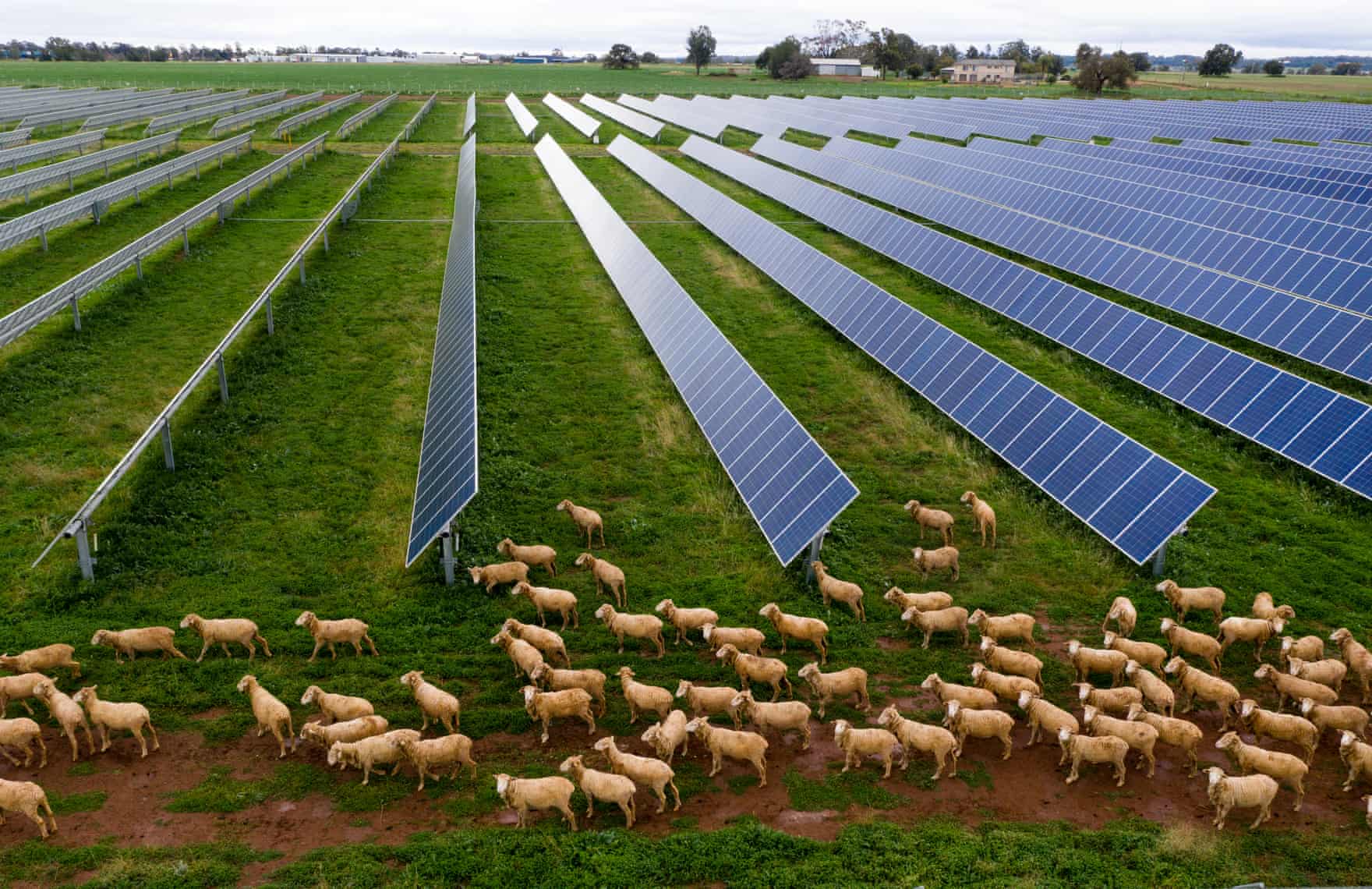
It also faces challenges in the rollout of large-scale wind and solar farms. The Clean Energy Council, an industry lobby group, this week warned that while multiple records were broken in 2025, commitments on new developments were at a decade low due to an uncertain investment market and delays and cost blowouts in transmission connections.
They mean a national government target of 82% of electricity from renewable sources by 2030 remains in doubt.
Battery construction, however, shows little sign of slowing. That transformation is evident at the site of the now destroyed Liddell coal stacks, which fell so spectacularly this week.
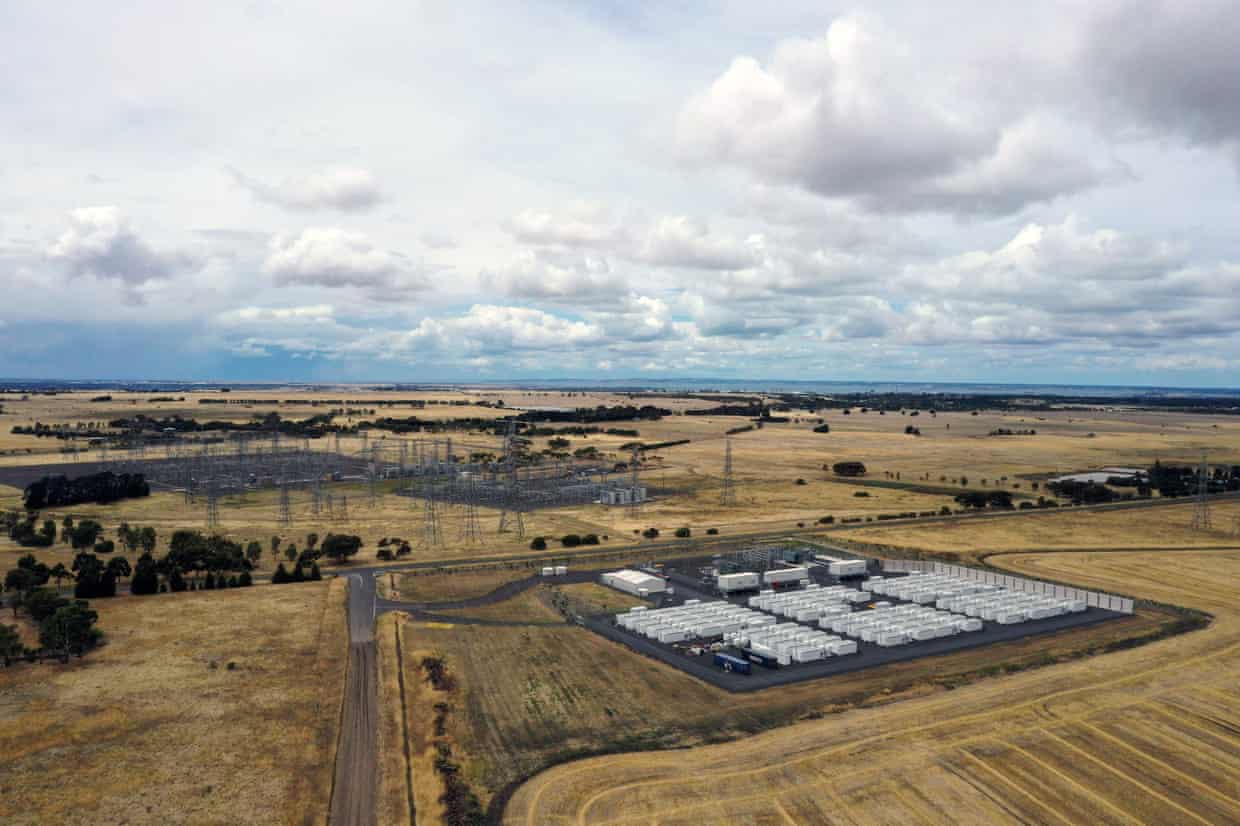
The energy company AGL – for years, Australia’s most polluting fossil fuel company – has commissioned a 500 megawatt, two-hour duration battery system to help replace it. It is due to start full commercial operation next month.
Alison Reeve, the energy and climate change programme director at the Grattan Institute thinktank, says it neatly illustrates how the energy system has been rewritten, almost overnight. Under the new model, households are producers and players in the market, not just consumers. Older forms of generation are increasingly being squeezed out. And the advent of batteries with longer durations means past criticisms of solar energy – that the sun doesn’t shine at night – is being “blown out of the water”.
“It is a profound change in how you run an energy market. The message is that if you can make rooftop solar happen, you can make a number of other changes really easily. And storing energy just opens up so much more flexibility in the system,” she says. “We’ve just found a new way to do it.”