



惯性聚合 高效追踪和阅读你感兴趣的博客、新闻、科技资讯
阅读原文 在惯性聚合中打开

推荐订阅源

C
Cisco Blogs
Cyberwarzone
Cyberwarzone
Exploit-DB.com RSS Feed
SecWiki News
SecWiki News
Martin Fowler
Martin Fowler
T
Tor Project blog
N
Netflix TechBlog - Medium
C
Cybersecurity and Infrastructure Security Agency CISA
V
Vulnerabilities – Threatpost
V
Visual Studio Blog
GbyAI
GbyAI
PCI Perspectives
PCI Perspectives
D
DataBreaches.Net
Jina AI
Jina AI
H
Heimdal Security Blog
云风的 BLOG
云风的 BLOG
P
Privacy International News Feed
A
About on SuperTechFans
J
Java Code Geeks
美团技术团队
H
Hackread – Cybersecurity News, Data Breaches, AI and More
N
News | PayPal Newsroom
有赞技术团队
有赞技术团队
MyScale Blog
MyScale Blog
博客园 - 司徒正美
C
Check Point Blog
T
Threat Research - Cisco Blogs
Attack and Defense Labs
宝玉的分享
宝玉的分享
AI
AI
Simon Willison's Weblog
C
Cyber Attacks, Cyber Crime and Cyber Security
I
Intezer
P
Proofpoint News Feed
Blog — PlanetScale
Blog — PlanetScale
Apple Machine Learning Research
Hugging Face - Blog
Hugging Face - Blog
The Last Watchdog
The Last Watchdog
freeCodeCamp Programming Tutorials: Python, JavaScript, Git & More
Vercel News
Vercel News
I
InfoQ
阮一峰的网络日志
阮一峰的网络日志
Cisco Talos Blog
Cisco Talos Blog
W
WeLiveSecurity
Hacker News: Ask HN
Hacker News: Ask HN
Recent Commits to openclaw:main
奇客Solidot–传递最新科技情报
奇客Solidot–传递最新科技情报
D
Docker
博客园 - Franky
Security Archives - TechRepublic

Asia Times

Taiwan’s KMT offers US an off-ramp from war with China F/A-XX fighter tests future of US carrier power against China US, China forge rival fusion chains as Europe weighs role Who is calling the shots in Iran? Large Hadron Collider results hint at undiscovered physics The US counterterrorism czar without a counterterrorism plan Japan’s Takaichi chooses guns over butter — at her peril Iran war leaves Asian nations weighing their nuclear options Southeast Asia holds the key to unlocking Korean impasse In jab at Taiwan, China ramps up military support for Somalia Iran war is turbocharging China’s Africa pivot China’s drone-laid mines aim to trap US in a Taiwan war AI and robots can’t fill bellies – so, capitalism’s end? Next, an Iran nuclear deal with Chinese characteristics Iran top diplomat says country may rejoin Islamabad peace talks Iran, not US, cancels Hormuz blockade after Israel-Lebanon truce Israel-Lebanon ceasefire no tidy end to fighting, Hormuz shutdown Congressional Dems probe envoy Jared Kushner’s Arab money ties Manacled Manus: the limits of ‘Singapore washing’ for China AI China Shock 2.0 jolts global economy as Trump does Xi’s work Disrupted supply chains, divided politics Will Russia attack Ukraine’s European drone suppliers? AI shrinking the margin for nuclear error in South Asia Iran's low-cost drones democratizing precision warfare - Asia Times Israel-Lebanon ceasefire won’t end the death and suffering Don’t hold your breath on a truly European NATO AI boom’s real profits are being made in Asia Hong Kong banks dependent on SWIFT are warned of new US sanctions US starting to respond to challenge of massive drone incursions - Asia Times Trans-Himalayan net zero is a strategic necessity for Asia Alarm bells follow new report of looming US plan to attack Cuba Trump says Israel and Lebanon have agreed to 10-day ceasefire Cuba: the Bay of Pigs invasion 65 years later The legendary cyberpunk anime ‘Akira’ demands a rewatch China’s satellite boost gives Iran a US targeting edge Indonesia losing its sovereign way between US and China Taiwan’s opposition courting China as faith in US fades China carefully navigating Iran’s tighter Hormuz grip Will oil prices ever truly return to ‘normal’? Russia’s war on Telegram may ignite the very fire it fears US Big Oil earning $30 million per hour from Iran war Sending combat troops to exercise, Japan leaves WWII ghosts behind - Asia Times Trump budget director defends 43% military spending boost Don’t believe claims Southeast Asia scam schemes were shut down Blockade v blockade fallout may be not just a world energy crisis Iran war putting China’s economy in a tight spot New resistance alliance built to win Myanmar's civil war - Asia Times US Navy leaning on AI to sweep Iran’s Hormuz mines Trump vs Pope: A US-Vatican rift centuries in the making - Asia Times US Hormuz blockade may not survive a Chinese standoff - Asia Times Iran war inflicting losses that will never be recovered Did Trump just light the match for World War III? Allied shipyards key to closing US naval gap with China Russia’s navy deterred Estonia from boarding its ‘shadow fleet’ In Hormuz war of words, US illustrates threat with ‘drug boat’ hit China faces Trump’s Iran offensive in the Hormuz Strait Medieval Christian tropes inflaming Islamophobic Iran war debate EU loan aims to keep Ukraine war going until 2029 Third China Shock exposing US’s broken defense economics Who should speak for Myanmar? Not Min Aung Hlaing - Asia Times Humanity isn’t ready for AI’s biological threat Quad needs to break China’s rare earth hold on Myanmar Iran war threatening to shatter the global economy - Asia Times US Air Force unready for a prolonged war with China US Hormuz blockade, tariffs jolt China - Asia Times Trump needs A-10s to go after Iranian speedboats and patrol ships NATO allies bash Trump’s Hormuz blockade as oil passes $100 a bbl Trump: with God on his side?  - Asia Times Top Iran diplomat: Deal ‘inches away,’ Trump team sabotaged talks Iran war as a cage Trump can't escape - Asia Times Dueling Hormuz blockades push world to the brink China tech companies going gangbusters in the Gulf Quantum computers to break our codes faster than expected To Lam’s Vietnam drifting perceptibly closer to China Hungarian voters end 16 straight years of Orban’s far-right rule Five emerging themes for the Indo-Pacific from Trump's Iran war - Asia Times Trump announces closure of Hormuz Strait as Iran talks falter - Asia Times Iran has weakened US in the great power game Time to give the Trump-Putin-Orban axis a slap in the face China’s Middle East billions still woefully reliant on US gunboats Indonesia can’t stay silent on China’s UUV incursion Too many players, too many grievances for one ceasefire to hold Japan’s unsustainable pacifist delusion US lawmakers seek to block China’s DUV lithography access For South Korea, an alliance in question Trump aides caught with pants down as Iran war gooses inflation Non-rich Asian states, hit hardest by Iran crisis, ration energy Structural strains grip Tokyo and Seoul US isn’t losing soft power in SE Asia — it’s ceding it to China KMT’s ‘imperialist’ rhetoric shifts Taiwan’s democratic fault line Iran ceasefire: too many brokers, too little leverage Ending Israel’s war on peace Iran ceasefire won’t easily ease emerging Asia’s pain N Korea building a new war playbook from Iran and Ukraine America’s Soviet moment: Why Trump is looking like Yeltsin Can Pakistan deliver as Washington’s go-to mediator with Iran? CNBC anchor mulls investor ‘upside’ of Trump civilizational threat With Middle East in flames, Trump eyes ‘next conquest’ Vietnam: all the power in To Lam’s grasping hands Mooted South China Sea oil deal with China draws fire in Manila
The deal to reopen Hormuz is nowhere near done
2026-04-10 · via Asia Times

Wednesday’s ceasefire announcement by President Donald Trump, linked to Iran reopening the Strait of Hormuz, prompted immediate optimism shipping would quickly resume. It didn’t.

The following morning, traffic remained minimal. A handful of vessels, largely linked to Iran, made the transit. But most of the ships waiting in the Gulf stayed put. Iran announced shortly afterwards that it would effectively close the strait because of Israel’s attacks on Lebanon.

The reality is the strait was never closed. Framing the issue as “open” or “closed” misses the point. Ships are not being physically blocked. They are being deterred.

Over recent weeks, Iran has demonstrated both the capability and intent to target commercial shipping. Attacks and credible threats against vessels have driven daily transits down from around 130 to just a handful. Until that risk changes, ships will not return in meaningful numbers.

So what can be done to turn this around?

Both walking and talking

The ceasefire declarations have added to the uncertainty rather than resolved it. Washington has asserted that the strait is open.

Tehran’s messaging has been more ambiguous, including references to requiring vessels to inform Iranian authorities before transiting. Some interpret this as a precursor to attempts to exert control over the waterway through a toll.

This ambiguity matters. Shipping is a commercial activity driven by risk calculations. Operators and crews will not move on the basis of political statements, particularly when recent experience suggests those statements may not hold.

In practice, restoring traffic through the strait will likely occur in two phases. The first is reducing the threat. That can occur through military means, diplomacy, or a combination of both, but it must materially degrade Iran’s ability and willingness to target shipping.

The second is reassurance. Even if Iran’s attacks on civilian shipping stop as a result of the ceasefire, shipping will not immediately return. Confidence has been shaken and will take time to rebuild.

A credible reassurance effort would include limited naval escorts, at least initially. It’s notable the US did not move immediately to demonstrate confidence in the ceasefire by escorting US flagged and crewed commercial vessels out of the Gulf.

That would have sent a clear signal to industry, helped restore confidence in transits and undercut subsequent Iranian claims that ships require approval from its armed forces.

Given Iran’s interest in maintaining the ceasefire, it would have been unlikely to challenge ships under US naval protection. The US hesitation has instead created space for Iran to entrench its position, pushing vessels closer to its coastline and reinforcing its ability to shape how the strait is used.

An effective reassurance campaign would also involve a broader international presence to provide surveillance, information-sharing and rapid response capability. The international community should move quickly to establish this. Its very establishment would help restore confidence in transits.

We have seen this model before. The International Maritime Security Construct, established in 2019 following Iranian attacks in the Gulf of Oman, focused on transparency, coordination and reassurance rather than large-scale convoy operations.

I served as the construct’s director of plans in 2020. A similar, but more effective, approach is likely to be required again. It is not a silver bullet, but reassurance is layered, and this would at least provide the clarity and communication shippers need.

Diplomacy will also matter. Clear, coordinated messaging from the international community, backed by explicit economic consequences for any renewed attacks on merchant shipping, will be essential to rebuilding confidence.

The question of tolls

There has also been speculation about whether Iran might seek to impose a toll on vessels transiting the strait.

The legal position here is clear. The Strait of Hormuz is an international strait under the United Nations Convention on the Law of the Sea.

Ships enjoy the right of transit passage through the strait. Charging vessels for passage would cut directly against that principle and set a dangerous precedent for other strategic waterways.

There are early signs Iran is testing the boundaries. Reports of radio calls warning vessels they require approval to transit, and suggestions that ships should notify Iranian authorities before transiting, point to an attempt to exert greater control over the strait.

That should be resisted.
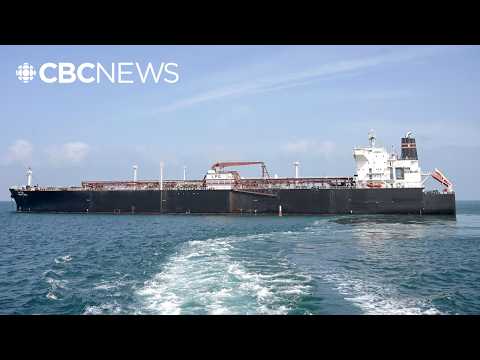
YouTube video

Allowing a toll, or even limited restrictions, to take hold in the Strait of Hormuz would have far-reaching consequences, undermining the central principle of maritime trade: freedom of navigation. Regardless of Donald Trump’s flippant comments, the international community is unlikely to accept any enduring Iranian toll system.

If Iran attempts to pursue one, it should face clear economic consequences, including sanctions.

Questions remain about whether mines have been laid in or near the strait. Even the suggestion adds to uncertainty and reinforces the need for a coordinated international response, including transparent assessments of the threat environment.

A clear, public assessment from the international community on whether the strait has in fact been mined would go a long way. It should be an early priority for any coalition effort.

The bottom line

Ultimately, shipping will return to the Strait of Hormuz not when it is declared open, but when it is assessed to be safe enough.

That will require a sustained period without attacks, a visible international effort to secure the waterway, and clear signalling that the rules governing international straits will be upheld.

Until then, the ships will wait.

Jennifer Parker is adjunct professor, Defence and Security Institute, The University of Western Australia; UNSW Sydney

This article is republished from The Conversation under a Creative Commons license. Read the original article.