
惯性聚合 高效追踪和阅读你感兴趣的博客、新闻、科技资讯
阅读原文 在惯性聚合中打开

推荐订阅源

人人都是产品经理
人人都是产品经理
MyScale Blog
MyScale Blog
Y
Y Combinator Blog
罗磊的独立博客
奇客Solidot–传递最新科技情报
奇客Solidot–传递最新科技情报
P
Proofpoint News Feed
Google DeepMind News
V
Vulnerabilities – Threatpost
T
The Blog of Author Tim Ferriss
云风的 BLOG
云风的 BLOG
Recorded Future
Recorded Future
N
News and Events Feed by Topic
B
Blog RSS Feed
阮一峰的网络日志
阮一峰的网络日志
博客园_首页
C
CXSECURITY Database RSS Feed - CXSecurity.com
博客园 - 【当耐特】
N
Netflix TechBlog - Medium
博客园 - 叶小钗
B
Blog
Vercel News
Vercel News
T
Tenable Blog
T
The Exploit Database - CXSecurity.com
Spread Privacy
Spread Privacy
T
Threat Research - Cisco Blogs
Cyber Security Advisories - MS-ISAC
Last Week in AI
Last Week in AI
F
Fortinet All Blogs
cs.CL updates on arXiv.org
Microsoft Security Blog
S
Securelist
Microsoft Azure Blog
钛媒体:引领未来商业与生活新知
钛媒体:引领未来商业与生活新知
P
Palo Alto Networks Blog
让小产品的独立变现更简单 - ezindie.com
D
DataBreaches.Net
Cyberwarzone
Cyberwarzone
Engineering at Meta
Engineering at Meta
Martin Fowler
Martin Fowler
G
GRAHAM CLULEY
Project Zero
Project Zero
Cisco Talos Blog
Cisco Talos Blog
A
Arctic Wolf
C
CERT Recently Published Vulnerability Notes
L
LangChain Blog
cs.AI updates on arXiv.org
C
Check Point Blog
A
About on SuperTechFans
W
WeLiveSecurity
The GitHub Blog
The GitHub Blog

Asia Times

Taiwan’s KMT offers US an off-ramp from war with China F/A-XX fighter tests future of US carrier power against China US, China forge rival fusion chains as Europe weighs role Who is calling the shots in Iran? Large Hadron Collider results hint at undiscovered physics The US counterterrorism czar without a counterterrorism plan Japan’s Takaichi chooses guns over butter — at her peril Iran war leaves Asian nations weighing their nuclear options Southeast Asia holds the key to unlocking Korean impasse In jab at Taiwan, China ramps up military support for Somalia Iran war is turbocharging China’s Africa pivot China’s drone-laid mines aim to trap US in a Taiwan war AI and robots can’t fill bellies – so, capitalism’s end? Next, an Iran nuclear deal with Chinese characteristics Iran, not US, cancels Hormuz blockade after Israel-Lebanon truce Israel-Lebanon ceasefire no tidy end to fighting, Hormuz shutdown Congressional Dems probe envoy Jared Kushner’s Arab money ties Manacled Manus: the limits of ‘Singapore washing’ for China AI China Shock 2.0 jolts global economy as Trump does Xi’s work Disrupted supply chains, divided politics Will Russia attack Ukraine’s European drone suppliers? AI shrinking the margin for nuclear error in South Asia Iran's low-cost drones democratizing precision warfare - Asia Times Israel-Lebanon ceasefire won’t end the death and suffering Don’t hold your breath on a truly European NATO AI boom’s real profits are being made in Asia Hong Kong banks dependent on SWIFT are warned of new US sanctions US starting to respond to challenge of massive drone incursions - Asia Times Trans-Himalayan net zero is a strategic necessity for Asia Alarm bells follow new report of looming US plan to attack Cuba Trump says Israel and Lebanon have agreed to 10-day ceasefire Cuba: the Bay of Pigs invasion 65 years later The legendary cyberpunk anime ‘Akira’ demands a rewatch China’s satellite boost gives Iran a US targeting edge Indonesia losing its sovereign way between US and China Taiwan’s opposition courting China as faith in US fades China carefully navigating Iran’s tighter Hormuz grip Will oil prices ever truly return to ‘normal’? Russia’s war on Telegram may ignite the very fire it fears US Big Oil earning $30 million per hour from Iran war Sending combat troops to exercise, Japan leaves WWII ghosts behind - Asia Times Trump budget director defends 43% military spending boost Don’t believe claims Southeast Asia scam schemes were shut down Blockade v blockade fallout may be not just a world energy crisis Iran war putting China’s economy in a tight spot New resistance alliance built to win Myanmar's civil war - Asia Times US Navy leaning on AI to sweep Iran’s Hormuz mines Trump vs Pope: A US-Vatican rift centuries in the making - Asia Times US Hormuz blockade may not survive a Chinese standoff - Asia Times Iran war inflicting losses that will never be recovered Did Trump just light the match for World War III? Allied shipyards key to closing US naval gap with China Russia’s navy deterred Estonia from boarding its ‘shadow fleet’ In Hormuz war of words, US illustrates threat with ‘drug boat’ hit China faces Trump’s Iran offensive in the Hormuz Strait Medieval Christian tropes inflaming Islamophobic Iran war debate EU loan aims to keep Ukraine war going until 2029 Third China Shock exposing US’s broken defense economics Who should speak for Myanmar? Not Min Aung Hlaing - Asia Times Humanity isn’t ready for AI’s biological threat Quad needs to break China’s rare earth hold on Myanmar Iran war threatening to shatter the global economy - Asia Times US Air Force unready for a prolonged war with China US Hormuz blockade, tariffs jolt China - Asia Times Trump needs A-10s to go after Iranian speedboats and patrol ships NATO allies bash Trump’s Hormuz blockade as oil passes $100 a bbl Trump: with God on his side?  - Asia Times Top Iran diplomat: Deal ‘inches away,’ Trump team sabotaged talks Iran war as a cage Trump can't escape - Asia Times Dueling Hormuz blockades push world to the brink China tech companies going gangbusters in the Gulf Quantum computers to break our codes faster than expected To Lam’s Vietnam drifting perceptibly closer to China Hungarian voters end 16 straight years of Orban’s far-right rule Five emerging themes for the Indo-Pacific from Trump's Iran war - Asia Times Trump announces closure of Hormuz Strait as Iran talks falter - Asia Times Iran has weakened US in the great power game Time to give the Trump-Putin-Orban axis a slap in the face China’s Middle East billions still woefully reliant on US gunboats Indonesia can’t stay silent on China’s UUV incursion Too many players, too many grievances for one ceasefire to hold Japan’s unsustainable pacifist delusion US lawmakers seek to block China’s DUV lithography access For South Korea, an alliance in question Trump aides caught with pants down as Iran war gooses inflation Non-rich Asian states, hit hardest by Iran crisis, ration energy Structural strains grip Tokyo and Seoul US isn’t losing soft power in SE Asia — it’s ceding it to China KMT’s ‘imperialist’ rhetoric shifts Taiwan’s democratic fault line The deal to reopen Hormuz is nowhere near done Iran ceasefire: too many brokers, too little leverage Ending Israel’s war on peace Iran ceasefire won’t easily ease emerging Asia’s pain N Korea building a new war playbook from Iran and Ukraine America’s Soviet moment: Why Trump is looking like Yeltsin Can Pakistan deliver as Washington’s go-to mediator with Iran? CNBC anchor mulls investor ‘upside’ of Trump civilizational threat With Middle East in flames, Trump eyes ‘next conquest’ Vietnam: all the power in To Lam’s grasping hands Mooted South China Sea oil deal with China draws fire in Manila
Lessons for new Apple CEO Ternus in Steve Jobs’s wilderness years
Geoffrey Cai · 2026-04-23 · via Asia Times

Apple has named John Ternus, its head of hardware engineering, as its next CEO. At the same moment, Apple is paying Google roughly a billion dollars a year to run the AI brain of Siri, because Apple’s own AI hasn’t been good enough.

Apple’s hardware is excellent but the AI is not. And the AI is where the next decade of computing is going to be decided. These two things are true at once, and I’ve been turning them over this week.

Steve Jobs faced a version of this problem, and got it wrong for most of a decade before he got it right. That’s the story I’ve spent four years reporting. After Apple pushed him out in 1985, Jobs started a company called NeXT and ran it for twelve years.

My book on those years, Steve Jobs in Exile, is out May 19. The ending is famous. Apple bought NeXT for its software, Jobs came back and the iPhone followed. What gets skipped is the eight years in the middle, when Jobs almost lost everything because he couldn’t hear what his own customers were telling him.

I keep thinking about one scene.
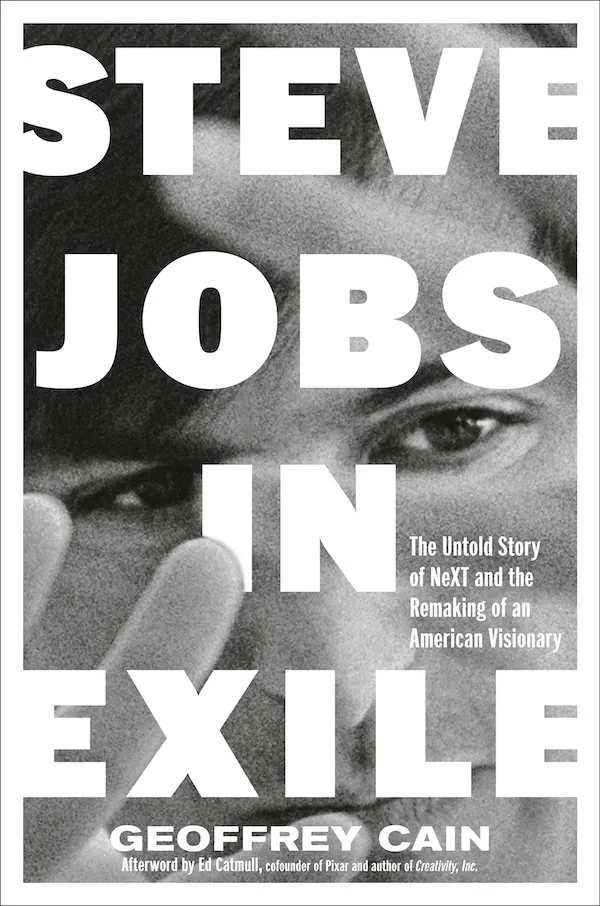
Cover image: Portfolio / Penguin

By the early 1990s, NeXT was burning through cash. The computers were beautiful and too expensive. The machine Jobs had poured five years into – a black magnesium cube with a fragile paint job and a finicky optical disc drive – wasn’t selling. What was moving was the software. The operating system called NeXTSTEP was around five to seven years ahead of anything else on the market. Developers and customers loved it, and a handful of firms were building their businesses on top of it.

One of those firms was O’Connor & Associates, a Chicago high-speed trading shop. NeXTSTEP let them write proprietary trading software fast, which gave them an edge on Wall Street. One day a principal from O’Connor showed up unannounced at NeXT’s offices in Redwood City, California, and asked to see Phil Wilson, NeXT’s human resources chief.

He closed the door.

“Phil,” he said, “you have to help me make Steve understand the value of NeXT computers to us is not in the hardware, it’s in the software.”

O’Connor had done the math. Without NeXTSTEP, they’d lose their trading advantage, and without the NeXT computer, they’d lose NeXTSTEP. They were so dependent on the software that at the end of every quarter they called NeXT and ordered the most expensive workstations on the price list, overspecced, overpriced, whatever it took.

“O’Connor basically made payroll,” Mike Slade, NeXT’s marketing VP at the time, told me. The firm was propping up the hardware business just to keep the software alive.
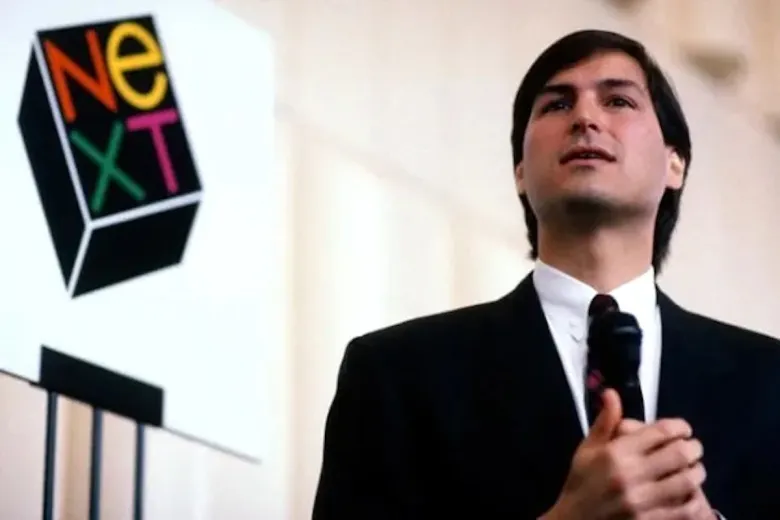
Steve Jobs during his time at NeXT Computer. Image: Distrito Medico Monterrey / Flickr

Phil Wilson went back to his office and wrote Jobs a long email laying it all out. NeXT should abandon hardware. Become a software company. The customers were telling them where the value was.

Jobs wrote back, “You’re an HR guy.” Then a subtle threat. If NeXT became a software company, he wrote, it would have to downsize, “and we won’t need a guy like you.”

It took Jobs two more years and two more rounds of layoffs and a near-bankruptcy to figure out what he needed to hear. On a day employees called “Black Tuesday” in February 1993, Jobs finally shut down the hardware division, laid off most of his employees, and sold what was left to Canon. Three years later, he told Terry Gross on Fresh Air that the door to start a new hardware company had closed before NeXT ever opened. He just hadn’t seen it at the time.

Here’s what I want to be careful about, because it’s easy to draw the wrong lesson from this. Jobs’s original NeXT vision, hardware and software built together as one integrated platform, was prescient. That vision is literally what saved Apple after he returned in 1997 and was later appointed CEO. The iPhone is the purest expression of it, hardware and software bound together, designed as one object, by a company that owns both stacks.

The mistake at NeXT wasn’t betting on hardware-plus-software. It was insisting on selling that vision on Jobs’s terms, in Jobs’s form factor, at Jobs’s prices, while customers were telling him what they actually needed was the piece they could afford and use. He wanted to show them his vision for the future, but they wanted a tool that solved their problems right now. It took him most of a decade to see that those were different things.

Now look at Apple in 2026. The hardware is still the best in the business. The integration – device to chip to OS – is the thing no competitor can match. That part of the original vision is intact. What’s failing, what has been failing for two years now, is the AI. Apple Intelligence landed with a thud and the promised personalized Siri got delayed. The company finally cut a check to Google for a custom Gemini model to paper over the gap.

And, in that moment, the board named a hardware engineer to run the company and promoted another hardware engineer, Johny Srouji, to oversee all the devices.

There is a version of the future where this is the right call. Apple’s silicon team is extraordinary. On-device AI may turn out to be where the next ten years are actually decided, and no one is better positioned for that than the company Ternus is about to lead. Maybe the Google deal is a bridge – the way Google Maps was on the first iPhone – and Apple is two years away from running the same integrated play on AI that it ran on chips.

That’s the bull case. I don’t dismiss it.

The story I keep coming back to is NeXT. A company doubles down on the thing it knows how to do, while its customers try to tell it something has shifted. The founder, or the board, doesn’t hear it. The problem is that it would require giving up a version of the company they’ve spent years building.

Tech author and veteran Asia news correspondent Geoffrey Cain‘s Steve Jobs in Exile comes out May 19 from Portfolio/Penguin. If this piece resonated, the book is the full story. Pre-order here. Subscribe for free to his Substack newsletter The Burner Files.