





惯性聚合 高效追踪和阅读你感兴趣的博客、新闻、科技资讯
阅读原文 在惯性聚合中打开

推荐订阅源

G
GRAHAM CLULEY
T
Tenable Blog
Know Your Adversary
Know Your Adversary
C
CXSECURITY Database RSS Feed - CXSecurity.com
P
Privacy International News Feed
S
Security Affairs
NISL@THU
NISL@THU
O
OpenAI News
Attack and Defense Labs
Application and Cybersecurity Blog
Hacker News: Ask HN
Hacker News: Ask HN
Webroot Blog
Webroot Blog
Schneier on Security
S
SegmentFault 最新的问题
S
Schneier on Security
G
Google Developers Blog
V
V2EX
C
Check Point Blog
U
Unit 42
Google DeepMind News
T
Threatpost
阮一峰的网络日志
阮一峰的网络日志
T
The Exploit Database - CXSecurity.com
Recent Announcements
M
MIT News - Artificial intelligence
S
Secure Thoughts
博客园 - 司徒正美
Recorded Future
Recorded Future
P
Proofpoint News Feed
Spread Privacy
Spread Privacy
K
Kaspersky official blog
Cyber Security Advisories - MS-ISAC
AI
AI
博客园 - 聂微东
N
News and Events Feed by Topic
SecWiki News
SecWiki News
钛媒体:引领未来商业与生活新知
钛媒体:引领未来商业与生活新知
V
Vulnerabilities – Threatpost
P
Palo Alto Networks Blog
OSCHINA 社区最新新闻
OSCHINA 社区最新新闻
Engineering at Meta
Engineering at Meta
Recent Commits to openclaw:main
奇客Solidot–传递最新科技情报
奇客Solidot–传递最新科技情报
酷 壳 – CoolShell
酷 壳 – CoolShell
WordPress大学
WordPress大学
The Hacker News
The Hacker News
The Last Watchdog
The Last Watchdog
Project Zero
Project Zero
W
WeLiveSecurity
博客园 - Franky

Asia Times

Taiwan’s KMT offers US an off-ramp from war with China F/A-XX fighter tests future of US carrier power against China US, China forge rival fusion chains as Europe weighs role Who is calling the shots in Iran? Large Hadron Collider results hint at undiscovered physics The US counterterrorism czar without a counterterrorism plan Japan’s Takaichi chooses guns over butter — at her peril Iran war leaves Asian nations weighing their nuclear options Southeast Asia holds the key to unlocking Korean impasse In jab at Taiwan, China ramps up military support for Somalia Iran war is turbocharging China’s Africa pivot China’s drone-laid mines aim to trap US in a Taiwan war AI and robots can’t fill bellies – so, capitalism’s end? Next, an Iran nuclear deal with Chinese characteristics Iran top diplomat says country may rejoin Islamabad peace talks Iran, not US, cancels Hormuz blockade after Israel-Lebanon truce Israel-Lebanon ceasefire no tidy end to fighting, Hormuz shutdown Congressional Dems probe envoy Jared Kushner’s Arab money ties Manacled Manus: the limits of ‘Singapore washing’ for China AI China Shock 2.0 jolts global economy as Trump does Xi’s work Disrupted supply chains, divided politics Will Russia attack Ukraine’s European drone suppliers? AI shrinking the margin for nuclear error in South Asia Iran's low-cost drones democratizing precision warfare - Asia Times Israel-Lebanon ceasefire won’t end the death and suffering Don’t hold your breath on a truly European NATO AI boom’s real profits are being made in Asia Hong Kong banks dependent on SWIFT are warned of new US sanctions US starting to respond to challenge of massive drone incursions - Asia Times Trans-Himalayan net zero is a strategic necessity for Asia Alarm bells follow new report of looming US plan to attack Cuba Trump says Israel and Lebanon have agreed to 10-day ceasefire Cuba: the Bay of Pigs invasion 65 years later The legendary cyberpunk anime ‘Akira’ demands a rewatch China’s satellite boost gives Iran a US targeting edge Indonesia losing its sovereign way between US and China Taiwan’s opposition courting China as faith in US fades China carefully navigating Iran’s tighter Hormuz grip Will oil prices ever truly return to ‘normal’? Russia’s war on Telegram may ignite the very fire it fears US Big Oil earning $30 million per hour from Iran war Sending combat troops to exercise, Japan leaves WWII ghosts behind - Asia Times Trump budget director defends 43% military spending boost Don’t believe claims Southeast Asia scam schemes were shut down Blockade v blockade fallout may be not just a world energy crisis Iran war putting China’s economy in a tight spot New resistance alliance built to win Myanmar's civil war - Asia Times US Navy leaning on AI to sweep Iran’s Hormuz mines Trump vs Pope: A US-Vatican rift centuries in the making - Asia Times US Hormuz blockade may not survive a Chinese standoff - Asia Times Iran war inflicting losses that will never be recovered Did Trump just light the match for World War III? Allied shipyards key to closing US naval gap with China Russia’s navy deterred Estonia from boarding its ‘shadow fleet’ In Hormuz war of words, US illustrates threat with ‘drug boat’ hit China faces Trump’s Iran offensive in the Hormuz Strait Medieval Christian tropes inflaming Islamophobic Iran war debate EU loan aims to keep Ukraine war going until 2029 Third China Shock exposing US’s broken defense economics Who should speak for Myanmar? Not Min Aung Hlaing - Asia Times Humanity isn’t ready for AI’s biological threat Quad needs to break China’s rare earth hold on Myanmar Iran war threatening to shatter the global economy - Asia Times US Air Force unready for a prolonged war with China US Hormuz blockade, tariffs jolt China - Asia Times Trump needs A-10s to go after Iranian speedboats and patrol ships NATO allies bash Trump’s Hormuz blockade as oil passes $100 a bbl Trump: with God on his side?  - Asia Times Top Iran diplomat: Deal ‘inches away,’ Trump team sabotaged talks Iran war as a cage Trump can't escape - Asia Times Dueling Hormuz blockades push world to the brink China tech companies going gangbusters in the Gulf Quantum computers to break our codes faster than expected To Lam’s Vietnam drifting perceptibly closer to China Hungarian voters end 16 straight years of Orban’s far-right rule Five emerging themes for the Indo-Pacific from Trump's Iran war - Asia Times Trump announces closure of Hormuz Strait as Iran talks falter - Asia Times Iran has weakened US in the great power game Time to give the Trump-Putin-Orban axis a slap in the face China’s Middle East billions still woefully reliant on US gunboats Indonesia can’t stay silent on China’s UUV incursion Japan’s unsustainable pacifist delusion US lawmakers seek to block China’s DUV lithography access For South Korea, an alliance in question Trump aides caught with pants down as Iran war gooses inflation Non-rich Asian states, hit hardest by Iran crisis, ration energy Structural strains grip Tokyo and Seoul US isn’t losing soft power in SE Asia — it’s ceding it to China KMT’s ‘imperialist’ rhetoric shifts Taiwan’s democratic fault line The deal to reopen Hormuz is nowhere near done Iran ceasefire: too many brokers, too little leverage Ending Israel’s war on peace Iran ceasefire won’t easily ease emerging Asia’s pain N Korea building a new war playbook from Iran and Ukraine America’s Soviet moment: Why Trump is looking like Yeltsin Can Pakistan deliver as Washington’s go-to mediator with Iran? CNBC anchor mulls investor ‘upside’ of Trump civilizational threat With Middle East in flames, Trump eyes ‘next conquest’ Vietnam: all the power in To Lam’s grasping hands Mooted South China Sea oil deal with China draws fire in Manila
Too many players, too many grievances for one ceasefire to hold
2026-04-11 · via Asia Times

US President Donald Trump’s rapid and dramatic turn from threatening to kill “an entire civilization” in Iran on the morning of April 7, 2026, to announcing a two-week ceasefire later that day left many observers with a sense of whiplash.

While it is difficult to predict whether the ceasefire between the US and Iran will hold or how events will unfold, the dynamics of the conflict so far reveal multiple vulnerabilities in the short term and numerous detrimental effects on the region in the medium to long term.

Already, the truce has shown signs of strain. Iran and the US almost immediately offered dueling narratives about the agreement, including whether it would cover the war in Lebanon.

Iran and Pakistan, the primary mediator, asserted that it would, while the US and Israel, which pledged to honor the US agreement, said it would not. Indeed, a day after the ceasefire came into force, Israel conducted some of its most intense bombing in Lebanon to date.

As an expert in Middle East politics, I believe that the involvement of so many governments and militant groups – in both the negotiation process and in terms of the regional effects of the conflict – make it more difficult to uphold a ceasefire.

Over the past decade, there has been a shift in regional alliances in the Middle East, leading to increasingly assertive foreign policies by many countries and a deepening rivalry between Iran and Saudi Arabia.

The current war only fuels these dynamics, incentivizing competition and offering governments and militant groups new opportunities to exert leverage over opponents.

The current reality also underlines the idea that external intervention and privileging war over diplomacy has made conflict resolution ever more difficult in a region with a long history of imperial expansion, great power competition and bitter political divides.
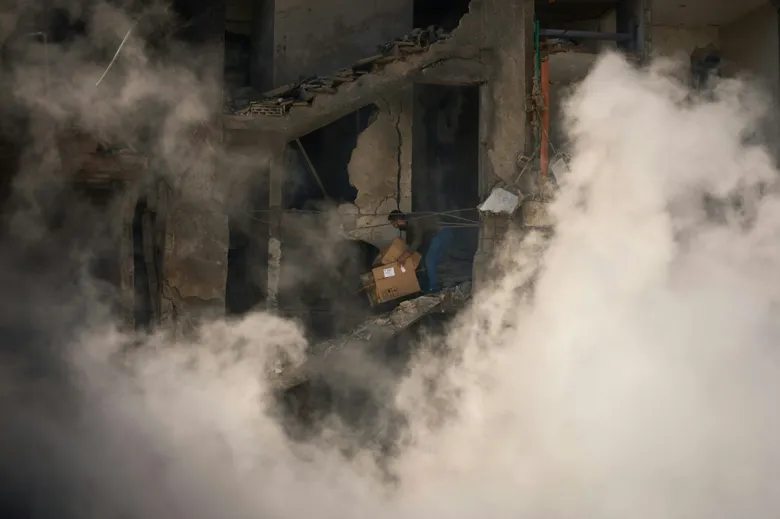
A man stands in a destroyed building as smoke rises around him.
A Lebanese man gathers his belongings from his home, which was destroyed in an Israeli airstrike a day after the ceasefire with Iran went into effect. Photo: AP via The Conversation / Emilio Morenatti

Regional fault lines

One of the more remarkable aspects of the war in Iran that began on February 28 was how quickly it escalated in terms of geographic scope and the actors pulled into it.

The three key countries involved – Israel, the US and Iran – are all facing internal political tensions, polarization and legitimacy crises. Outside countries such as China, Russia and Pakistan have deployed their own strategic interests and diplomatic tools in the conflict in indirectly getting involved.

The conflict has also drawn in a variety of regional governments and other groups, from [Saudi Arabia and the Gulf states] to Hezbollah in Lebanon and the Houthis in Yemen.

All of that is bound to deepen the fault lines that make regional tensions and sectarian conflict more likely in the long run.

Meanwhile, public opinion in the Arab world shows profound damage to the US’s reputation in the region and a loss of credibility in the international legal and humanitarian system.

Events since the war began have been bad enough. The war has led to over 1,200 Iranian civilian deaths, over 3.2 million Iranians temporarily displaced and significant damage to Iranian infrastructure. Thirteen American soldiers have also died in the course of the conflict, as have more than two dozen in Israel and the Gulf states.

That’s to say nothing of the toll in Lebanon, where more than 1,500 people have died and more than 1 million displaced since the beginning of March.

Politics of regional instability

The Houthis in Yemen, one of the conflict participants that remained surprisingly silent at the outbreak of the war, are instructive for understanding the region’s complicated and fractured dynamics.

As a religious rebel movement that follows the Zaydi branch of Shia Islam, the Houthis, who took over Yemen’s capital in 2014, have been the target of sustained military operations by Saudi Arabia and the United Arab Emirates since 2015.

This has only pushed them closer to Tehran.
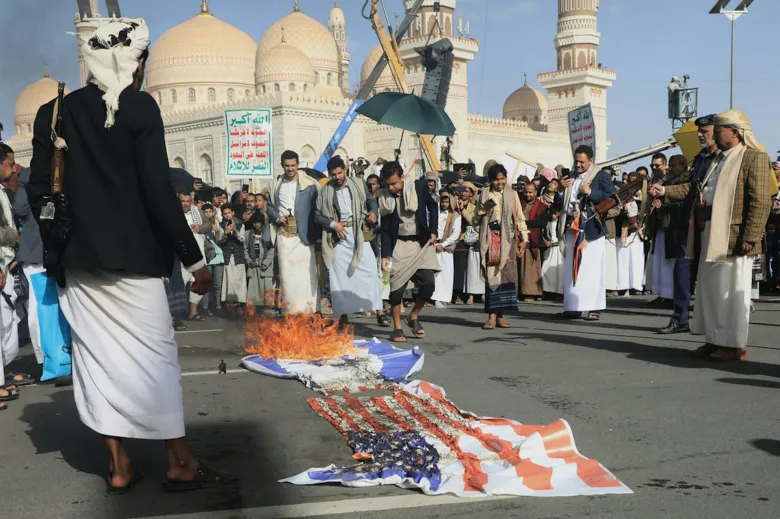
Protesters burn flags at a demonstration.
Houthi supporters burn American and Israeli flags during a rally against the war on Iran in Sanaa, Yemen, on April 3, 2026. Photo: AP via The Conversation / Osamah Abdulrahman

Avowed opponents of Israel, the Houthis declared war against the country following the Hamas attacks of October 7, 2023, and Israel’s subsequent war in Gaza.

In 2024, the Houthis attacked maritime shipping in the Red Sea near the Bab el-Mandeb Strait, a key maritime choke point. That prefigured, in a much smaller and less consequential way, Iran’s own actions in blocking the Strait of Hormuz during the current crisis.

That Houthi campaign to block maritime shipping resulted in a US-led international coalition and significant military strikes against the insurgent group, their redesignation as a foreign terrorist organization, and ultimately a ceasefire deal between the US and the Houthi movement in May 2025.

Yet the underlying regional disputes and domestic fractures that the Houthis were part of were never resolved. Eventually, the Houthis reentered the fight against Israel amid the latest war in Iran, attacking Israel on March 28.

They refrained from attacks in the Red Sea and currently are observing the ceasefire. But entering the war enabled a weakened Houthi movement to signal resolve, military capacity and commitment to its alliance with Iran, just as Yemen continues to face an economic and severe humanitarian crisis.

The Houthis have now also added leverage to play the role of spoiler amid ongoing diplomacy.

Costs of diplomacy avoidance

Of course, the Houthis are not the only movement that will perceive the war on Iran as an opportunity to exert regional influence.

Just as the Houthis and their enemies are using regional conflicts to boost their domestic legitimacy and strategic advantages, so too are the more salient participants − Iran, Israel and the US − re-litigating their own past conflicts on the battlefield.

Amid all of these current regional trends of crises and contestation, the United States’ own strategic goals have remained remarkably unclear. The Trump administration has vacillated from a focus on regime change to preventing Iran from developing nuclear capabilities.
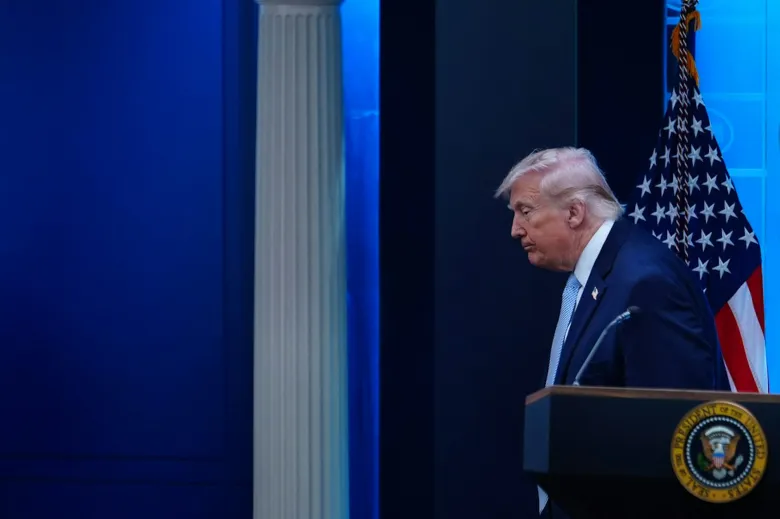
A man in a suit walks away from a lectern.
President Donald Trump departs a news conference on April 6, the day before threatening to destroy Iran’s civilization − and then agreeing to a ceasefire. Photo: AP via The Conversation /Julia Demaree Nikhinson

So far, there are no indications that talks with Iran to extend the ceasefire into a full diplomatic agreement will successfully prevent Iran from pursuing uranium enrichment. Indeed, one of the contested points of the framework for talks with Iran is the apparent acceptance of Iran’s right to nuclear enrichment.

In 2018, Trump abandoned the Joint Comprehensive Plan of Action, or so-called Iran deal. In it, Iran agreed to terms, including limiting uranium enrichment, that would block its path to a nuclear weapon, should it have desired one.

Under the Iran deal, Tehran had also complied with inspections by the International Atomic Energy Agency. It was not until much after American withdrawal from the agreement that Iran once again started stockpiling uranium and pursuing enrichment.

In her 2020 book on the tenuous 22-month diplomatic process leading to the Iran deal, aptly titled “Not for the Faint of Heart,” Ambassador Wendy Sherman wrote how complex, challenging and delicate such multiparty negotiations can be.

But the recent war on Iran suggests that the current machine-gun politics approach toward Tehran and the Middle East favored by the US and Israel comes with serious costs and risks.

In the course of a war with unclear targets, vague strategic objectives and high human costs, the region is far less stable than it was when the conflict began. That has made the path to long-term durable peace all the more difficult now that diplomacy is back on the table.

Ioana Emy Matesan is associate professor of government, Wesleyan University

This article is republished from The Conversation under a Creative Commons license. Read the original article.