


惯性聚合 高效追踪和阅读你感兴趣的博客、新闻、科技资讯
阅读原文 在惯性聚合中打开

推荐订阅源

Martin Fowler
Martin Fowler
A
About on SuperTechFans
让小产品的独立变现更简单 - ezindie.com
aimingoo的专栏
aimingoo的专栏
T
The Blog of Author Tim Ferriss
IT之家
IT之家
罗磊的独立博客
博客园_首页
月光博客
月光博客
freeCodeCamp Programming Tutorials: Python, JavaScript, Git & More
Last Week in AI
Last Week in AI
OSCHINA 社区最新新闻
OSCHINA 社区最新新闻
量子位
Hugging Face - Blog
Hugging Face - Blog
G
Google Developers Blog
博客园 - 叶小钗
H
Help Net Security
N
Netflix TechBlog - Medium
B
Blog
Engineering at Meta
Engineering at Meta
Cyber Security Advisories - MS-ISAC
V
V2EX
Vercel News
Vercel News
博客园 - 三生石上(FineUI控件)

Asia Times

Taiwan’s KMT offers US an off-ramp from war with China F/A-XX fighter tests future of US carrier power against China US, China forge rival fusion chains as Europe weighs role Who is calling the shots in Iran? Large Hadron Collider results hint at undiscovered physics The US counterterrorism czar without a counterterrorism plan Japan’s Takaichi chooses guns over butter — at her peril Iran war leaves Asian nations weighing their nuclear options Southeast Asia holds the key to unlocking Korean impasse In jab at Taiwan, China ramps up military support for Somalia Iran war is turbocharging China’s Africa pivot China’s drone-laid mines aim to trap US in a Taiwan war AI and robots can’t fill bellies – so, capitalism’s end? Next, an Iran nuclear deal with Chinese characteristics Iran, not US, cancels Hormuz blockade after Israel-Lebanon truce Israel-Lebanon ceasefire no tidy end to fighting, Hormuz shutdown Congressional Dems probe envoy Jared Kushner’s Arab money ties Manacled Manus: the limits of ‘Singapore washing’ for China AI China Shock 2.0 jolts global economy as Trump does Xi’s work Disrupted supply chains, divided politics Will Russia attack Ukraine’s European drone suppliers? AI shrinking the margin for nuclear error in South Asia Iran's low-cost drones democratizing precision warfare - Asia Times Israel-Lebanon ceasefire won’t end the death and suffering Don’t hold your breath on a truly European NATO AI boom’s real profits are being made in Asia Hong Kong banks dependent on SWIFT are warned of new US sanctions US starting to respond to challenge of massive drone incursions - Asia Times Trans-Himalayan net zero is a strategic necessity for Asia Alarm bells follow new report of looming US plan to attack Cuba
Japanese parties pressure PM Takaichi on Hormuz energy cr...
Tobias Harri · 2026-04-26 · via Asia Times
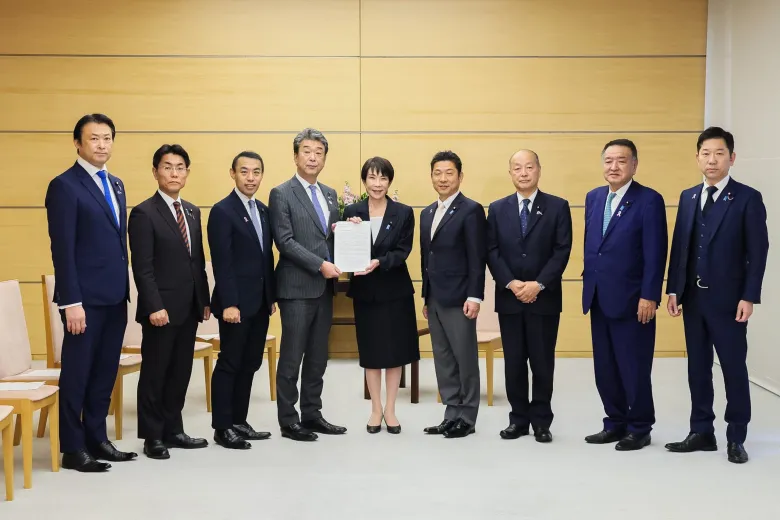
Her Liberal Democratic Party officials present Prime Minister Takaichi Sanae with proposals for managing the Hormuz crisis. Photo: LDP

Japan’s Liberal Democratic Party (LDP) policy chief Takayuki Kobayashi met with Prime Minister Sanae Takaichi on Friday, April 24, and delivered a series of proposals for the government’s response to the Hormuz crisis, including a call to consider dispatching minesweepers once the conflict is over.

The bulk of the proposals, however, focused on measures to contain price increases and ensure adequate supplies as the crisis shows few signs of abating. (The full set of proposals is available here.)

Takaichi has continued to focus on reassuring the public that the situation is under control, stating for example in the Diet Friday that the government is working on resolving bottlenecks in Japan’s distribution of naptha – even as producers have warned that shortages could lead them to scale back production.

Meanwhile, at a meeting of the cabinet committee on the situation in the Middle East Friday, the prime minister said that the government had secured oil supplies for May from alternate sources totaling roughly 60% of Japan’s May 2025 usage.

She instructed her government to aim to top this figure for June.

In the face of the Takaichi government’s focus on managing supplies instead of taking demand-side measures, the Centrist Reform Alliance (CRA) and its affiliated parties are calling for an early supplemental budget to address the crisis.

However, as Toyo Keizai columnist Kanbee warns, despite leading indicators pointing to slowing demand, the lessons from the oil shocks of the 1970s should caution the government against relying of fiscal stimulus to aid consumers.

Meanwhile, a Nikkei panel of economists favors both measures to promote conservation and reducing or phasing out gasoline subsidies.

This article is republished with permission from Tobias Harris’s newsletter Observing Japan.