







Editor’s note: Seymur Mammadov is a special commentator for News.Az and the director of the international expert club EurAsiaAz. The article reflects the author’s personal opinion and does not necessarily represent the views of News.Az.
The 59th Annual Meeting of the Board of Governors of the Asian Development Bank in Samarkand is an event whose significance extends far beyond Uzbekistan. Formally, it is a major international financial forum bringing together government representatives, finance ministers, central bank governors, international organizations, businesses, investors, and development institutions.
Yet in political and economic terms, the Samarkand meeting may become an important signal for Central Asia as a whole: the region is gradually moving from the periphery of Eurasian politics toward becoming an independent platform for discussing investment, infrastructure, energy, transport, water, climate, and sustainable growth.
For Uzbekistan, hosting such a forum in Samarkand is not merely a matter of international prestige. It is part of a broader strategy through which Tashkent seeks to consolidate its status as one of Central Asia’s leading economic platforms. In recent years, Samarkand has become one of the country’s main diplomatic showcases. Major international meetings, summits, and forums have been held there. Now, the Annual Meeting of the ADB — one of Asia’s key financial institutions — is being added to this line. In doing so, Uzbekistan is showing that it wants to be not only a participant in regional processes, but also an organizer, moderator, and one of the centers where the region’s new economic agenda is shaped.
The main effect of the forum for Central Asia lies in the fact that it strengthens the investment visibility of the entire region. For a long time, Central Asian countries were viewed by external actors primarily through the lens of raw materials, transit, security, or the geopolitical balance between Russia, China, the West, and other centers of power. The Samarkand forum offers a different framework. Central Asia is increasingly being seen as a space of infrastructure modernization, green energy, digitalization, regional connectivity, private sector development, and new production chains.
Source: Shutterstock
This is particularly important for Uzbekistan, as the country is carrying out large-scale reforms, opening up its economy, seeking to attract investment, and trying to turn its geographic location into an economic advantage. But the importance of the forum is not limited to Uzbekistan alone. Investors and international financial institutions rarely look at one country in isolation. They are interested in the regional logic: transport corridors, energy networks, labor markets, access to raw materials, trade routes, water resources, political stability, and the possibility of long-term planning.
Therefore, the forum in Samarkand automatically increases attention not only to Tashkent, but also to Kazakhstan, Kyrgyzstan, Tajikistan, and Turkmenistan.
One of the key areas of the forum’s impact will be transport connectivity. Central Asia lies between China, Russia, South Asia, the Caucasus, the Middle East, and Europe. But favorable geography alone does not turn a region into a full-fledged transit hub. That requires railways, highways, modern border crossings, digital customs procedures, logistics hubs, coordinated tariffs, and the political will of neighboring states. These are precisely the kinds of issues that may receive fresh momentum after the Samarkand forum.
In this sense, Uzbekistan is seeking to show that it can become one of the central nodes of regional logistics. Tashkent is actively promoting transport projects and is interested in access to South Asia, as well as in developing links with Afghanistan, China, the Caucasus, and European markets. Kazakhstan, for its part, has long positioned itself as Central Asia’s main transit hub, especially through routes connected to China, Russia, the Caspian Sea, and Europe.
Uzbekistan’s growing activity does not necessarily have to be perceived by Astana as a threat. On the contrary, it may create conditions for deeper cooperation between the region’s two largest economies.
If Kazakhstan and Uzbekistan manage not to engage in destructive competition, but instead coordinate their transport strategies, Central Asia will gain a much stronger position in negotiations with external actors. The region would be able to offer not fragmented national routes, but a comprehensive system of corridors connecting East and West, North and South. In that case, Kyrgyzstan and Tajikistan would also benefit, as they need new roads, energy infrastructure, and access to markets, while Turkmenistan, with its important transit potential through the Caspian Sea, Iran, and the southern route, would gain new opportunities as well.
The second important effect of the forum is linked to energy and the climate agenda. For Central Asia, this is no longer an abstract issue, but a question of economic security. The region faces growing electricity demand, aging infrastructure, water scarcity, climate risks, and the need to shift toward more sustainable development models. The ADB traditionally pays significant attention to green energy, energy efficiency, grid modernization, sustainable water use, and climate adaptation.
As a result, the Samarkand forum may increase interest in projects that affect several countries of the region at once.
For Kyrgyzstan and Tajikistan, this is especially important because of their hydropower potential. These countries have significant water and energy resources, but often face a lack of financing, weak infrastructure, and limited access to large markets. If the ADB and other development institutions intensify regional programs, Bishkek and Dushanbe may gain additional opportunities to modernize their energy sectors, build and repair infrastructure, improve water management, and strengthen resilience to climate change.
For Kazakhstan and Uzbekistan, the energy agenda has a different dimension. Both countries need to modernize their energy systems, develop renewable energy sources, improve industrial efficiency, and reduce pressure on aging power-generation capacity. Kazakhstan has major potential in wind and solar energy, while Uzbekistan is actively attracting investors to solar and broader energy projects. If the ADB forum leads to expanded financing for such programs, it could accelerate the energy transformation of the entire region.
The third key area is water security. For Central Asia, water is one of the most sensitive strategic issues. Population growth, climate change, agricultural demand, outdated irrigation systems, and differences between upstream and downstream countries create long-term risks. No country in the region can solve the water problem alone. Therefore, the role of international institutions such as the ADB lies not only in financing individual projects, but also in creating platforms where interests can be coordinated.
If the Samarkand forum leads to greater attention to water management, irrigation modernization, sustainable agriculture, and cross-border projects, this could become one of the most practical outcomes for the region. Water is directly linked to food security, energy, social stability, and migration. Therefore, investment in water infrastructure can have not only economic, but also political effects.
The fourth area is private sector development. Central Asia has long developed mainly through state-led projects, resource revenues, and large infrastructure programs. However, sustainable economic growth is impossible without private business, the banking sector, technology companies, small and medium-sized enterprises, and transparent rules of the game. The ADB places emphasis on competitiveness and private investment, and this may send an important signal to governments across the region.
For Uzbekistan, private sector development is part of the reform agenda. The country is trying to reduce the role of the state in the economy, improve the investment climate, develop industry, and create jobs. Kazakhstan already has more developed financial and investment infrastructure, but it also needs to diversify its economy.
Kyrgyzstan and Tajikistan are interested in developing small and medium-sized businesses, because this sector can create employment and reduce social vulnerability. Turkmenistan, despite the specific nature of its more closed model, will sooner or later also have to address the issue of economic diversification.
The fifth effect is linked to critical minerals and new production chains. Amid the global transition to green energy, the development of electric vehicles, batteries, electronics, and high-tech manufacturing, the world is looking for new sources of raw materials.
Central Asia has a serious resource base, including metals and minerals that may be in demand in emerging industrial chains. Yet for the region, this brings both opportunities and risks.
The opportunity lies in the possibility of attracting investment, technologies, and new forms of industrial cooperation. The risk is that the region may once again find itself merely supplying raw materials without creating added value within its own economies.
Therefore, the key question is whether Central Asia can use the interest in critical minerals to develop processing, engineering expertise, logistics, industry, and technological partnerships. The Samarkand forum may help raise this issue to the level of international financial institutions and governments.
The sixth important effect is diplomatic. Holding the ADB forum in Samarkand strengthens Central Asia’s agency. In the past, many decisions and discussions about the region’s future took place outside the region — in Moscow, Beijing, Brussels, Washington, Ankara, or other power centers. Now, Central Asian cities themselves are increasingly becoming venues where international organizations, investors, and foreign governments come to discuss the region’s future. This changes the very architecture of regional diplomacy.
In this regard, Uzbekistan is actively using Samarkand as a symbol of its new openness. The Silk Road city is becoming not only a historical brand, but also a modern instrument of foreign policy. When an international financial forum is held there, Tashkent sends two signals to its partners at once: Uzbekistan has a deep historical identity, and it also claims a modern role in the global economy. For Central Asia as a whole, this is important because the region gains greater international visibility and begins to be perceived as an independent space of opportunity.
Source:CABAR.asia
However, the impact of the Samarkand forum will not be automatic. The mere fact of holding a major event does not guarantee real change. Central Asia faces serious challenges: bureaucracy, corruption risks, weak institutions, infrastructure gaps, different speeds of reform, competition between countries, and dependence on external actors. If the forum remains only an image-building event, its effect will quickly fade. But if it is followed by concrete projects, financing, agreements, roadmaps, and implementation mechanisms, its importance may become much more long-term.
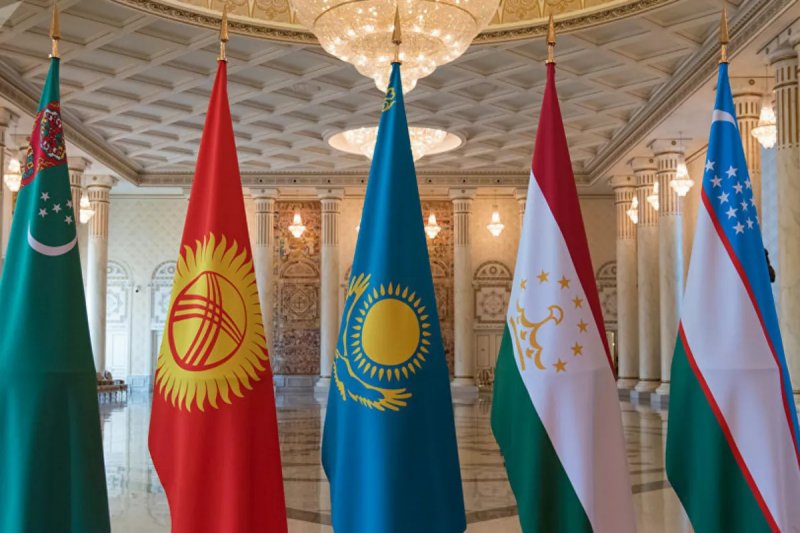
The main question is whether Central Asian countries will be able to engage with international financial institutions not only separately, but also as an interconnected region. Kazakhstan, Uzbekistan, Kyrgyzstan, Tajikistan, and Turkmenistan have different political models, different levels of openness, and different economic priorities. Yet their key problems are largely shared: transport, water, energy, climate, employment, migration, digitalization, education, and access to investment. This is precisely why the ADB can play not only the role of a lender, but also that of a platform helping to coordinate regional interests.
For Uzbekistan, the Samarkand forum is a chance to consolidate its status as one of Central Asia’s main economic centers. For Kazakhstan, it is a signal that regional competition is intensifying, which means Astana will need to develop its own infrastructure and investment initiatives more actively. For Kyrgyzstan and Tajikistan, it is an opportunity to draw attention to energy, water, roads, and social development. For Turkmenistan, it is a chance to cautiously integrate into broader regional economic connectivity without abandoning its traditional foreign policy model.
In a broader sense, the forum shows that Central Asia is gradually moving out of the periphery. The region is becoming a space where the interests of Asia, Europe, the Middle East, and international financial institutions intersect. The question now is whether the countries of the region themselves can use this interest to their advantage — not only for political image-building, but also for economic modernization, job creation, infrastructure development, and greater resilience.
That is why the Samarkand meeting of the Asian Development Bank may become more than a successful international event. It may become part of the formation of a new economic architecture in Central Asia. If Tashkent and its neighbors manage to turn the attention of the ADB and investors into real projects, the region will have a chance to strengthen its connectivity, increase its investment appeal, and become an independent center of economic growth in Eurasia.
(If you possess specialized knowledge and wish to contribute, please reach out to us at opinions@news.az).
此内容由惯性聚合(RSS阅读器)自动聚合整理,仅供阅读参考。 原文来自 — 版权归原作者所有。