


The World Bank expects commodity prices to rise to levels last seen in 2022, affecting not only oil and gas but also other raw materials, according to Bloomberg. Their global prices could increase by an average of 16 percent due to the war in Iran and related disruptions to supplies of oil, metals and fertilisers, World Bank experts say. As for energy commodities, the World Bank forecasts a 24 percent rise in prices. Brent crude, for example, is now expected to average $86 per barrel, up from the previous forecast of $60.
Meanwhile, developments have begun to unfold on the global oil market that, according to experts, could affect the World Bank’s forecast.
On April 28, the United Arab Emirates surprised the market by announcing that it would withdraw from the Organization of the Petroleum Exporting Countries (OPEC) and end its cooperation with OPEC+ from May 1.
“It is time to focus our efforts on what is dictated by our national interests and by our commitments to our investors, customers, partners and global energy markets,” the UAE’s official statement, quoted by WAM news agency, said.
The statement emphasised that the UAE remains committed to the stability of the global market and that the decision would strengthen the country’s ability to respond to changing market needs.
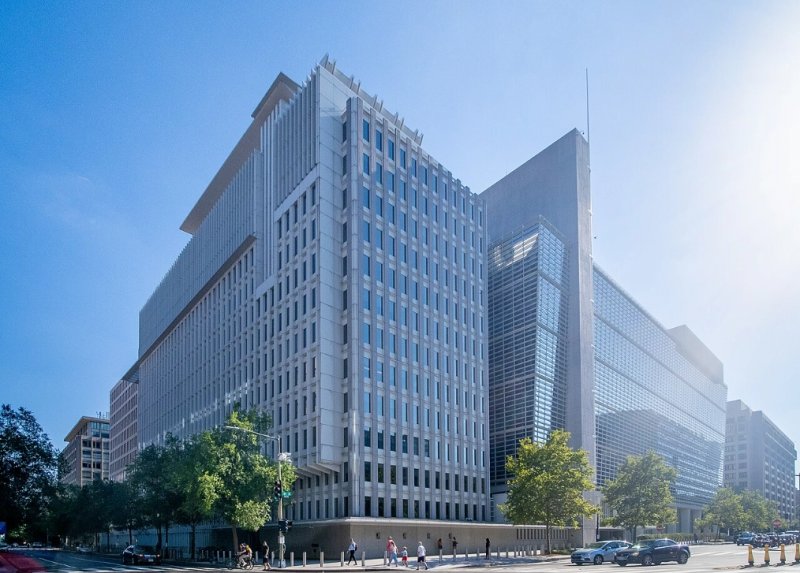
Photo: Getty
Energy Minister Suhail Al Mazrouei said the UAE had decided to leave OPEC against the backdrop of the blockade of the Strait of Hormuz. According to CNN, citing the minister, he said that “the timing is appropriate, because at this moment the decision will not have a significant impact on the market or prices due to the closure of the Strait of Hormuz. Everyone is restricted.” Mazrouei described the move as a sovereign national decision.
The UAE’s decision has caused concern within the organisation. Most analysts predict that it will deal a serious blow to oil-exporting countries and lead to a fundamental reshaping of the global energy market.
The UAE is one of OPEC’s oldest and most important members, as well as an active participant in the cartel’s cooperation with non-OPEC oil-producing countries under the OPEC+ framework. According to the organisation’s data, with oil production of 3.14 million barrels per day in 2025, the Emirates ranked fourth among OPEC members after Saudi Arabia, Iraq and Iran. Within OPEC+, it ranked fifth, behind the same countries and Russia. Last year, the UAE accounted for 11 percent of OPEC’s total oil output. However, in March 2026, due to the war in the Middle East, UAE production fell to 1.89 million barrels per day.
A number of experts believe that the issue is not so much the closure of the Strait of Hormuz, but rather political disagreements with Saudi Arabia, which sets the tone within OPEC. These disagreements emerged long ago, and the problems surrounding the strait merely provided the UAE with a pretext to do what it had long been considering.
Political differences between Saudi Arabia and the UAE have long gone beyond occasional disputes and turned into strategic rivalry, driven by competition for economic leadership in the region and differences in foreign policy. The main areas of friction include conflicting interests in Yemen, competition for foreign investment and ambitions to diversify their economies.
More specifically, Riyadh seeks to preserve a unified Yemen by supporting the internationally recognised government, while the UAE backs the Southern Transitional Council (STC), pursuing decentralisation and control over southern ports and Socotra Island in order to secure maritime trade routes. In addition, the UAE demonstrated an independent foreign policy by signing the Abraham Accords with Israel without aligning itself with Saudi approaches.
And that is not all. Saudi Arabia has prepared its ambitious Vision 2030 plan, which aims, among other things, to encourage international companies to relocate their regional headquarters from Dubai to Riyadh. The Emirates, naturally, cannot accept this.
The two countries have repeatedly clashed over production levels, as the UAE seeks to maximise profits from its resources before they are depleted. Saudi Arabia’s desire to lead OPEC has encountered resistance from the Emirates, which has its own interests.
Therefore, the UAE’s current decision can hardly be considered a major surprise. The events surrounding Iran and the crisis in the Strait of Hormuz simply accelerated it. Analysts note that the Emirates were disappointed by the lack of support and mutual assistance from their Arab neighbours.
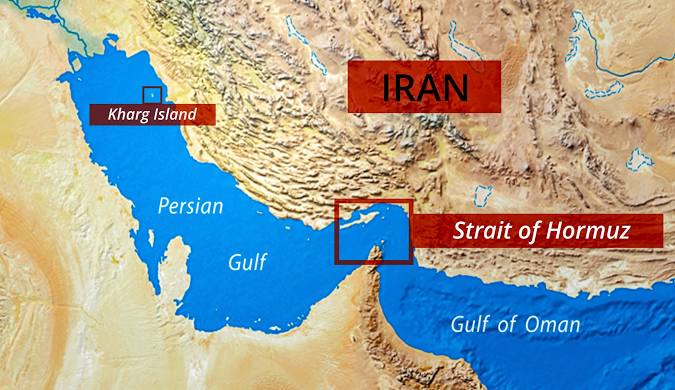
Photo: Getty
Experts interviewed by the Russian newspaper Vedomosti believe that serious contradictions within OPEC+ had been building since 2023, following Angola’s withdrawal, the gradual rollback of “voluntary cuts” from spring 2025, and the agreement by other participants to increase the UAE’s quota by 300,000 barrels per day. Discussions had been scheduled for May 3, but amid the Hormuz crisis it became clear that increasing production would not be possible. The reason is that the UAE has only one oil pipeline, with a capacity of 1.8 million barrels per day.
The UAE has invested heavily in oil production and related infrastructure over the past 10 years, while OPEC policy has prevented it from maximising revenues. This is why the Emirates want to pursue a more independent energy policy.
According to Russian experts, in this context the future of OPEC+ appears rather uncertain. Much will depend on Saudi Arabia and whether it will try to keep within the organisation those countries seeking to increase production, particularly Iraq and Kazakhstan. Like the UAE, these countries want their investments in the sector to generate higher returns, something restricted by OPEC+ limits.
Earlier, Angola, Ecuador and Qatar also left OPEC.
Excluding the UAE, OPEC currently includes Saudi Arabia, Venezuela, Nigeria, Iran, Iraq, Kuwait, Libya, the Republic of the Congo, Gabon and Equatorial Guinea. Together, the cartel accounts for approximately 35 percent of global oil production and around 50 percent of crude exports. These countries hold about 80 percent of the world’s proven oil reserves.
Within OPEC+, OPEC’s decisions are joined by Russia, Brazil, Azerbaijan, Oman, Bahrain, Brunei, Kazakhstan, Malaysia, Mexico, South Sudan and Sudan. Together, OPEC and OPEC+ countries produce more than 40 percent of the world’s oil.
By leaving the organisation, the UAE is seeking to strengthen its position on the global market by increasing production that had previously been restricted by OPEC decisions.
One noteworthy fact is that the UAE needs an oil price of only around $50 per barrel to balance its budget, while Saudi Arabia requires about $90. It goes without saying that Riyadh, by regulating production within OPEC, seeks to prevent prices from falling, while the Emirates lose opportunities because of reduced production.
What the United Arab Emirates will do after leaving OPEC is now the question concerning all participants in the oil market.
Tural Heybatov
此内容由惯性聚合(RSS阅读器)自动聚合整理,仅供阅读参考。 原文来自 — 版权归原作者所有。