








Editor’s note: Abulfaz Babazadeh is a scientist, a scholar of Japanese studies, a political observer, and a member of the Union of Journalists of Azerbaijan. The views expressed in this article are the author’s own and do not necessarily reflect those of News.Az.
The United States is holding another important round of primary elections on May 19. At first glance, this is neither a presidential campaign nor a nationwide vote capable of instantly changing the political balance in Washington. Yet it is precisely these primaries that often determine who will compete for seats in Congress, governorships, key state-level offices and even judicial posts. With the 2026 midterm elections approaching, this day has become an important political indicator: it shows the mood of party activists, the strength of candidates, Donald Trump’s influence over Republicans and the Democrats’ ability to challenge Republicans in competitive districts.
On May 19, primaries are taking place in several states, including Alabama, Georgia and Pennsylvania. The national political calendar also includes voting in other states, including Kentucky, Idaho and Oregon, making this one of the most active stages of the spring election season.
The main intrigue of these primaries is that they are taking place in the middle of the political cycle, as both parties are already preparing for the battle for Congress. For Democrats, the midterms are a chance to regain or strengthen their position in the House of Representatives. For Republicans, they are an opportunity to preserve their advantage, especially in southern and conservative states, while also testing how strong Trump’s influence remains within the party.
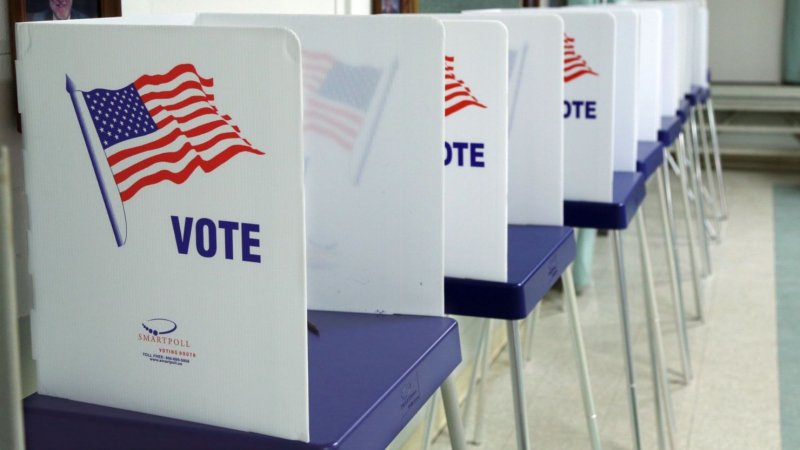
Particular attention is focused on Pennsylvania. This state remains one of the most important political battlegrounds in the United States. Pennsylvania is not only a major industrial state with a strong electoral history; it often reflects the broader balance between urban Democrats, suburban voters and conservative areas. On May 19, the state is holding its primary election, with polling places open from 7 a.m. to 8 p.m.
Source: Getty Images
Pennsylvania also matters because several intra-party contests are unfolding in districts that could play a role in the fight for the House of Representatives. Democrats are looking for opportunities to target several Republican-held districts after competitive primaries conclude. These include districts associated with Republican Representatives Brian Fitzpatrick, Ryan Mackenzie and Scott Perry.
For the Democratic Party, Pennsylvania is not only a fight against Republicans but also an internal test. In several races, candidates backed by the party establishment are facing more progressive challengers. These conflicts matter because they reveal what political style Democrats will offer voters in the fall: a moderate approach aimed at the center, or a more ideological and mobilization-driven message.
For Pennsylvania Governor Josh Shapiro, this day also carries significance. Shapiro, who is seen as a possible national figure in the 2028 election cycle, has been actively supporting Democratic party infrastructure and candidates. This makes the Pennsylvania primaries not just a local event, but part of a broader struggle within the Democratic Party over future leadership.
In Georgia, the primaries also carry serious political weight. May 19 is General Primary Election Day, when parties choose their candidates for the November elections. At the same time, the vote also includes nonpartisan offices, including many judicial positions, where the winner may effectively be decided on this very day.
This is an important feature of American politics that is often underestimated outside the United States. Primaries do not only determine party nominees. In some states, voters on these days also decide the composition of courts, local authorities and public offices that influence citizens’ everyday lives far more directly than federal politicians in Washington.
Since the 2020 election, Georgia has remained one of the symbols of political confrontation in the United States. The state became a battlefield over election disputes, party mobilization, voting rights and the balance between Democrats and Republicans. As a result, any primary election in Georgia is seen not merely as a technical procedure, but as an indicator of party organization, turnout and voter mood.
Alabama, meanwhile, presents a different political story. It is one of the most Republican states in the country, which means the main battle often takes place not between Democrats and Republicans, but inside the Republican Party itself. On May 19, voters are casting ballots for constitutional offices, state lawmakers and members of Congress. Two constitutional amendments are also on the ballot.
The situation in Alabama is complicated by court rulings and redistricting disputes. Because of a U.S. Supreme Court decision and changes related to electoral districts, only three of the state’s seven congressional districts — the 3rd, 4th and 5th — are holding full mandatory primaries on May 19. Primaries in the remaining four districts have been moved to August 11.
This makes Alabama one of the most interesting and at the same time, most complicated cases of the election day. The issue is not only the choice of candidates, but also a broader conflict over redistricting, representation and control of seats in the House of Representatives. In American politics, district boundaries can have enormous significance: sometimes the map itself determines which party has an advantage even before the campaign begins.
Particular attention in Alabama is focused on the race for a U.S. Senate seat. Republicans are choosing a candidate for the seat being vacated by Senator Tommy Tuberville, who is running for governor. Among the Republican contenders are Representative Barry Moore, who has been endorsed by Donald Trump, as well as the state's Attorney General Steve Marshall and other candidates.
These races show how powerful Trump’s influence remains within the Republican Party. His endorsement can still be a decisive factor in conservative states. But primaries also reveal the limits of that influence: candidates backed by Trump must not only win inside the party, but also prove they can mobilize voters in the fall.
The gubernatorial race in Alabama is also attracting attention. Tommy Tuberville is running for governor, while former Senator Doug Jones is among the Democratic figures associated with the race. For Democrats, Alabama remains a difficult state, but Jones’ presence is symbolically important: he has already shown that under certain conditions, a Democrat can achieve success even in a deeply Republican region.
The broader political background of May 19 extends far beyond individual states. These primaries are taking place at a time when American politics remains highly polarized. Republicans are trying to preserve control over their strongest regions and strengthen their position in Congress. Democrats are looking for opportunities to make gains in competitive districts, especially in states such as Pennsylvania and Georgia.
Source: AP
The primaries also help identify which issues are likely to dominate the fall campaign. For Republicans, these will likely include the economy, immigration, security, criticism of the federal government and cultural issues. For Democrats, the focus is likely to be on defending democracy, social programs, healthcare, voting rights, abortion and criticism of Trump’s influence over the Republican Party.
Judicial elections and nonpartisan offices deserve separate attention. In Georgia, for example, officials have made clear that in a number of nonpartisan races, the winner may be determined on May 19 itself. This means the results of the day may affect not only the November campaign, but also the judiciary, local governance and the political infrastructure of the states.
In Pennsylvania, where a closed primary system is in place, voting also reflects the strength of party mobilization. In closed primaries, Republicans vote for Republican candidates, while Democrats vote for Democratic candidates. This system makes the activity of the party base especially important, since it is the base that decides which candidates will later compete for the broader electorate.
That is why May 19 should not be seen as a secondary day in the American political calendar. Yes, these are not presidential elections. Yes, many of the races are local in nature. But it is precisely from such primaries that the future balance of power in Congress, the states and the courts begins to take shape. It is here that parties decide which faces, slogans and strategies they will take into the November campaign.
For the United States, this day is a test of party discipline, electoral energy and political mood. For Democrats, it is an opportunity to see where they can challenge Republicans. For Republicans, it is a test of their ability to hold their base together and avoid internal divisions. For observers of American politics, it is an early signal of what the fight for power in Washington may look like in the fall of 2026.
(If you possess specialized knowledge and wish to contribute, please reach out to us at opinions@news.az).
此内容由惯性聚合(RSS阅读器)自动聚合整理,仅供阅读参考。 原文来自 — 版权归原作者所有。