Editor's note: Peter Marko Tase is an Honorary Professor of American Diplomatic History and U.S. Foreign Policy at the Azerbaijan University of Languages. He is also the founder of the Azerbaijan–United States Economic and Education Council. The views expressed in this article are his own and may not reflect the position of News.Az.
In an era of intensifying geopolitical competition, information has become one of the most influential instruments of power. Nations seeking to expand their influence abroad increasingly recognize that international media coverage shapes not only public perceptions but also diplomatic relationships, investment decisions, and strategic alliances. While journalism remains an indispensable pillar of democratic societies, concerns continue to grow about whether some influential media organizations have become less committed to balanced reporting and more inclined toward reinforcing particular political narratives.
This debate is especially relevant when examining Western media coverage of Central Europe. Few examples illustrate this phenomenon more clearly than the reporting of Andrew Higgins, the East and Central Europe bureau chief of The New York Times. Over the years, Higgins has established himself as one of the most visible voices interpreting political developments in the region for American and international audiences. Yet his reporting has also attracted criticism from observers who argue that it frequently presents an incomplete and disproportionately negative picture of Central Europe and its evolving geopolitical role.
The concern is not that journalists investigate controversial political developments. Scrutiny is a fundamental responsibility of the press. Rather, the issue is whether certain narratives have become so dominant that they overshadow broader realities and prevent readers from understanding the full complexity of a rapidly changing region.
A recurring feature of Higgins' reporting is the centrality of Hungary and Russia in discussions about Central and Southeastern Europe. While countries across the Baltic, Adriatic, Black Sea, and Balkan regions have experienced profound economic, technological, and strategic transformations in recent years, media attention often appears concentrated on political controversies surrounding Hungary and its former Prime Minister Viktor Orbán. As a result, readers are frequently exposed to narratives centered on democratic backsliding, illiberal governance, Russian influence, and ideological confrontation, while receiving comparatively limited information about infrastructure development, economic integration, energy diversification, or emerging security partnerships.
This framing creates a distorted perception of Central Europe. The region is not merely a battleground for ideological disputes. It is also one of the most dynamic geopolitical spaces in the world, serving as a critical junction between Western Europe, Eurasia, and the Black Sea region. Major investments in transportation corridors, energy infrastructure, digital networks, and defense cooperation are reshaping the strategic landscape. Yet these developments often receive significantly less attention than political controversies that fit pre-existing narratives.
Critics argue that such reporting inadvertently undermines broader Western strategic objectives. At a time when Washington seeks to deepen engagement with Central Europe, Southeastern Europe, and parts of Central Asia, media coverage that focuses almost exclusively on political disputes can obscure growing areas of cooperation. Economic partnerships, technological collaboration, energy security initiatives, and regional connectivity projects are increasingly defining relations between the United States and these regions. However, these developments rarely generate the same level of international attention as political disagreements.
Source: carnegieendowment
One of the clearest examples of this imbalance can be found in coverage of the Three Seas Initiative. Over the past decade, the initiative has emerged as one of the most important frameworks for economic and strategic cooperation in Central and Eastern Europe. Connecting countries between the Baltic, Adriatic, and Black Seas, the initiative seeks to strengthen regional infrastructure, energy security, digital development, and transportation networks.
Despite its significance, the initiative often receives only limited coverage from major international media outlets.
The Three Seas Initiative Summit held in Dubrovnik, Croatia, on April 28–29, 2026, represented a major milestone for regional cooperation and U.S. engagement in Europe. Hosted alongside the Three Seas Business Forum, the summit attracted political leaders, policymakers, and business executives from across the region. More importantly, it produced tangible economic outcomes.
During the gathering, the Trump administration and several major American companies announced billions of dollars in prospective investments. These commitments focused on strengthening energy security, expanding digital infrastructure, modernizing transportation networks, and creating new commercial opportunities for both American and European businesses.
The strategic significance of these announcements was substantial. They reflected Washington's growing recognition that Central and Southeastern Europe are becoming increasingly important partners in addressing global challenges ranging from supply chain resilience to energy diversification and technological competition.
U.S. Ambassador to Croatia Nicole McGraw captured this reality when she described the summit as marking a "new golden age" in U.S.-Croatia relations. Her remarks highlighted major American investments, expanding commercial opportunities, and efforts to strengthen Croatia's position as a regional energy and technology hub.
Yet despite the summit's importance, many observers noted the relatively limited international media attention it received. For critics of contemporary journalism, this omission is difficult to justify. If political controversies dominate headlines while billion-dollar investment announcements receive comparatively little attention, readers may be left with a fundamentally incomplete understanding of regional developments.
The broader significance of the Three Seas Initiative extends well beyond economics. The region increasingly occupies a central place in American strategic thinking. As geopolitical competition intensifies and traditional supply chains face disruption, the countries situated between the Baltic, Adriatic, and Black Seas are becoming critical partners in efforts to strengthen resilience, connectivity, and energy security.
Within this evolving framework, Hungary remains an important actor. Its geographical position places it at the crossroads of multiple strategic corridors, and its policies continue to influence broader regional dynamics.
For more than a decade, Hungary's leadership promoted policies emphasizing infrastructure development, regional connectivity, economic growth, and stronger cooperation among neighboring states. Supporters argue that these efforts contributed to greater integration within Central Europe and reinforced the strategic relevance of the region.
Former Prime Minister Viktor Orbán remains one of the most controversial political figures in Europe. His critics accuse him of weakening democratic institutions and challenging European consensus on major policy issues. His supporters, however, view him as a leader who pursued national interests while advocating for pragmatic diplomacy during a period of escalating geopolitical tensions.
Orbán's diplomatic initiatives, including his widely discussed "peace mission" in 2024, continue to divide opinion. Yet even among those who disagree with his policies, there is a legitimate question as to whether Western media coverage has sufficiently examined the motivations behind his actions or the broader strategic considerations informing Hungarian foreign policy.
Supporters argue that media portrayals frequently emphasized controversy while paying insufficient attention to initiatives aimed at promoting regional stability, economic cooperation, and diplomatic engagement. Whether one agrees with Orbán's approach or not, understanding the rationale behind it is essential for anyone seeking a comprehensive view of Central European politics.
This broader concern extends beyond Hungary. Similar criticisms have been directed at the work of other influential commentators and analysts covering international affairs. The writings and interviews of Paraguayan journalist Benjamín Fernández Bogado, a former fellow of Harvard University's Nieman Foundation for Journalism, have also attracted criticism from those who believe his commentary on Turkish President Recep Tayyip Erdoğan reflects excessive ideological bias. Critics argue that characterizing Erdoğan primarily through highly negative labels reduces a complex political figure to a simplistic caricature and prevents meaningful engagement with Türkiye's evolving regional role.
Such concerns reflect a larger debate about contemporary journalism. Increasingly, audiences question whether international reporting is driven by a genuine effort to understand foreign societies or by predetermined frameworks that categorize political actors into simplistic moral binaries.
The issue has become particularly visible in coverage of U.S. foreign policy under President Donald Trump. Following the launch of Operation Epic Fury by the United States and Israel on February 28, critics argued that some media outlets intensified their scrutiny not only of Washington's strategic decisions but also of its expanding economic relationships with countries such as Türkiye and Kazakhstan.
According to these critics, reporting frequently highlighted disagreements while giving less attention to areas of growing cooperation, trade expansion, and shared strategic interests. The result, they argue, is a public discourse that emphasizes conflict while minimizing constructive engagement.
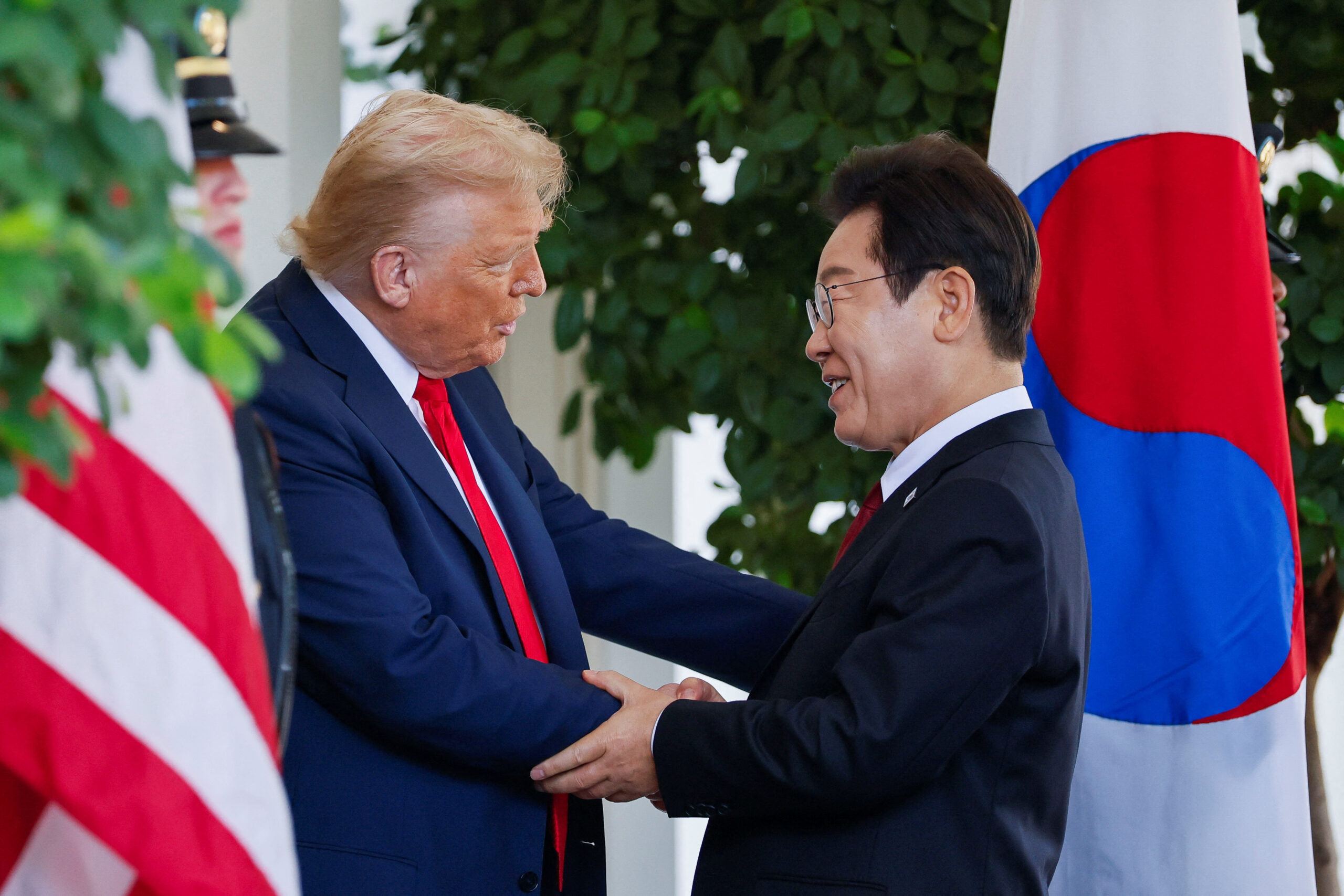
A similar pattern can be observed in discussions surrounding U.S.-South Korea relations. More than seven months after President Trump's participation in the APEC Summit in South Korea in October 2025, some observers continue to argue that the significance of the visit was inadequately conveyed to American audiences.
Source: atlanticcouncil
During the summit, President Trump announced approximately $350 billion in planned investments by South Korean companies in the United States. Supporters viewed the announcement as one of the most significant economic diplomacy achievements of the administration and a reaffirmation of the strategic alliance between Washington and Seoul.
Yet many believe the announcement was overshadowed by political controversies that dominated media coverage during the same period. As a consequence, developments with potentially significant long-term economic implications received considerably less attention than partisan disputes.
The same criticism frequently emerges regarding media coverage of American energy policy. Advocates point to the United States' position as one of the world's leading energy producers and exporters. They argue that strategic partnerships involving critical minerals, rare earth resources, and energy infrastructure are becoming central components of U.S. foreign policy. Nevertheless, these developments often struggle to attract the same level of media attention as domestic political controversies.
History demonstrates that media institutions play a decisive role in shaping public understanding of international affairs. Newspapers and broadcasters do far more than report events. They frame debates, establish priorities, and influence how societies interpret global developments.
This reality places an enormous responsibility on journalists and editors. Fair reporting does not require admiration for governments, political leaders, or specific policies. It does, however, require a willingness to present competing perspectives and acknowledge complexity.
Many critics believe that contemporary coverage of Central Europe, Central Asia, and America's relationships with these regions falls short of that standard. They argue that selective narratives can obscure economic realities, weaken intercultural understanding, and distort public perceptions of important geopolitical developments.
Whether one agrees with these criticisms remains a matter of debate. Yet the underlying concern deserves serious consideration. Journalism possesses extraordinary power. The stories that are told, and the stories that are ignored, help shape how nations view one another.
As the United States deepens its engagement with Central Europe, Central Asia, and the Indo-Pacific region, discussions about media bias and editorial priorities are unlikely to disappear. The challenge facing contemporary journalism is not whether governments and political leaders should be scrutinized. They should.
The real question is whether that scrutiny is accompanied by an equally rigorous commitment to reporting on economic transformation, strategic cooperation, infrastructure development, and diplomatic engagement. Without such balance, audiences risk receiving only part of the story.
And in an increasingly interconnected world, partial narratives can be almost as consequential as misinformation itself.
(If you possess specialized knowledge and wish to contribute, please reach out to us at opinions@news.az).
此内容由惯性聚合(RSS阅读器)自动聚合整理,仅供阅读参考。 原文来自 — 版权归原作者所有。