






In an interview with News.Az, Ukrainian military and political analyst Oleksandr Kovalenko, a member of the Information Resistance group, discusses Russia’s latest large-scale strikes against Ukraine, the effectiveness of Ukrainian air defences, Kyiv’s deep-strike campaign against Russian energy infrastructure, the prospects for negotiations in 2026 and the possibility of Azerbaijan hosting future Ukraine–Russia talks. He also comments on the upcoming parliamentary elections in Armenia and the broader regional implications of the vote.
- How would you assess the scale of Russia’s attack on 2 June? Was it a one-off escalation or the beginning of a new phase of the campaign against Ukraine’s energy infrastructure and rear areas?
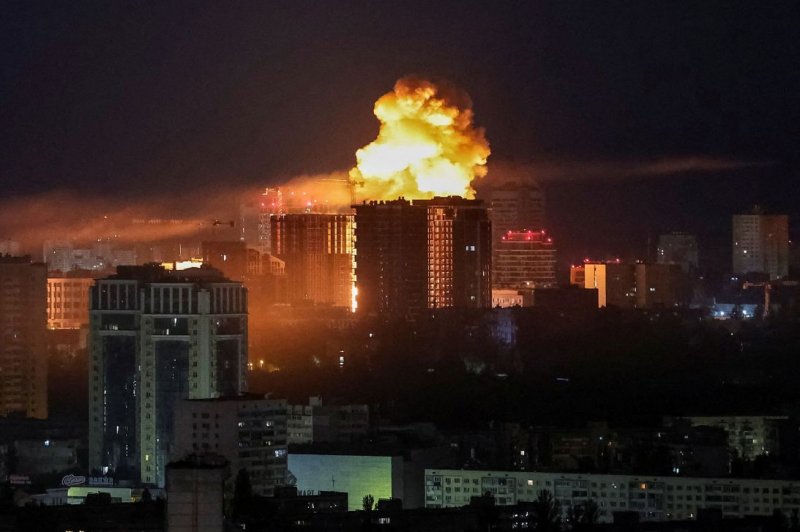
- The strike on Kyiv on the night of 2 June did not have any specific distinguishing feature, apart from the large-scale use of ballistic missiles and 3M22 Zircon missiles — eight Zircons and 33 9M723 Iskander-M ballistic missiles. That was the main difference.
In general, however, this was a systematic strike that the Russian Federation is capable of carrying out roughly once every week or week and a half. This period is sufficient for it to accumulate munitions, prepare launch platforms and launchers, prepare flight missions, define flight trajectories, assign coordinates, and carry out coordination.
To conduct a large-scale combined strike involving more than 500 drones of various types and more than 50 missiles of different categories, Russia requires about a week to a week and a half. Incidentally, almost a week had passed since the previous major strike.
Since approximately the second half of 2025, such systematic strikes have become a regular feature of Russia’s campaign of terror against Ukraine. This applies to different cities, regional centres and operational directions.
The last two strikes were concentrated attacks on Kyiv, which can be seen as a form of pressure and coercion against the capital. However, such strikes are not unusual. Russia has been carrying them out since 2022.
The difference now is that they have become more systematic and better organised in terms of ammunition stockpiling and planning. Earlier, they were more chaotic. Therefore, this does not come as a surprise.
This is not a question of escalation. It is a question of ongoing terror and violence against the Ukrainian population. These strikes are aimed at terrorising civilians. This constitutes a war crime, and in Russia’s historical context, it will not be forgotten.
Source: Reuters
- How effective is Ukraine’s air defence today? What has changed compared to the winter of 2025–2026?
- Today, the biggest problem for Ukrainian air defence is the shortage of PAC-3 anti-ballistic missiles for the Patriot air defence system. In other areas, Ukraine maintains a fairly high level of interception against subsonic, small, low-flying targets — that is, drones of all types, including jet-powered drones.
Ukraine’s short-range air defence — anti-aircraft drones and drone interceptors — is currently among the world’s most advanced in technical and technological terms. Ukraine’s experience in this field is already becoming a global trend. Today, around 94–95% of drone targets are intercepted, which is a very high figure.
At the same time, Ukraine also records a very high interception rate for enemy cruise missiles, including Kh-101, 3M14 Kalibr, 9M727, 9M728, as well as Kh-31, Kh-59 and other air-launched guided missiles. This is achieved not only through short- and medium-range air defence systems, but also through the active use of aviation. MiG-29, Su-27, F-16 and Mirage 2000 fighter jets also take part in intercepting missiles, bringing the overall interception rate for cruise missiles to around 90–95%.
The biggest problem remains the interception of ballistic missiles, due to the shortage of both Patriot systems and PAC-3 interceptor missiles. This deficit means that, in some months, the ballistic missile interception rate may fall to 25–30% at best, which is very low.
Unfortunately, a large number of ballistic and hypersonic aeroballistic missiles still reach their targets. For example, the Kh-47M2 Kinzhal aeroballistic missile has shown vulnerability to electronic warfare systems. A significant portion of Kinzhal missiles are not so much intercepted by Patriot systems as suppressed by Ukraine’s Lima electronic warfare system, which is one of the most advanced systems in Ukraine’s arsenal and has proven effective against Kinzhals.
However, it is not sufficiently effective against the 9M723 Iskander-M. Therefore, the key role is played by the PAC-3 missile, of which Ukraine is critically short. Whenever Russia faces serious difficulties, it expands its terror against the civilian population.
- Have the Ukrainian Armed Forces managed to stop Russia’s spring–summer offensive of 2026?
- Russia’s spring offensive campaign has been an absolute failure, and the summer offensive campaign also offers no positive prospects for the Russian occupying forces. It is beginning from an extremely unfavourable position.
Russia is now in its worst position on the battlefield since 2023. The situation was worse only in 2022, when they were retreating. That is the only way to characterise it.
They have struck the civilian population before as well. However, they are now attempting to use propaganda — particularly through officials such as Dmitry Peskov, Maria Zakharova, Sergei Lavrov and even Vladimir Putin — to claim that strikes on Ukraine would stop if Ukraine surrendered its territory. This is a completely unacceptable ultimatum equivalent to capitulation, and it is striking coming from a country that is itself in a highly vulnerable position.
In addition, real concern is growing within the Russian command, linked to Ukraine’s systematic efforts to disrupt logistics in the south — for example, in the temporarily occupied parts of the Zaporizhzhia and Kherson regions. This not only disrupts the land corridor to the temporarily occupied Crimean Peninsula, but also undermines the material and technical supply of forward units in the southern direction.
This may lead to serious operational problems, as Russian troops cannot sustain combat without ammunition, supplies or fuel. The Russian command is fully aware that a crisis in maintaining control over the southern regions could emerge in the near future. That is why Russia will attempt to escalate terror against civilians in order to force Ukraine into concessions within a negotiation framework based on ultimatums. However, this is unlikely to succeed.
The spring–summer offensive has only just begun. The spring phase has effectively transitioned into the summer one, but the spring offensive itself was an absolute failure.
These are Russia’s worst battlefield indicators in recent years. As noted, the situation was worse only in 2022, when Russian forces were retreating. May was particularly disastrous for them, with losses of almost 34,000 personnel, while territorial gains amounted to only about 20 square kilometres in a month. By comparison, last year they were capturing 400–500 square kilometres per month.
The difference is almost 25-fold: the effectiveness of their offensive operations has declined sharply, while losses per square kilometre have increased dramatically. Roughly speaking, they are losing 1,600–1,700 personnel for every square kilometre captured — extremely high losses.
This situation is likely to worsen further. Ukrainian operations against medium-depth logistics may further constrain Russian advances, particularly in the south. At the very least, this could significantly limit their operational capacity. In the longer term, it may lead to a serious degradation not only of their offensive potential, but also of their defensive capabilities.
Source: The Kyiv Post
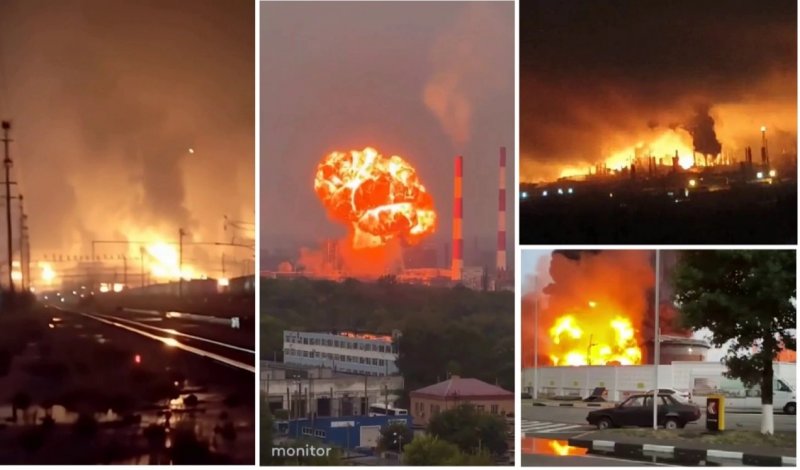
- How do you assess the effectiveness of Ukrainian countermeasures and strikes deep inside Russian territory, including recent attacks on St Petersburg and oil infrastructure?
- We have identified a strategically important direction for ourselves: strikes deep inside the territory of the Russian Federation at the medium- and deep-strike levels. We can already see the effect.
Russia is facing very serious problems due to the shortage of oil-refining capacity. In the European part of Russia, most refineries are no longer fully performing their functions. This means reduced crude oil processing, lower revenues for the budget, and growing losses. Even though the crisis in the Persian Gulf has led to higher oil prices, Russia cannot fully benefit from this situation.
Ukrainian strikes are proving far more effective than European and American sanctions. By targeting the oil-refining sector, we deprive Russia of the ability to generate super-profits — or even meaningful profits — from the export of energy resources and petroleum products. This direction is being implemented successfully, and most importantly, it will be scaled up.
We see that the number of raids is increasing every day, and their effectiveness is also improving. In addition, the technical and technological parameters of our drones are advancing. At the turn of 2022–2023, we increased their range to around 500 kilometres with considerable difficulty. Now we are already surpassing the 2,000-kilometre range.
If by the end of the year we reach a strike range of 3,000–3,500 kilometres, I would not be surprised at all. We have every opportunity to achieve this. At the same time, we are also seeing an increase in the payload capacity of our drones.
We started with drones carrying warheads of 30–40 kilograms, gradually increasing this to 50–70 kilograms. Now the standard warhead is around 100–120 kilograms. Recently, drones produced by Fire Point struck an FSB base at Henicheska Hirka in the temporarily occupied Kherson region using warheads of 150–200 kilograms.
In other words, we are gradually bringing the combat capability and strike power of our drones to the level of an average cruise missile. Of course, this is cheaper, more effective, no less destructive, and can be further scaled to depths beyond 3,000 kilometres. I believe this is the right direction, and it is already showing strong results.
- In your view, who is dictating the pace of the war now — Russia or Ukraine? Who holds the strategic initiative?
- I would not speak about strategic initiative in absolute terms, because strategy is a different level of analysis. “Strategic initiative” is not an entirely appropriate term to apply to the current combat zone in Ukraine. One can speak of tactical or operational-tactical initiative, but not yet of strategic initiative.
There is still considerable uncertainty. But at the tactical level, Ukraine is already imposing conditions. Russia is currently incapable of achieving unexpected large-scale breakthroughs, such as penetrating 20–30 kilometres into Ukrainian defences and collapsing defensive lines.
Russia has a large number of personnel in the combat zone, but it is unable to use them effectively. Therefore, we are not so much dictating conditions as imposing the pace of combat operations and the rules of engagement on the enemy. Full-scale dictation will begin once the enemy loses logistics and communications, at least in several key footholds, primarily in the south.
Only then will Ukraine be able to fully dictate conditions. However, this has not yet happened, and it is too early for such conclusions.
At the very least, we must pass through the summer offensive campaign. Russia has not yet used its strategic reserve. Yes, it is small — slightly more than 20,000 personnel. This is the smallest reserve the Russian army has had since 2022. Nevertheless, it remains a force that could be deployed in an unexpected direction.
We would prefer to avoid such surprises. Once this reserve is exhausted or neutralised during the summer campaign, and Russia is sufficiently weakened on the battlefield, a window of opportunity will open for Ukraine. This would allow not only tempo-setting in the war but also the imposition of conditions.
- Are there real chances for negotiations or a ceasefire in 2026?
- I currently see no chance of negotiations or a ceasefire — neither long-term nor even medium-term — in 2026 that would produce any meaningful result.
We observed a diplomatic track last year, and it produced no outcome whatsoever. It was unproductive from the outset. I have always maintained this position, and I can only confirm it now. If the process is resumed in the same format and rhythm, it will again yield no results or prospects.
I see no signs in 2026 of any effective resumption of negotiations. As for 2027, we will assess the situation depending on developments in the autumn–winter period of 2026.
- In late April, Ukrainian President Volodymyr Zelenskyy, during his visit to Azerbaijan, stated his readiness to hold the next stage of negotiations with Russia on Azerbaijani territory, provided the Russian side agrees. How do you assess this proposal?
- I fully support this statement and believe it is one of the viable alternatives that could be accepted not only by Ukraine, but potentially even by Russia — depending on whether Russia genuinely regards Azerbaijan as a neutral country in this war.
Moreover, Azerbaijan is a country whose international weight is growing, not only regionally in the South Caucasus but also in broader global affairs. It is increasingly involved in a wider range of international processes across several regions.
Therefore, this platform is indeed interesting and promising for such negotiations. We are ready to consider such options. However, the key question remains whether Russia itself is ready for a genuine negotiation process.
I would not want Azerbaijan, in such a process, to serve merely as a venue for meetings and discussions without real outcomes. We have already seen similar formats in other countries. The United Arab Emirates has served as such a platform, and Türkiye has also hosted meetings at various stages. President Recep Tayyip Erdoğan has made similar proposals, and others have followed.
But again, the key issue is results. For us, it is essential that these meetings produce tangible outcomes, unlike last year, when Russia showed no real interest in meaningful diplomatic engagement.
Most likely, those discussions amounted once again to unrealistic ultimatums. Russia is currently in no position to demand concessions or force Ukraine into anything. Therefore, we are waiting for Russia to adopt a more realistic stance. If that happens, it would be desirable for such a negotiation process to take place in Azerbaijan — whether in Baku, Ganja or another city.
Source: Getty Images
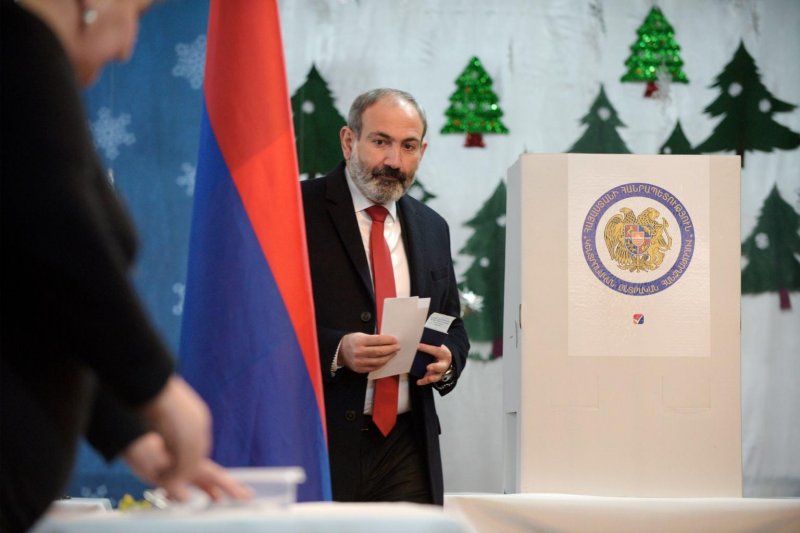
- Parliamentary elections will be held in Armenia this Sunday. What are your forecasts?
- Judging by information published by monitoring resources, Nikol Pashinyan’s Civil Contract party is leading quite confidently and is not expected to lose.
At the same time, I can point to the notably aggressive rhetoric of Samvel Karapetyan’s opposition party, Strong Armenia. This political force is using highly negative methods, fuelling ethnic hostility and once again inflaming interethnic tensions.
A large number of fabricated narratives are being circulated by Samvel Karapetyan’s networks and by associated outlets that, in some cases, also appear to have links to the Russian Federation. A significant amount of anti-Azerbaijani and anti-Turkic rhetoric and disinformation is being spread. Therefore, it appears that Samvel Karapetyan’s campaign is built not only on revanchism but also on sustaining interethnic hostility and division.
As for Nikol Pashinyan, his actions during the 2020 44-day war can, of course, be assessed in different ways. However, today he is the Prime Minister of Armenia and, arguably, one of the few leaders in Armenia’s history who is primarily focused on the country’s stability and development, rather than drawing it into another destructive and historically costly conflict.
This applies to any rhetoric involving revanchism, the return of so-called “historical lands”, or other politicised and instrumentalised historical narratives. In my view, those Armenian voters who make a rational and balanced choice will vote for Nikol Pashinyan.
It has been a very tense and polarised election campaign. However, polling data for Civil Contract suggests that Armenia’s further development is unlikely to shift towards revanchism. Therefore, I believe Civil Contract will win, and Armenia will continue on a pragmatic and regionally constructive path — both in foreign policy and in its broader regional posture. Ultimately, I believe common sense and a more stable future for the country will prevail.
此内容由惯性聚合(RSS阅读器)自动聚合整理,仅供阅读参考。 原文来自 — 版权归原作者所有。