


Editor’s note: Abulfaz Babazadeh is a scientist, a scholar of Japanese studies, a political observer, and a member of the Union of Journalists of Azerbaijan. The views expressed in this article are the author’s own and do not necessarily reflect those of News.Az.
Pakistani Prime Minister Shehbaz Sharif is beginning an official visit to China, which will last from 23 to 26 May. At first glance, this may appear to be another bilateral trip by the leader of a country traditionally close to Beijing. However, in the current international environment, the visit carries much broader significance.
In recent months, China has increasingly positioned itself as a platform where key global and regional players arrive one after another. First Donald Trump, then Vladimir Putin, and now Shehbaz Sharif — this sequence of visits itself demonstrates that Beijing is increasingly claiming the role of one of the main centres of global diplomacy.
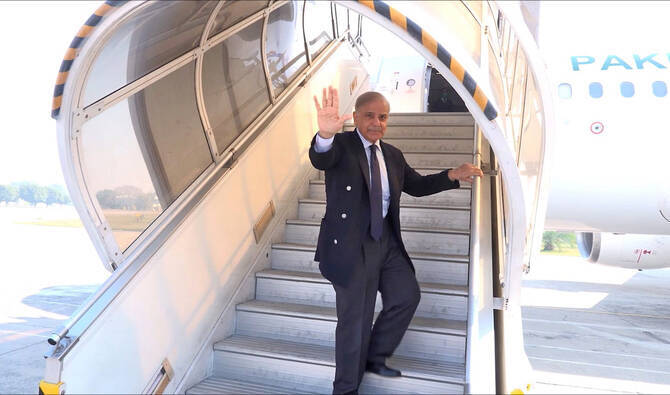
Photo: Arab News
According to Reuters, the Pakistani prime minister’s visit will take place from 23 to 26 May, as previously announced by China’s Ministry of Foreign Affairs. The trip comes amid the continued strengthening of the China-Pakistan strategic partnership, as well as growing attention to security, infrastructure and regional stability.
For Pakistan, China has long been not just a major partner, but a strategic pillar. Relations between the two countries are built around several key areas: security, infrastructure, trade, energy, military-political coordination and the China-Pakistan Economic Corridor. CPEC remains one of the most important components of China’s Belt and Road Initiative, as it gives Beijing access to the Arabian Sea through Pakistan’s Gwadar port and reduces China’s dependence on vulnerable maritime routes.
However, Shehbaz Sharif’s current visit is important not only in economic terms. It is taking place at a time when regional security is once again becoming one of the main issues for both Beijing and Islamabad. Chinese projects in Pakistan have faced security threats in recent years, and for Beijing, the protection of its investments and citizens abroad has become an increasingly sensitive issue.
Pakistan, in turn, is interested in convincing the Chinese side that Islamabad is capable of ensuring the security of major infrastructure projects and continuing the development of CPEC at a new stage.
The economic foundation of the China-Pakistan partnership also remains highly significant. China is Pakistan’s largest trading partner and one of its main sources of imports. According to China Briefing, citing Chinese customs statistics, trade turnover between China and Pakistan reached approximately $23.1 billion in 2024, an increase of 11.1% compared with the previous year.
At the same time, the trade balance remains sharply asymmetrical: Chinese exports to Pakistan amounted to around $20.2 billion, while China’s imports from Pakistan stood at about $2.8 billion.
This is why the trade and economic agenda is likely to become one of the central topics of the talks. For Pakistan, the key issue is not only maintaining Chinese investment, but also turning the strategic partnership with Beijing into a genuine source of export growth, jobs and foreign currency earnings. Islamabad will be interested in expanding access for Pakistani goods to the Chinese market, developing industrial production, agriculture, energy, transport infrastructure and special economic zones. For China, meanwhile, Pakistan remains an important sales market, transport hub and strategic foothold in South Asia.
The visit also has an important political dimension. China is seeking to show that its partnerships are not limited to relations with great powers. After contacts with the United States and Russia, Beijing is demonstrating that it is also working seriously with key regional states, especially those with strategically important geographical positions. Pakistan is precisely such a country. It is located at the intersection of South Asia, Central Asia, the Middle East and the Indian Ocean. For China, it is not merely a neighbour and ally, but an important element of the broader Eurasian architecture.
It is especially noteworthy that Sharif’s visit comes against the backdrop of China’s intensified activity on several fronts at once. Russian President Vladimir Putin recently visited Beijing, where he stated that Russian-Chinese relations had reached an unprecedented level. He also invited Xi Jinping to visit Russia next year.
In this context, the Pakistani prime minister’s arrival appears to be part of a broader diplomatic picture: China is gathering around itself a network of partners, each of whom matters for a separate strategic direction — Russia for the Eurasian and energy balance, Pakistan for South Asia and access to the Indian Ocean, and contacts with the United States for the broader process of global strategic bargaining.
For Islamabad, the trip to Beijing also has domestic significance. Pakistan needs economic stability, investment, infrastructure support and expanded trade. In this sense, China remains one of the few partners capable of offering Pakistan’s leadership not only political support, but also long-term projects. However, Beijing is likely to expect greater stability, security guarantees and practical efficiency from Islamabad. China is increasingly viewing its partners not only through the lens of political loyalty, but also through one key question: are they capable of delivering results?
In this sense, Shehbaz Sharif’s visit may become an attempt to relaunch or accelerate the economic agenda between the two countries. For Pakistan, it is important to show that relations with China should not remain merely a symbol of “all-weather friendship”, but must deliver concrete economic results. For China, in turn, Pakistan remains a showcase for its long-term Eurasian strategy.
The regional factor also cannot be ignored. China-Pakistan rapprochement traditionally attracts close attention from India, as New Delhi sees this alliance as one of the key challenges to its security. Against the backdrop of growing competition between India and China, as well as India’s expanding relations with the United States, Australia, Japan and Europe, Sharif’s visit to Beijing will be closely studied in New Delhi. For India, any new agreements between China and Pakistan, especially in the areas of infrastructure, security and technology, carry strategic significance.
There is also a broader signal for the West. China is showing that it is neither isolated nor on the defensive. On the contrary, Beijing is building a dense diplomatic agenda around itself, hosting global and regional leaders and discussing security, economics, transport corridors and political coordination with them. In this sense, China is acting not merely as a country responding to Western pressure, but as a state shaping alternative centres of attraction.
For Pakistan, this is also an opportunity to strengthen its diplomatic role. Islamabad has traditionally balanced between different centres of power, but China remains its most reliable strategic partner. At the same time, Pakistan understands that excessive dependence on one direction can limit its room for manoeuvre. Therefore, it is important for Sharif to demonstrate that relations with Beijing are not a form of dependence, but a strategic choice based on mutual interests.
The Middle East is another important aspect. Reuters notes that Sharif’s visit was preceded by a trip to Beijing in late March by Pakistan’s foreign minister, amid diplomatic efforts to reduce tensions in the Middle East. This means that China and Pakistan may discuss not only bilateral issues, but also a broader regional agenda — from the Islamic world to energy security and transport routes. Pakistan, with its ties to the Muslim world and its strategic location, can be a useful partner for China in these matters.
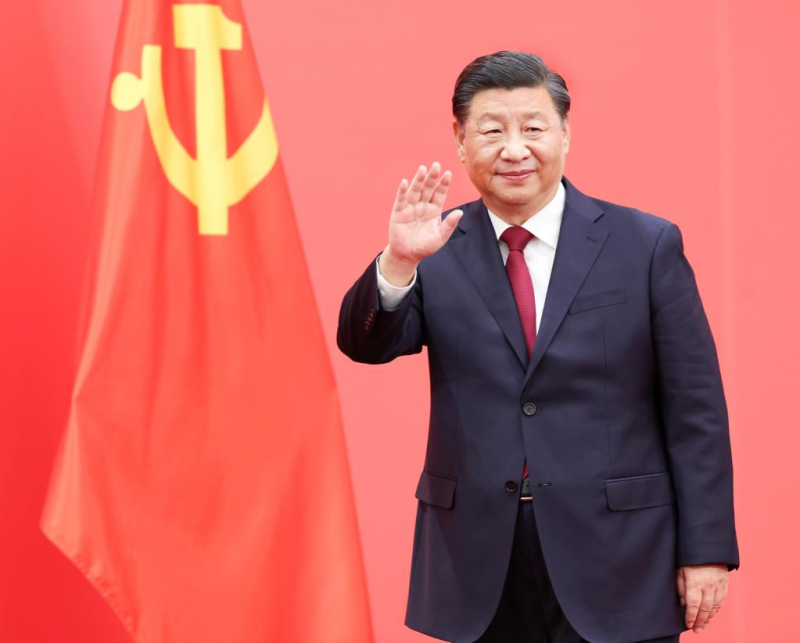
Photo: Xinhua
Thus, Shehbaz Sharif’s visit to China is not an ordinary trip. It fits into a broader picture in which Beijing is gradually becoming a diplomatic platform through which some of the most important lines of modern politics pass. Trump, Putin and Sharif are different political figures representing different interests and different regions. But together, they demonstrate one thing: China is becoming a place where the new architecture of international relations is being discussed.
The main intrigue surrounding the visit is whether Pakistan will be able to secure not only political support from China, but also new economic momentum. Equally important is what security guarantees Islamabad will offer Beijing for Chinese projects. If the two sides manage to agree on a new practical agenda, Sharif’s visit could become an important stage in the development of the China-Pakistan partnership.
In a broader sense, the trip shows that China is no longer limiting itself to the role of an economic giant. It is increasingly acting as a centre of political gravity. And while global diplomacy was once more often concentrated around Washington, Brussels or Moscow, today more and more routes lead to Beijing. For Pakistan, this is a chance to strengthen its strategic pillar. For China, it is another opportunity to demonstrate that it is becoming one of the main organisers of the new Eurasian political order.
(If you possess specialized knowledge and wish to contribute, please reach out to us at opinions@news.az).
此内容由惯性聚合(RSS阅读器)自动聚合整理,仅供阅读参考。 原文来自 — 版权归原作者所有。