




惯性聚合 高效追踪和阅读你感兴趣的博客、新闻、科技资讯
阅读原文 在惯性聚合中打开

推荐订阅源

Hugging Face - Blog
Hugging Face - Blog
V
Visual Studio Blog
Last Week in AI
Last Week in AI
Stack Overflow Blog
Stack Overflow Blog
The GitHub Blog
The GitHub Blog
Recent Announcements
博客园 - Franky
D
DataBreaches.Net
B
Blog
Y
Y Combinator Blog
T
The Blog of Author Tim Ferriss
Microsoft Azure Blog
人人都是产品经理
人人都是产品经理
WordPress大学
WordPress大学
P
Proofpoint News Feed
J
Java Code Geeks
奇客Solidot–传递最新科技情报
奇客Solidot–传递最新科技情报
Martin Fowler
Martin Fowler
月光博客
月光博客
宝玉的分享
宝玉的分享
Engineering at Meta
Engineering at Meta
阮一峰的网络日志
阮一峰的网络日志
F
Fortinet All Blogs
博客园 - 【当耐特】

Economic news

News.az - Latest news from Azerbaijan US-Iran naval confrontation in Hormuz looms over failed Islamabad talks | News.az Russia readies first Yak-130M batch to intercept Ukrainian long-range drones | News.az Moscow and Kyiv trade blame over fresh wave of mutual strikes | News.az Nvidia-backed SiFive hits $3.65 billion valuation for open AI chips | News.az BYD sets Guinness Records, previews new EVs at MIAS 2026 | News.az Russian listed by Memorial as political prisoner goes on hunger strike | News.az US gas prices slide 2 cents to $4.14 a gallon | News.az Pilots' union calls strikes at Lufthansa on April 13, 14 | News.az US military says two of its ships transited the Strait of Hormuz | News.az US has agreed to unfreeze Iranian assets | News.az Malaysia warns of supply shortages as global tensions push up costs | News.az China hospital helps stroke patient walk using mind controlled rehab system | News.az How will Barcelona line up against Espanyol? | News.az China successfully launches test satellite for satellite internet technology support | News.az Iraqi parliament elects Nizar Amedi as country's new president | News.az India raises export duties on diesel, aviation turbine fuel | News.az Lebanese PM delays Washington trip | News.az Sources: Iran's new Supreme Leader has disfiguring injuries | News.az Iraq's Parliament convenes to elect new president | News.az Iran denies U.S. vessel crossed Strait of Hormuz | News.az Microsoft halts all carbon removal purchases | News.az BYD to install 6,000 flash chargers globally | News.az Sirens alert of drone attack from Lebanon in Western Galilee | News.az U.S. warships cross Strait of Hormuz for first time since Iran war started | News.az World Bank and IMF to host 2029 Annual Meetings in Abu Dhabi | News.az Pakistani and Iranian delegations meet for talks in Islamabad | News.az Ships sail through Strait of Hormuz as peace talks begin | News.az Israeli air attacks kill 10 in southern Lebanon | News.az US-Iran negotiations for permanent ceasefire start in Islamabad | News.az
Shrinking habitats put global plant species at risk | New...
2026-05-23 · via Economic news

Shrinking habitats put global plant species at risk

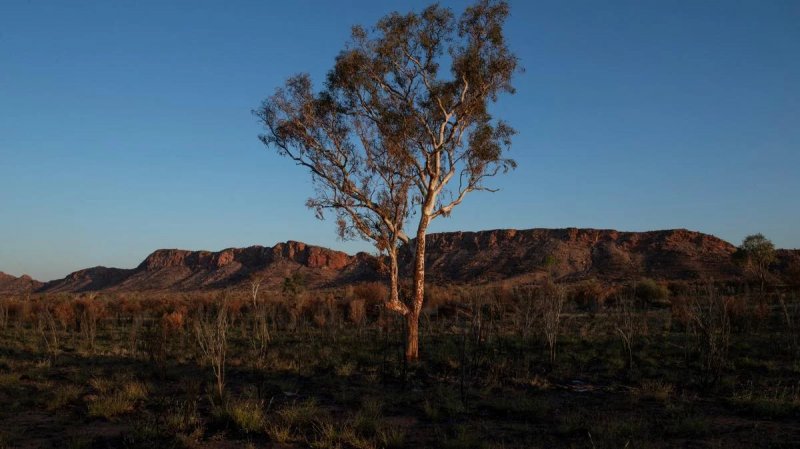
REUTERS/Jaimi Joy/File Photo Jaimi Joy Reuters

Scientists warn that some of the plants that define familiar landscapes may not survive by the end of the century, as climate change increasingly drives species loss by altering and often reducing the habitats they depend on.

Researchers modelled future ranges for numerous species of vascular plants, a category that accounts for almost all the world's plants - those with water- and nutrient-carrying tissues. They looked at more than 67,000 species, meaning about 18% of the world's known vascular plants, News.Az reports, citing Miami Herald.

They found that 7% to 16% could lose more than 90% of their range, placing them at high risk of extinction. Examples include Catalina ironwood, or island ironwood, a rare endemic California tree, bluish spike-moss from a plant lineage dating back more than 400 million years, and roughly one third of Eucalyptus species, one of Australia's most recognizable plant groups.

The researchers came to their estimates after examining millions of records on plant locations as well as greenhouse-gas emissions scenarios for 2081-2100.

A plant's habitat is not simply a place on a map, but the full array of conditions it needs: temperature, rainfall, soils, land use and landscape features such as shade.

"One way to picture this is to imagine plants trying to follow a moving 'climate envelope.' As temperatures warm, many species can shift northward or uphill to stay cool enough. But temperature is only part of the story," Junna Wang, a Yale University postdoctoral researcher, and Xiaoli Dong, a professor of environmental science and policy at the University of California, Davis, said in joint comments to Reuters.

Wang and Dong helped lead the study published in the journal Science.

In many places, the study indicated, climate change is shrinking these combinations, leaving fewer areas where all the conditions that a species needs still exist together.

For plants, movement, or dispersal, usually happens across generations, via seeds or spores carried by wind, water, animals or gravity. Yet when the researchers compared realistic movement with a scenario in which plants could reach any newly suitable habitat, extinction rates were very similar.

"If slow movement were the main problem, then allowing unlimited dispersal should dramatically reduce extinction risk. But that is not what we found," Wang and Dong said. That matters for conservation. "If dispersal limitation were the main driver, then strategies like assisted migration - physically helping species move to new areas - could solve much of the problem. But if climate change is reducing the amount of suitable habitat overall, then simply helping species move may not be enough," they added.

News.Az 

By Ulviyya Salmanli