






Before our eyes, global politics is once again changing its geometry: old alliances are losing their automatic significance, great powers are bargaining over spheres of influence, and Europe is being forced to redefine its place between the United States, China and Russia.
To discuss whether this signals the emergence of a new bipolar world, why the United States and China may shift from confrontation to a pragmatic division of influence, what role remains for Europe in such a system, and how these developments affect security in the post-Soviet space, News.Az spoke with Polish political scientist Jakub Korejba.
– What was your main impression of Donald Trump's visit to Beijing?
– The first, and perhaps strongest, impression is the sharp contrast between Trump's current visit to Beijing and the situation we witnessed nine years ago, when Xi Jinping visited Trump at Mar-a-Lago. Nine years may not seem like much, but in international relations an entire era has passed during that time.
The China of then and the China of today are already two different political realities. Back then, Xi Jinping was effectively visiting the central figure of global politics in a country widely regarded as the unquestioned centre of global power. Today, Trump's visit to Beijing allows us to speak about the beginning of a new world order, a new system, and a new era in which the United States and China stand as comparable centres of power.
Judging by the course of the visit, its agenda, tone, atmosphere, and outcomes, one can observe the emergence of a bipolar order. China no longer appears to be a country catching up with America. It presents itself as an equal.
– Why do you believe time is currently working more in China's favour?

Source: rand
– Both domestic and international trends suggest that time is likely on China's side. The gap that still exists between the United States and China in areas such as the economy, technology, finance, and military capabilities will gradually narrow.
More importantly, however, the key issue is not economic, financial, technological, or military parity. What is even more significant is ideological parity. During the Cold War, the capitalist and socialist systems both claimed universal validity. They were perceived as competing visions of the future.
After the collapse of the Soviet Union, the United States viewed much of the world from a position of ideological, civilisational, and philosophical superiority. The American model was presented as the only correct one: democracy, a market economy, human rights, separation of powers, and a multiparty system. These elements were treated as universal standards. Countries organised differently were often regarded as less developed, inferior, or second-rate from the perspective of Western political thinking.
– What has changed now?
– Today, relations between the United States and China no longer reflect the language of ideological superiority. This means Washington is effectively acknowledging that the Chinese model also possesses legitimacy. It serves as an independent source of political ideas, governance, strategic thinking, and state development.
In other words, the United States can no longer approach China with the assumption that “our system is correct while yours is merely a temporary deviation from the norm”. The Chinese model is no longer viewed as secondary. It has become an equal alternative.
– Was the United States able to impose any conditions on China?
Source: Reuters
– What stands out is that the United States was unable to impose anything on China. Washington failed to obtain significant concessions from Beijing without offering something in return. The traditional American negotiating approach of “you give us concrete concessions and we may consider offering something later” no longer works.
China is no longer a country that can be addressed through unilateral demands. Beijing expects reciprocity, respect for its interests, and recognition of its role within the international system.
– Taiwan remains one of the key issues. How do you assess its future after this visit?
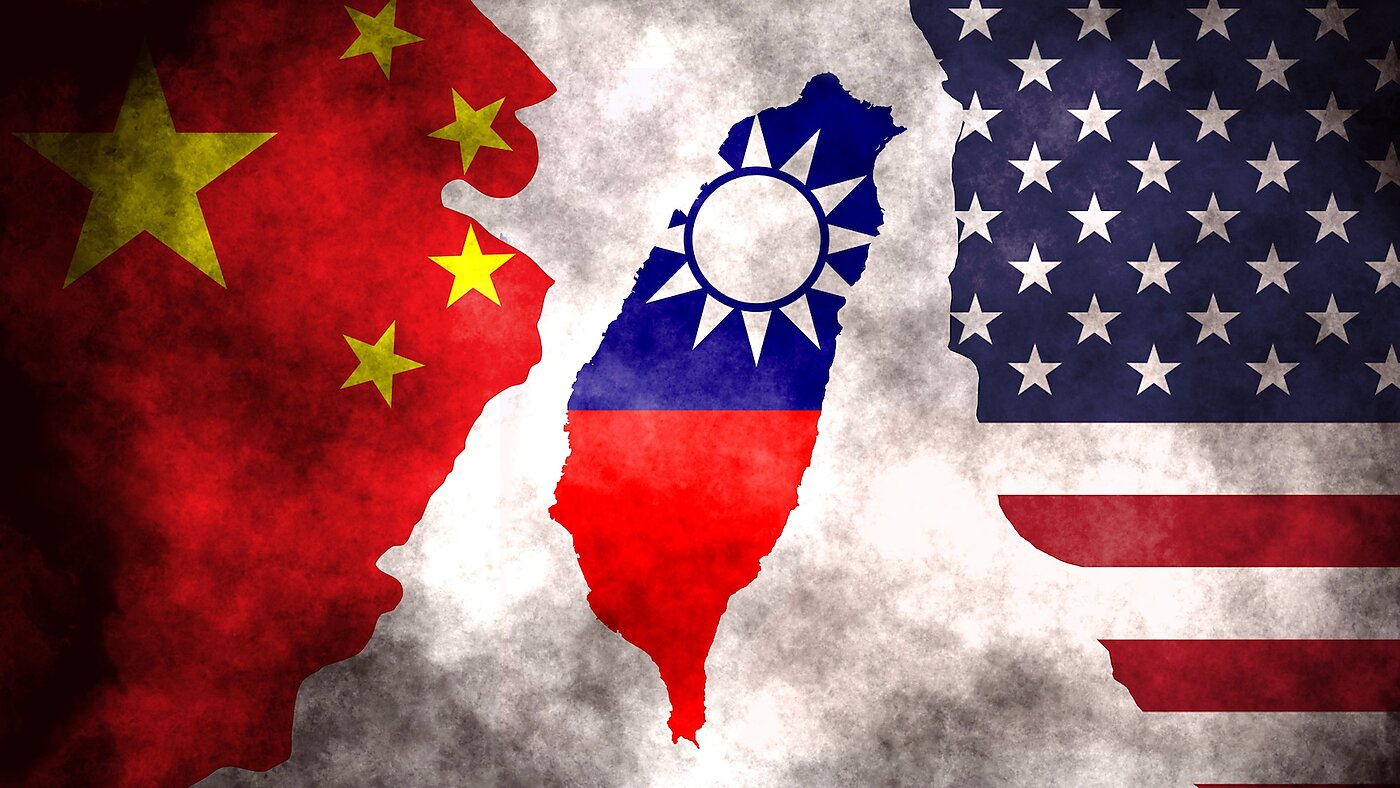
– When it comes to strategic decisions, there is a strong impression that Taiwan's fate has, in essence, already been determined. To put it bluntly, Taiwan appears to have become part of a larger geopolitical bargain.
Formally, Taiwan is considered part of China. It now seems that Washington may be prepared to gradually align this formal position with political reality. In practical terms, the United States could be stepping back from its role as the principal guarantor of Taiwan's resistance to Beijing's authority.
Exactly how this process would unfold, whether through legal, political, or institutional mechanisms, remains unclear. It may still be under discussion. However, there appears to have been a fundamental willingness in Washington to reconsider the strict defence of Taiwan as an independent political entity.
– Why might the United States take such a step?
– The United States understands that challenging China's territorial integrity under current international conditions has become excessively costly, dangerous, and risky. The strategy no longer pays off economically, strategically, politically, or ideologically.
Therefore, one can only hope that those in Beijing and Taipei who are considering how to manage this process will succeed in doing so peacefully and without war.
– Can we say that the new world order has become a reality after this visit?
– Yes, that is precisely what has happened. What we are witnessing is no longer a potential future order but an actual and increasingly defined one. Moreover, it may prove durable.
If China and the United States abandon direct confrontation, accept each other as permanent realities, and begin dividing spheres of influence, they are choosing peaceful coexistence over conflict. They are no longer attempting to impose their own models on one another but are instead seeking agreed rules for competition.
Today, very little in the world can be accomplished without either China or the United States. These two powers dominate global politics, economics, technology, and security to such an extent that all other actors are compelled to reassess their positions.
– Many political scientists previously predicted a war between the United States and China over Taiwan. Have those forecasts lost relevance?
Source: smallwarsjournal
– It appears so. For years, many analysts repeatedly predicted that a US-China war over Taiwan would begin within one, two, or three years. Such statements remain readily available in public records. Yet it is now becoming clear that this scenario is increasingly unlikely.
And if there is no war between the United States and China, then exploiting their rivalry becomes impossible. That fundamentally alters the global balance.
– Who stands to lose the most from a possible rapprochement between the United States and China?
– The greatest loser would be any actor that built its strategy around contradictions between Washington and Beijing. First and foremost, that means Russia.
Vladimir Putin has substantial reasons to reconsider his position. If there is no major conflict between the United States and China, and if they begin resolving key issues through consensus, Moscow loses one of its most important geopolitical advantages.
For a long time, Russia could count on US-China rivalry to create room for manoeuvre. If that rivalry softens, Russian strategic options become significantly more limited.
– Is it possible that Washington and Beijing reached an unwritten formula of “Ukraine in exchange for Taiwan”?
– If such an understanding truly existed, hypothetically speaking, Ukraine in exchange for Taiwan, Russia's position would become extremely difficult. In that case, Vladimir Putin would have serious matters to discuss with Xi Jinping.
Naturally, we cannot present this as an established fact. However, the logic of great power politics has often involved such exchanges: one region, one sphere of influence, or one crisis being linked to another. In this context, Russia could find itself in the position of a country whose interests are being discussed without its decisive participation.
– Xi Jinping spoke about constructive strategic stability. What might this concept mean?
– From the Chinese perspective, it likely means that the United States and China should divide spheres of influence between themselves, both geographic and non-material. This includes not only territory but also technology, trade, finance, communications, space, and digital infrastructure.
The goal would be to avoid directly harming one another, focus on their respective areas of influence, and channel competition into fields that do not lead to military confrontation. Competition could continue in technology, space, finance, trade, logistics, and communications, while major geopolitical clashes, especially over territory, would be avoided.
Put simply, Xi Jinping may have been proposing the following: let us organise the world in a way that avoids mutual destruction and compete only where competition does not lead to war.
– What does this mean for countries that built their foreign policy around alignment with one centre of power against another?
– For such countries, this is a very serious signal. States that defined their international identity as allies of China against the United States, or allies of the United States against China, will now need a new strategy.
If the two principal centres of power move from confrontation to managed coexistence, serving another country's conflict becomes pointless. These states will need to find a new role, a new identity, and a new model of behaviour within the international system.
– Why is Xi Jinping's remark that China, with its 5,000 years of statehood, and the United States, approaching its 250th anniversary, can coexist on the same planet so significant?
Source: globaltimes
– In my view, it is the most important conclusion of the visit. Through that statement, Xi Jinping proposed a new philosophy for US-China relations. He was effectively saying: we are different, we possess different historical scales, civilisational traditions, and political systems, yet we can coexist.
What is particularly noteworthy is that the conceptual framework now originates not from the American president but from the Chinese leader. That in itself is a fundamentally new development. Previously, America largely generated global narratives and promoted them internationally. Today, the United States appears willing not only to engage another power on equal terms but also to accept concepts articulated by China.
– So China is now not only an economic and military power but also a producer of global ideas?
– Exactly. If Xi Jinping says that two great powers can coexist on the same planet, it represents a rejection of conflict, confrontation, and the war that many regarded as almost inevitable.
This is a significant turning point. China is no longer merely reacting to the American agenda. Official Beijing is proposing its own frameworks through which the world increasingly interprets emerging realities.
– You are critical of those who consistently predicted war between the United States and China. Why?
– I believe it is irresponsible to frighten people with war, especially when it is done for attention, popularity, or monetisation.
I had the privilege of speaking with members of the older generation, including my grandfathers and others who experienced real war — war with a capital W. During my childhood, when someone used the word “war”, everyone understood exactly what kind of war was being discussed.
For that reason, I believe it is not entirely appropriate to compare today's international crises with that experience. It is even less responsible to turn the threat of war into a tool for attracting public attention.
– What is the main conclusion that can be drawn from the meeting between Xi Jinping and Donald Trump?
– The main conclusion is that war can be avoided. Judging by the available signals, that is precisely what Xi Jinping and Donald Trump were attempting to achieve during their discussions and walks in Zhongnanhai.
While discussing bilateral relations, they were most likely outlining the contours of a new world order in which the United States and China recognise each other as the principal centres of power, avoid direct confrontation, and move towards a more complex but less destructive form of rivalry.
This is no longer the old unipolar world. Yet it is not chaos either. It is a new form of bipolarity: pragmatic, tough, calculated, but potentially capable of preventing a major war.
此内容由惯性聚合(RSS阅读器)自动聚合整理,仅供阅读参考。 原文来自 — 版权归原作者所有。