








The nearly simultaneous visits to China by US President Donald Trump and Russian President Vladimir Putin highlight a profound shift in the global balance of power. As wars, sanctions, trade disputes and energy insecurity continue to unsettle the international system, Beijing is increasingly positioning itself not only as an economic superpower, but also as a central player in global crisis management.
From the Taiwan Strait and the Strait of Hormuz to sanctions evasion, Arctic infrastructure and Eurasian transport corridors, China is steadily converting the vulnerabilities of both rivals and partners into diplomatic leverage. Washington is seeking Beijing’s assistance in managing tensions with Iran and stabilising economic relations, while Moscow has become increasingly dependent on Chinese markets, financing, logistics and political support.
In an exclusive interview with News.Az, American political analyst Irina Tsukerman explains how Xi Jinping is using this period of global fragmentation to strengthen China’s strategic influence, and why both the United States and Russia increasingly find themselves compelled to engage with Beijing on its own terms.
- Irina, is Xi Jinping using the weaknesses of both the United States and Russia to transform China into the main center for managing global crises?
- The nearly simultaneous visits to China by Trump and Putin demonstrate how aggressively Xi Jinping is attempting to turn Beijing into the central political hub for managing the world’s most dangerous crises. China is exploiting a moment in which several major powers are simultaneously under pressure and transforming those vulnerabilities into proof of its own indispensability.
Beijing no longer wants to be viewed solely as an industrial superpower or the world’s largest export platform. Xi is increasingly positioning China as the state through which global trade disputes, sanctions conflicts, energy instability, transport corridors, regional wars, financial resilience, and military risk management all pass.
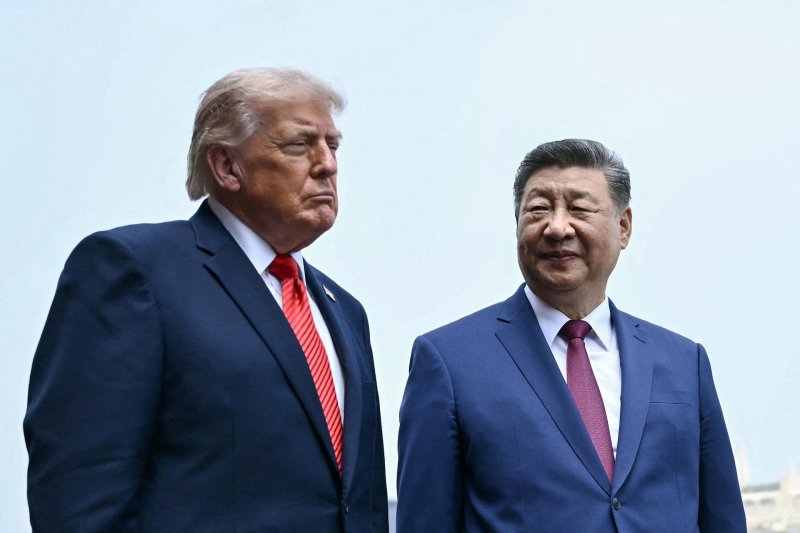
Trump arrived in Beijing with serious strategic needs of his own. His administration understands that a prolonged economic confrontation with China is creating growing internal vulnerabilities for the United States. Supply chain instability, investor anxiety, pressure from industry, inflationary risks tied to trade restrictions, and concerns among major American sectors are all increasing the desire to at least partially stabilize relations with Beijing.
In addition, Trump traditionally conducts diplomacy through personal relationships between leaders. Chinese authorities fully understand how much importance he places on symbolism, spectacle, direct negotiations, and the image of a leader personally shaping world events.
Source: Reuters
- Can we say that Trump’s visit became less of a diplomatic episode for Beijing and more of a demonstration that dialogue with China has already become a strategic necessity for Washington?
- Beijing used the visit to reinforce the perception that stable dialogue with China is itself becoming a strategic necessity for Washington. Xi Jinping wanted global markets, Asian governments, Gulf states, and domestic Chinese audiences to see the US president arriving in Beijing amid wars, sanctions disputes, shipping instability, rising military tensions, and energy uncertainty.
The symbolic dimension of the visit was enormously important for Chinese leadership because China’s own economy continues to face serious structural pressure related to debt, weakening domestic confidence, slowing growth, demographic decline, and the deep crisis in the real estate sector. Trump’s ceremonial reception allowed Xi to project resilience, authority, and international relevance precisely at a moment when Beijing is deeply concerned about maintaining confidence both at home and abroad.
- Can it be said that during Trump’s visit Beijing was deliberately testing the limits of American flexibility — from symbolic gestures to economic promises?
- The atmosphere surrounding the meetings also allowed China to test how much symbolic pressure Washington was willing to tolerate in exchange for access and dialogue.
One particularly revealing example involved Marco Rubio. Rubio had been under Chinese sanctions since 2020 because of his criticism of repression in Xinjiang and Hong Kong. Instead of officially lifting the sanctions, Chinese authorities reportedly altered the official Chinese transcription of his surname in a way that technically allowed his entry while still preserving the claim that the sanctions formally remained in place.
The new version of his surname reportedly carried negative connotations associated with words like “reckless,” “rude,” or “foolish.” The absence of any serious public reaction from Trump made the situation even more revealing. Beijing was not simply solving a bureaucratic problem. China was testing how much symbolic humiliation Washington was willing to absorb in order to preserve access to high-level negotiations.
The same pattern emerged in the economic dimension of the visit. China allowed expectations to build around beef exports, aviation contracts, and broader commercial agreements, only for parts of those understandings to become diluted, postponed, or intentionally ambiguous.
Beijing extracted diplomatic and political value from the visit itself while preserving leverage and strategic flexibility. Trump received the optics of active diplomacy and apparent forward movement. China retained control over timing, implementation, and access to its own market. American companies and industries hoping for meaningful commercial breakthroughs once again found themselves waiting on promises whose fulfillment remains politically conditional and easily reversible.
Source: Shutterstock
- How strongly did the Taiwan issue shape the tone and logic of the negotiations between Beijing and Washington?
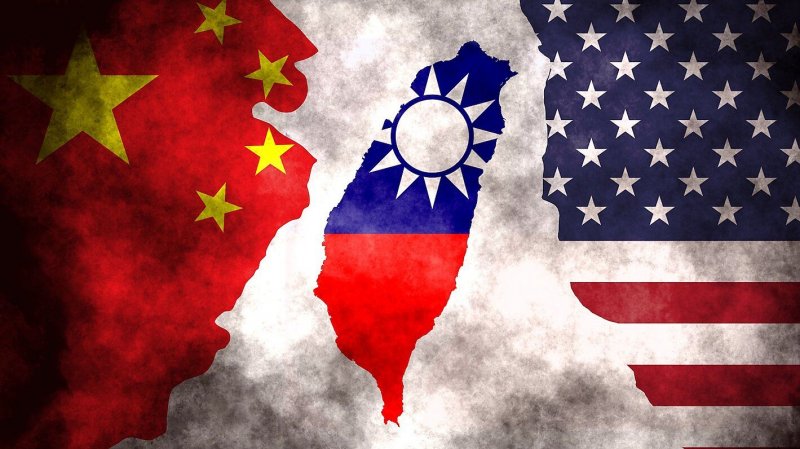
- Taiwan remained one of the central strategic subjects of the negotiations. Beijing likely used the broader context of the meetings to push Trump toward greater caution regarding military signaling, official contacts, arms sales, and public rhetoric surrounding Taipei.
Chinese leadership increasingly believes that time favors Beijing, provided military and political coordination between the United States and Taiwan slows down. China fully understands Trump’s attraction to large-scale deals and highly visible diplomatic achievements. That is precisely why Beijing is interested in integrating Taiwan into a broader package involving trade, economic stabilization, technological restrictions, Iran, and overall US-China relations.
- Can the Iranian issue be considered Xi Jinping’s hidden geopolitical victory during the negotiations with Trump?
- The Iranian dimension may have become Xi Jinping’s most valuable geopolitical gain from the visit. Trump reportedly asked China to influence Tehran in order to prevent threats to shipping through the Strait of Hormuz.
That request alone dramatically elevated China’s diplomatic weight because it reinforced the perception that Beijing possesses leverage over Iran that Washington cannot easily replicate. China is now capable of simultaneously presenting itself as Tehran’s economic partner, a stabilizing force for global energy markets, and a state capable of communicating with opposing camps without fully aligning itself with any of them.
This gives Beijing tremendous room for maneuver. China can assure Washington that it supports freedom of navigation and regional stability while simultaneously maintaining deep strategic and economic ties with Iran.
China can continue purchasing Iranian oil through opaque mechanisms while publicly promoting the language of de-escalation and responsible crisis management. Beijing can also continue facilitating flows of dual-use technologies and industrial equipment that indirectly strengthen Iran’s resilience without crossing thresholds that could provoke direct financial confrontation with the United States.
China does not need to fully resolve the Iranian crisis in order to benefit from it. It is enough for all sides to believe Chinese involvement is necessary to prevent escalation.
- How dependent is Russia today on China in implementing its new Eurasian transport projects?
- First of all, Putin arrived in Beijing under even greater strategic pressure. Russia’s dependence on China has sharply intensified since the war in Ukraine transformed Moscow’s position in the global economy.
Russia’s access to Western finance, technology, investment, logistics, and markets has narrowed dramatically. China now occupies the dominant position in the relationship economically, technologically, diplomatically, and financially.
Moscow needs Chinese purchases of Russian energy, Chinese banking channels, Chinese industrial products, Chinese electronics, Chinese logistics, Chinese diplomatic cover, and Chinese tolerance toward sanctions circumvention far more than China needs Russia itself.
This dependence becomes especially visible through Russia’s effort to establish a transport corridor through Iran toward the Persian Gulf. Moscow views this route as part of its long-term survival strategy after the collapse of much of its previous European energy and trade architecture.
The corridor is intended to reduce Russian vulnerability caused by sanctions, the rupture with Europe, instability around the Black Sea, and the declining reliability of traditional trade routes. This is fundamentally an attempt to preserve access to global trade and energy flows through a Eurasian infrastructure system increasingly functioning outside Western control.
Russia cannot build such a system independently. The corridor only becomes strategically meaningful with active Chinese financial, political, logistical, and strategic support. Moscow is effectively asking Beijing to finance part of Russia’s geopolitical future.
That gives Xi Jinping enormous leverage. China can accelerate the project, slow it down, alter its configuration, renegotiate pricing structures, impose conditions, or use the entire project as a bargaining tool in broader negotiations involving Gulf security, sanctions, Iran, energy routes, and relations with Washington.
- Why is Power of Siberia 2 more important for Moscow than for Beijing?
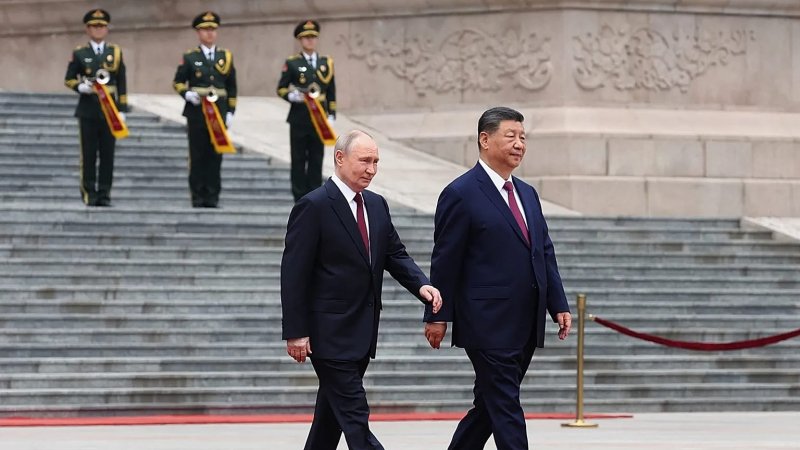
- One of the most revealing aspects of Putin’s trip was not what was announced, but what remained unresolved. Despite all the ceremonial rhetoric about limitless partnership and deepening strategic ties, the visit ended without clarity on key pipeline expansion projects — above all Power of Siberia 2.
That is extremely significant because the project is central to Russia’s post-European energy strategy. Having lost much of the European market, Moscow urgently needs alternative large-scale buyers capable of absorbing redirected gas volumes. China remains virtually the only market capable of partially replacing Europe in the long term.
For the Kremlin, Power of Siberia 2 is not simply a commercial agreement. It is one of the central pillars of Russia’s economic survival strategy after the collapse of its previous energy model. Putin desperately needs long-term Chinese commitments that would lock Russian gas into the Chinese market for decades.
The very fact that Putin left Beijing without a final agreement clearly exposed the real imbalance inside the relationship. China fully understands that Russia needs this deal far more than Beijing does.
Source: Sputnik
- Why is China reluctant to provide Russia with final guarantees on the pipeline?
- Xi Jinping gains leverage precisely by preserving uncertainty. China can continue delaying final approval, revising prices, demanding more favorable financial conditions, and seeking additional concessions related to infrastructure and the Arctic while maintaining maximum flexibility.
Once final guarantees are granted, part of that leverage disappears. By keeping Russia in a state of expectation regarding final commitments, China preserves influence over Moscow’s broader strategic behavior.
That is why the unresolved pipeline issue says so much about the real balance of power within the relationship. More and more elements of Russia’s long-term economic planning now directly depend on decisions made in Beijing.
The same model is now visible in energy, trade access, banking channels, technological supplies, sanctions-evasion mechanisms, infrastructure planning, and transport systems. Russia continues publicly speaking about sovereign strategic partnership, but more and more components of Russian economic survival depend directly on Chinese calculations.
Beijing is gradually becoming the force determining which Russian projects move forward rapidly, which remain frozen, and which become tools in broader geopolitical bargaining.
China benefits enormously from this dynamic. Xi Jinping can reassure Putin without granting him equal influence. Beijing can keep Russia in a condition of strategic dependency while simultaneously benefiting from cheap energy resources, Russia’s confrontation with the West, expanding influence over Russian infrastructure, and Moscow’s growing integration into China-centered economic systems.
Despite official rhetoric about equality and friendship, the relationship is increasingly functioning according to rules that overwhelmingly benefit China.
- How would you characterize both visits overall?
- The central significance of both visits lies in how effectively China is transforming the vulnerabilities of other powers into its own diplomatic capital.
Trump needs Chinese assistance in managing energy instability surrounding Iran and the Strait of Hormuz. Putin needs Chinese support for transport routes outside the sanctions system, energy diversification, financial protection, and long-term economic survival. Iran needs Chinese buyers, investment, technology, and diplomatic cover.
China takes each of these problems and transforms them into evidence that Beijing simultaneously stands at the center of multiple geopolitical systems.
- Can we say that Beijing is constructing an entirely new model of power?
- Xi Jinping gains prestige simply from the fact that other powers are forced to seek his participation. China does not need to fully solve these crises in order to profit from them. It is enough to maintain the perception that sustainable solutions are impossible without Beijing’s involvement.
That is what expands Chinese influence across the Middle East, Eurasia, global energy systems, transport corridors, and international diplomacy.
In the short term, Trump will likely continue trying to stabilize selected aspects of US-China relations through personal diplomacy and limited transactional agreements. Beijing will likely encourage this approach because it slows the formation of a unified anti-China front among the United States and its allies.
China will continue offering partial cooperation on trade, shipping security, and regional stability while avoiding structural concessions regarding technology, industrial policy, Taiwan, and Iran. Washington will likely continue discovering that symbolic diplomacy and ceremonial meetings do not necessarily translate into meaningful influence over China’s strategic behavior.
In the short term, Russia will become even more economically and diplomatically dependent on China. Moscow’s need for alternative energy markets, banking mechanisms outside the sanctions system, transport corridors, and industrial supplies will continue growing.
China will continue benefiting from cheap Russian energy resources, expanded access to Russian assets, and increasing influence over Russian infrastructure planning. Joint Arctic projects, settlements in national currencies, logistics systems, and dual-use technologies will likely expand in practical terms even as structural imbalances inside the relationship deepen further.
The long-term trajectory appears even more serious. Russia increasingly risks becoming a junior strategic dependent partner whose economic planning, export routes, energy future, and financial flexibility are determined by Chinese calculations.
Moscow may continue publicly using the rhetoric of sovereign partnership and multipolarity, but the underlying reality increasingly points toward growing structural subordination. China is gradually positioning itself not merely as Russia’s partner, but as the power capable of determining the pace and viability of Russia’s post-Western economic model.
For the United States, the long-term implications are different but equally serious. Beijing increasingly understands that it can use market access, mediation, economic scale, and crisis management in ways that force even rivals to seek Chinese assistance.
Chinese leadership believes that fragmentation of the international system only increases Beijing’s importance because every regional crisis, sanctions regime, trade dispute, or shipping threat creates new opportunities for China to act as mediator, gatekeeper, financier, or stabilizing power.
The more unstable the international system becomes, the more opportunities Xi sees to transform China into the unavoidable center of global diplomacy.
That is precisely what both visits demonstrated most clearly. Trump came seeking assistance in managing instability surrounding Iran, shipping security, trade pressure, and broader economic uncertainty. Putin came seeking strategic guarantees, infrastructure support, energy deals, sanctions protection, and confirmation that Russia still remains an important component of China’s worldview.
China succeeded in placing itself in the position of the state with which both leaders were compelled to engage. Xi Jinping increasingly understands that the strongest position in today’s fragmented international system does not necessarily belong to the loudest military power, but to the state that rivals, adversaries, sanctioned regimes, and economic competitors alike are simultaneously forced to approach in search of what they cannot obtain elsewhere.
此内容由惯性聚合(RSS阅读器)自动聚合整理,仅供阅读参考。 原文来自 — 版权归原作者所有。