


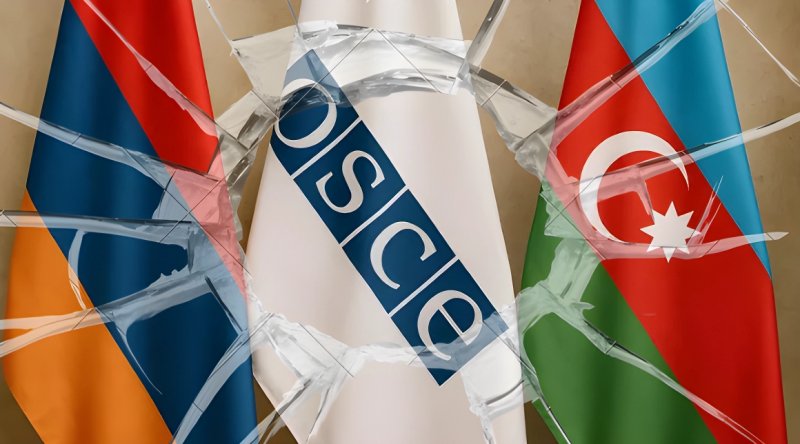
Source: Caliber
In March 2021, Richard Hoagland, who at the time served as the acting US co-chair of the OSCE Minsk Group, published an article on the website of the International Conflict Resolution Center reflecting on the fate of the group, its role, and its relevance.
At that moment, the American diplomat could hardly have known that Russian peacekeepers would leave Azerbaijan a year earlier than scheduled, that the Minsk Group would eventually be dissolved, and that Azerbaijan would fully restore its sovereignty. Nevertheless, Hoagland reached one central conclusion: the OSCE Minsk Group had achieved nothing.
It failed to produce results for many reasons. One was the completely opposing positions of the conflicting parties, as neither Baku nor Yerevan was willing to make concessions. Another was the role of external actors interested in prolonging the conflict. Hoagland revealed details that had not previously been discussed publicly, particularly regarding Russia’s position, arguing that Moscow merely created the appearance of mediation while in reality benefiting from the continuation of the conflict. The same, however, could also be said of the other co-chair countries.

此内容由惯性聚合(RSS阅读器)自动聚合整理,仅供阅读参考。 原文来自 — 版权归原作者所有。