





As Washington and Moscow compete for influence in a rapidly changing world order, China is steadily positioning itself as an indispensable geopolitical centre where the interests of the world’s major powers increasingly converge.
The nearly consecutive visits to Beijing by US President Donald Trump and Russian President Vladimir Putin once again underscored China’s growing global role — not only as an economic superpower, but also as a strategic actor capable of shaping diplomatic agendas, trade negotiations and even discussions surrounding global conflicts. Behind the official statements and carefully choreographed meetings, however, lie far more complex questions: Why did Trump and Putin choose Beijing at this particular moment? What sensitive negotiations may have taken place behind closed doors? Is China becoming a new geopolitical arbiter between East and West, or is Beijing still carefully avoiding excessive global responsibility while quietly expanding its influence?
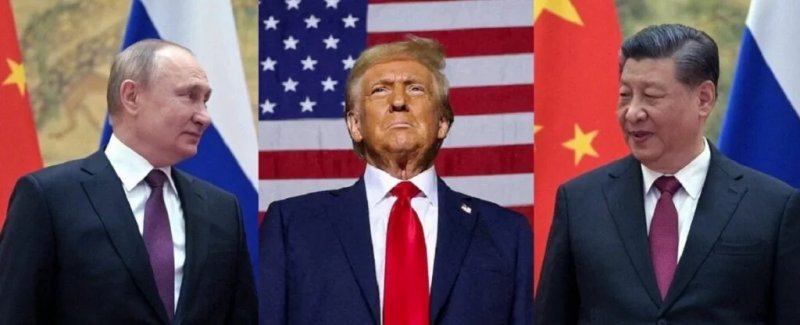
Photo: World Geostrategic Insights
Such visits simply demonstrate that contacts between Russia and China are systemic, long-term and regular in nature. In fact, over the past decade, a stable mechanism of meetings has emerged: every six months, either the Chinese or Russian president visits the other country. This diplomatic framework has long been established and operates smoothly. Of course, all major powers seek to build relations with China. However, this does not necessarily mean that China is becoming the sole centre of global geopolitics. These were primarily working meetings that happened to coincide because of various circumstances.
– If Trump went to China with the logic of deals, pressure and bargaining, while Putin arrived with the logic of strategic dependence and anti-Western consolidation, what do you believe was the main hidden objective behind each visit?
– According to numerous media reports, Trump’s trip to China was connected, among other things, with discussions about Beijing’s influence over Iran. The idea was that China could use its leverage to facilitate agreements and pressure Tehran in ways beneficial to Washington. It had been reported in advance that Trump intended to raise this issue. However, claiming that he openly planned to ask China for assistance would probably be too simplistic. Trump is known for disliking the role of a petitioner, so in this case he likely had to depart somewhat from his usual position. In addition, Trump travelled to China to negotiate ways to prevent new trade wars while simultaneously protecting the interests of American manufacturers.
It is no secret that China is an extremely powerful economic player with considerable influence over the American market. At the same time, the influence of American producers on the Chinese market is far more limited. This imbalance lies at the heart of the issue. Trump sought to ensure that the Chinese side would make certain concessions and create more balanced trading conditions.
Everyone understands that labour costs in China are significantly lower than in the United States. Of course, Trump could not negotiate higher wages for Chinese workers, but he could raise the issue of balancing trade relations. His logic was that both sides should benefit from cooperation: not only China benefiting from trade with the United States, but also the United States benefiting from engagement with China.
In this context, the soybean agreement became particularly symbolic. China traditionally purchases large volumes of soybeans from Latin American countries. However, Trump managed to secure a contract for Chinese purchases of American soybeans, which can be viewed as one of his tactical victories.
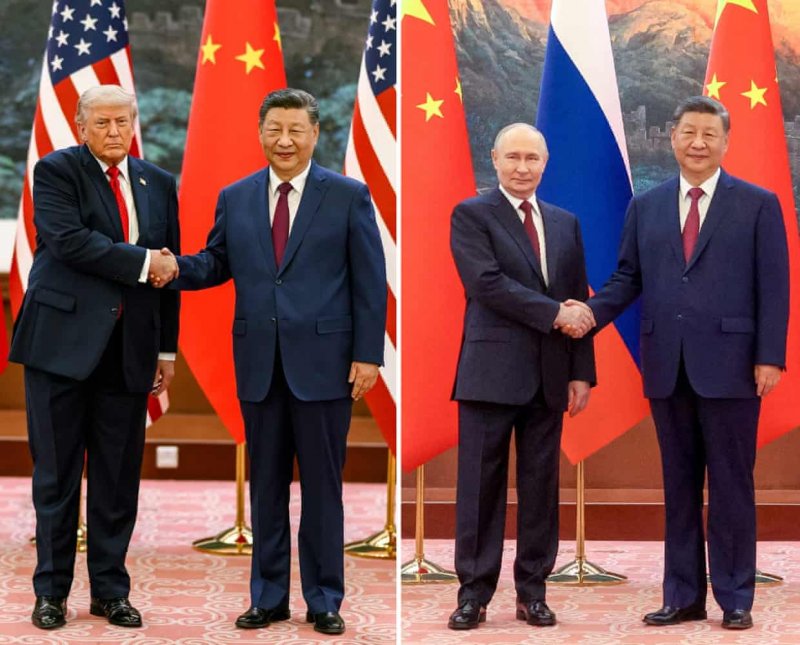
Photo: The Guardian
– And what about Russia in this context?
– As for Russia, it indeed had many reasons to conduct confidential negotiations. According to Yuri Ushakov, who oversees foreign policy issues within the Russian presidential administration, the talks went exceptionally well. However, he cannot publicly discuss their concrete outcomes: what agreements were reached, what projects were discussed, and how the two sides intend to protect them from external pressure. We can only speculate about the issues that stood at the centre of these consultations.
Most likely, they involved oil-related matters, tanker supplies circumventing sanctions, mechanisms for trade in dual-use goods, settlements in national currencies, alternative banking transfers and other schemes aimed at minimising the impact of Western restrictions. Naturally, many of these issues will never enter the public domain because they are highly sensitive and strategic in nature. The future development of economic and political cooperation between China and Russia depends heavily on their implementation.
Publicly, however, the two sides focused on the declaration they signed, which devoted significant attention to geopolitics, resistance to Western pressure, criticism of sanctions policies and joint condemnation of the actions of the United States and its allies. In this context, even the American strike on Iran during the negotiations was presented as a step undermining the foundations of global diplomacy. It appears that this friendly, warm and trusting atmosphere created the conditions necessary for coordinating and launching projects that the broader public may not yet know about.
Incidentally, one of those projects could involve the construction of road and railway infrastructure in the Caspian region, which may also be significant for Azerbaijan.
– Can it be said that China in this situation is already acting as a kind of “arbiter of global turbulence” — a country approached simultaneously by both the United States and Russia, though each with its own set of fears, expectations and dependencies?
– I would not say that. Although Russia would certainly prefer to remain a self-sufficient centre of power — “Russia for Russia”, so to speak — we can see that Moscow is actually interested in China becoming the new centre of globalisation within the emerging world order. China itself, however, is still not showing much enthusiasm for such a role and is perhaps acting with a degree of caution. China’s main objective, dating back to Deng Xiaoping’s concept, has been to avoid involvement in military confrontations and serious conflicts. Beijing’s priority remains the expansion of trade and economic ties, the promotion of various projects, and the gradual strengthening of its presence through business, investment, infrastructure initiatives and soft power across different regions of the world.
China builds enterprises, develops economic cooperation and expands its influence in this way. However, when it comes to military conflicts, China seeks to minimise risks. It does not want to be drawn into confrontations or face sanctions-related consequences because of direct involvement. Therefore, Beijing is behaving cautiously and, for now, is not acting as the geopolitical arbiter it could potentially become — and perhaps the role Russia would like it to play.
– After these visits, what signal do you think the world received?
– All the signals that Russia and China wanted to send to the world are reflected in the declaration I mentioned earlier. The document is quite extensive — more than 40 pages long. It addresses a wide range of issues, from condemning the ambitions of Japan and several European countries to acquire nuclear weapons to rejecting the practice of kidnapping and assassinating state leaders. It emphasises that such actions cannot remain unanswered.
If one reads this declaration carefully, it becomes clear that it effectively outlines the current positions of Russia and China on the key international issues of today. As for Trump and the United States, the message is somewhat different. Trump and Xi Jinping are trying to show the world that despite the existing problems and contradictions between Washington and Beijing, the two sides remain prepared to sit down at the negotiating table, seek diplomatic solutions and reach peaceful agreements.
This is particularly important because China, as is well known, has no interest in becoming entangled in military confrontations. China today is a powerful state, and the United States understands this. Therefore, Washington is also prepared for cooperation — above all in formats that could benefit all sides. In Trump’s logic, this could be described as a kind of deal. And the very possibility of such a deal sends an important signal to the entire world: despite competition and deep disagreements, the United States and China are still capable of reaching agreements.
此内容由惯性聚合(RSS阅读器)自动聚合整理,仅供阅读参考。 原文来自 — 版权归原作者所有。