



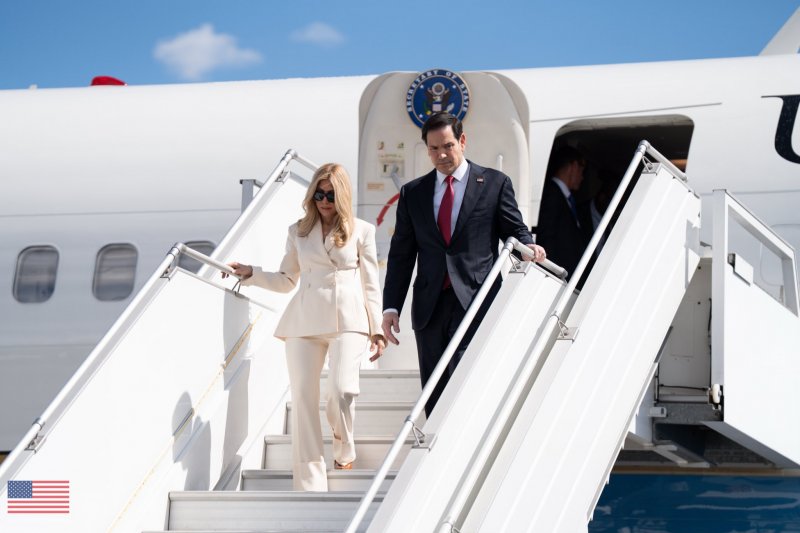
One of the key issues on the regional agenda is the agreement signed in Yerevan on May 26 by U.S. Secretary of State Marco Rubio and Armenian Foreign Minister Ararat Mirzoyan. Formally, the document marks a new stage in the strategic partnership between the United States and Armenia. In reality, however, its political and geo-economic significance goes far beyond bilateral relations.
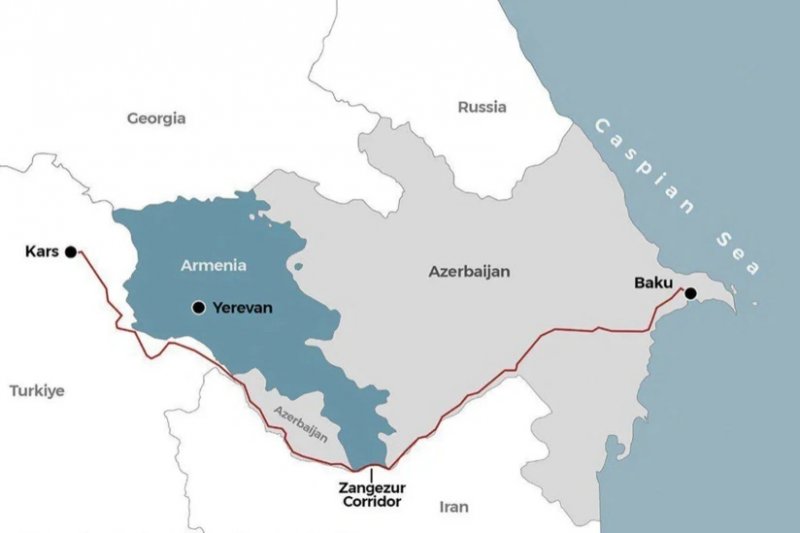
According to Reuters, the sides signed a strategic partnership agreement, as well as documents related to critical minerals and the TRIPP transport corridor — the Trump Route for International Peace and Prosperity. The corridor is designed to connect mainland Azerbaijan with Nakhchivan and further with Türkiye through Armenian territory.
In practical terms, Washington is moving simultaneously in several directions: strengthening its influence in the South Caucasus, reducing the region’s dependence on Russia and Iran, and promoting new routes for trade, logistics and access to strategic resources. Critical minerals have long become not only an economic issue for the United States, but also a matter of national security. They are essential for modern technologies, the energy transition, defense industries and high-tech production. In this context, Washington’s interest in Armenia is not accidental.
The TRIPP corridor is especially important. If implemented, the project could create a new logistics architecture in the South Caucasus. Azerbaijan would gain a land connection with Nakhchivan, Türkiye would receive an additional link to the Caspian region and Central Asia, while Armenia would get a chance to move beyond long-standing transport isolation and become a transit link between East and West.
Source: AIR Center
For Yerevan, this could represent a historic turning point. For years, Armenia remained outside major regional energy and transport projects because of the conflict with Azerbaijan and closed borders with Türkiye. Now Prime Minister Nikol Pashinyan is trying to present a new model for the country’s future: peace with Azerbaijan, the opening of communications, gradual rapprochement with the West and Armenia’s transformation into part of a broader Eurasian transport network.
However, this course carries serious domestic and external risks. The signing of the agreement took place less than two weeks before Armenia’s parliamentary elections scheduled for June 7. This makes Rubio’s visit not only a diplomatic event, but also a political one. For Pashinyan, the agreement with the United States may serve as evidence that his pro-Western course is producing concrete results. For his opponents, it may become another reason to accuse the authorities of making excessive concessions to the West, Azerbaijan and Türkiye.
Russia is already reacting painfully to Armenia’s turn toward the United States and Europe. Moscow has warned that Armenia could lose preferential prices for Russian gas if it continues to distance itself from Russian-led integration structures. This is a signal not only to Yerevan, but to the entire region: the Kremlin does not intend to calmly watch its traditional influence in the South Caucasus decline.
In this sense, the U.S.-Armenia agreement is part of a much larger geopolitical picture. After 2020, and especially after Azerbaijan restored full sovereignty over Karabakh in 2023, the old regional balance effectively ceased to exist. Russia, which for decades was perceived as the main arbiter between Baku and Yerevan, is gradually losing that role. The United States and the European Union are now trying to step in, offering Armenia new political and economic prospects.
For Azerbaijan, the TRIPP project is also of strategic importance. Baku has long sought the opening of regional communications and a direct connection with Nakhchivan. If the new route is implemented on acceptable terms, it will strengthen Azerbaijan’s transport role, deepen its connection with Türkiye and increase the country’s importance as a key link between Europe, the Caucasus, Central Asia and China.
At the same time, much will depend on the details. Issues of control, security, customs procedures, the role of international operators and guarantees for all sides remain highly sensitive. Armenia wants to preserve sovereignty over the route. Azerbaijan wants a reliable and unhindered connection with Nakhchivan. The United States wants to consolidate its presence in the region through infrastructure, investment and strategic projects.
Source: US Embassy in Armenia
The Iranian factor is also important. Tehran has traditionally been wary of any projects that could alter the balance of power along its northern borders. A stronger Türkiye-Azerbaijan connection backed by the United States may be perceived by Iran as a challenge. Therefore, TRIPP may become not only an economic project, but also a subject of serious diplomatic competition.
The Rubio-Mirzoyan agreement shows that the South Caucasus is no longer a peripheral region. It has become a space where the interests of the United States, Russia, Türkiye, Iran, the European Union, China and Central Asian countries intersect. Transport corridors, critical minerals, energy security and a possible peace treaty between Armenia and Azerbaijan are now all part of one larger geopolitical equation.
For Armenia, this agreement may either mark the beginning of a new stage of development or deepen domestic polarization. Much will depend on whether Yerevan can combine its Western orientation with pragmatic relations with its neighbors and avoid becoming a battlefield for competing external powers.
The main conclusion is that the United States is making one of its most visible moves in Armenia in years — not only through diplomacy, but through economics, infrastructure and resources. This is no longer just political support or symbolic statements. It is an attempt to establish a stronger foothold in the South Caucasus through the infrastructure of the future. That is why the agreement signed in Yerevan on May 26 may become one of the key developments not only for Armenia, but for the entire region.
By Murad Samedov
此内容由惯性聚合(RSS阅读器)自动聚合整理,仅供阅读参考。 原文来自 — 版权归原作者所有。