




On May 24, Cyprus is holding elections to the House of Representatives, the country’s parliament. At first glance, this may appear to be a domestic political event in a relatively small island state. Yet under current geopolitical conditions, the Cypriot vote goes far beyond national politics.
Cyprus remains one of the key points in the Eastern Mediterranean, where the interests of the European Union, Türkiye, Greece, Israel, the Middle East and major energy players intersect. That is why the outcome of the parliamentary elections in Nicosia will be closely watched not only in Cyprus itself, but also in Brussels, Ankara, Athens and other regional capitals.
According to ElectionGuide, Cyprus’s parliamentary elections are scheduled for May 24, 2026. The vote is taking place at a time when the country’s political system is facing growing public dissatisfaction, the rise of new political forces and the possible further weakening of traditional parties. The elections may significantly reshape the political landscape amid public frustration over corruption scandals, the cost of living and unresolved energy problems.
Formally, Cyprus is a presidential republic, with executive power concentrated in the hands of the president. However, parliament plays an important role in shaping the legislative agenda, approving reforms and overseeing the country’s political course. For this reason, the composition of the new House of Representatives may either make it easier for President Nikos Christodoulides to advance his initiatives or, on the contrary, complicate the government’s ability to implement its agenda.
One of the defining features of the current election is the high level of political fragmentation. A record number of candidates and parties are competing for seats in the 56-member parliament, which reflects a broader trend: voters are increasingly looking for alternatives to the traditional political establishment. For decades, Cypriot politics was largely shaped by rivalry between major parties, including the right-wing DISY and the left-wing AKEL. Today, however, their dominance no longer appears as secure as it once did.

Source: Reuters
New political forces, including reform-oriented and pro-European movements, may gain representation in parliament. At the same time, right-wing populist forces are also expected to strengthen their position. This combination could make the next parliament more diverse, but also more difficult to manage politically.
The reasons behind this shift are clear. Cypriot society has grown tired of the old party system. The corruption scandal surrounding the so-called “golden passports” program, which was shut down after criticism from the European Union, dealt a serious blow to public trust in state institutions. This was followed by rising prices, expensive electricity and public dissatisfaction with the way the authorities have handled energy infrastructure issues. As a result, the parliamentary elections have become not merely a vote for parties, but a kind of referendum on trust in the political system itself.
Yet the significance of the election is not limited to domestic politics. Cyprus occupies a special place in Europe’s security architecture. It is an EU member state located close to the Middle East, Türkiye, Syria, Israel, Lebanon and Egypt. In a period of instability across the Eastern Mediterranean, Nicosia is becoming an important diplomatic and strategic point for Brussels.
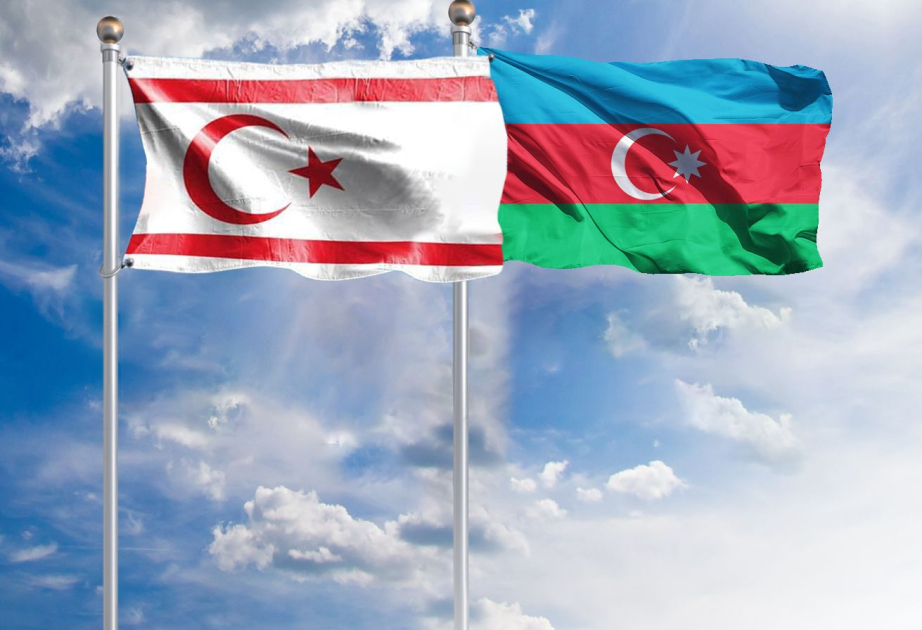
Cyprus also remains a divided island. The Republic of Cyprus is a member of the European Union, while the northern part of the island is controlled by the Turkish Republic of Northern Cyprus, which is recognized only by Türkiye. The EU has repeatedly emphasized that Cyprus joined the bloc as a de facto divided island, while EU law is temporarily suspended in areas not under the effective control of the government of the Republic of Cyprus.
This is why any political change in Nicosia is inevitably viewed through the prism of EU–Türkiye relations. For Ankara, Cyprus is not only a historical and political issue, but also an important element of its broader regional strategy in the Eastern Mediterranean. For Brussels, Cyprus is simultaneously an EU member state, an unresolved conflict and a point of direct contact with Türkiye.
The energy factor is equally important. In recent years, the Eastern Mediterranean has become an arena of competition over gas reserves, maritime routes, infrastructure and energy security. Cyprus, together with Greece, Israel and Egypt, is often seen as part of a potential energy architecture that could strengthen Europe’s position in diversifying its energy supplies. However, disputed maritime zones, Türkiye’s position and the unresolved Cyprus issue continue to create political risks.
For this reason, the composition of the new parliament may matter for the country’s foreign policy stability. If the parliament becomes too fragmented, the government may find it more difficult to carry out reforms and maintain a consistent line on sensitive issues, from energy policy to relations with the EU and Türkiye. If new parties gain significant representation, it will signal a strong public demand for renewal of the political system.
The election is also taking place in a broader European context. Across the EU, debates are intensifying over migration, security, energy, enlargement and relations with neighboring regions. Despite its small size, Cyprus is at the center of many of these processes. It faces migration pressure, depends heavily on regional stability and at the same time seeks to use its geographical position as a diplomatic advantage.
Source: AzerTAG
For Azerbaijan and the South Caucasus, the Cypriot elections are also of interest. The Eastern Mediterranean and the South Caucasus are increasingly viewed as interconnected spaces where energy, transport routes, relations with Türkiye and EU policy have direct significance. Any change in Cyprus’s political dynamics may influence the EU’s approach to regional issues, including energy cooperation, security and connectivity projects.
The main question is how strongly voters will punish the old political elite and how far the process of fragmentation will go. If traditional parties retain their positions, Cyprus is likely to continue along a relatively predictable political course. If new and protest-oriented forces achieve a strong result, Nicosia may enter a period of more complicated parliamentary negotiations and political transformation.
In any case, the May 24 vote is more than an ordinary parliamentary election. It is a test of public trust in state institutions, a test of the resilience of Cyprus’s party system and an important signal for the European Union. Cyprus may be a small state, but it has major geopolitical significance. That is why the results of the election on the island will matter far beyond Nicosia.
By Murad Samedov
此内容由惯性聚合(RSS阅读器)自动聚合整理,仅供阅读参考。 原文来自 — 版权归原作者所有。