






Editor’s note: Faig Mahmudov is a journalist based in Azerbaijan covering regional security, foreign policy, and geopolitical developments. The views expressed in this article are his own and do not necessarily reflect the official position or editorial stance of News.Az.
May could become one of the key months for the global economy, as relations between the United States and China are once again reaching a point where diplomacy, trade, technology, and security are becoming part of one major negotiation. A possible meeting between Donald Trump and Xi Jinping in Beijing on May 14–15 could determine not only the future format of U.S.–China relations, but also the mood of global markets for the coming months.
At first glance, this may look like a bilateral dispute between the world’s two largest economies. In reality, however, the U.S.–China conflict has long ceased to be just a trade war. It affects consumer prices, supply stability, car and electronics manufacturing, access to microchips, the future of artificial intelligence, Taiwan’s security, rare earth markets, and even the industrial strategies of Europe, Japan, South Korea, India, and Southeast Asian countries. That is why any major talks between Washington and Beijing in May will be closely watched not only in the two capitals, but also in Brussels, Tokyo, Seoul, New Delhi, Singapore, Riyadh, and on global financial markets.
Five issues could shape the fate of the global economy in May: tariffs, technology, Taiwan, rare earth metals, and supply chains. Each of these issues is serious on its own. But the main problem is that they no longer exist separately. Tariffs are linked to industrial policy. Technology is linked to national security. Taiwan is linked to semiconductors. Rare earth metals are linked to defense, electric vehicles, and green energy. Supply chains have become a field of strategic pressure, where each side is trying to reduce dependence on the other but cannot do so quickly or painlessly.
Source: Reuters
The first issue is tariffs. Tariffs were Donald Trump’s main instrument of pressure on China during his first presidential term, and after returning to the White House, he has again tried to use them as a tool to reshape relations with Beijing. But the problem is that tariffs have a double effect. They can hit Chinese exports, but they can also raise costs for American companies and consumers. If Washington increases tariff pressure, this could lead to higher prices, new supply disruptions, and retaliatory measures from China. If the United States softens its position, Trump’s critics may accuse his administration of making concessions to Beijing. That is why the tariff issue in May is not only an economic matter, but also a political test for the White House.
For China, tariffs are not merely a trade issue either. Beijing wants to show that it can withstand pressure and will not change its strategic course under threat. The Chinese economy is facing domestic problems, including weak consumer demand and pressure on the industrial sector, but China still has enormous export capacity. If the United States increases pressure, China may respond not symmetrically, but selectively: through raw materials, licenses, regulatory barriers, restrictions on American companies, and measures against attempts to move production out of China.
The second issue is technology. Technological competition has become the core of the new U.S.–China rivalry. This is not only about microchips, but also about artificial intelligence, data centers, cybersecurity, telecommunications, cloud services, semiconductor manufacturing equipment, and software. Washington is trying to limit China’s access to advanced technologies, fearing they could be used for military purposes or strengthen Chinese companies in global competition. Beijing, in turn, is accelerating import substitution and building its own technological ecosystem.
For the global economy, this means one thing: technological globalization has entered a new phase of fragmentation. Companies can no longer rely only on efficiency and low production costs. They must take into account political risks, the origin of components, export restrictions, security requirements, and possible sanctions. An electronics manufacturer, an automaker, a cloud company, or an artificial intelligence startup today has to think not only about the market, but also about geopolitics. This is changing the very logic of business.
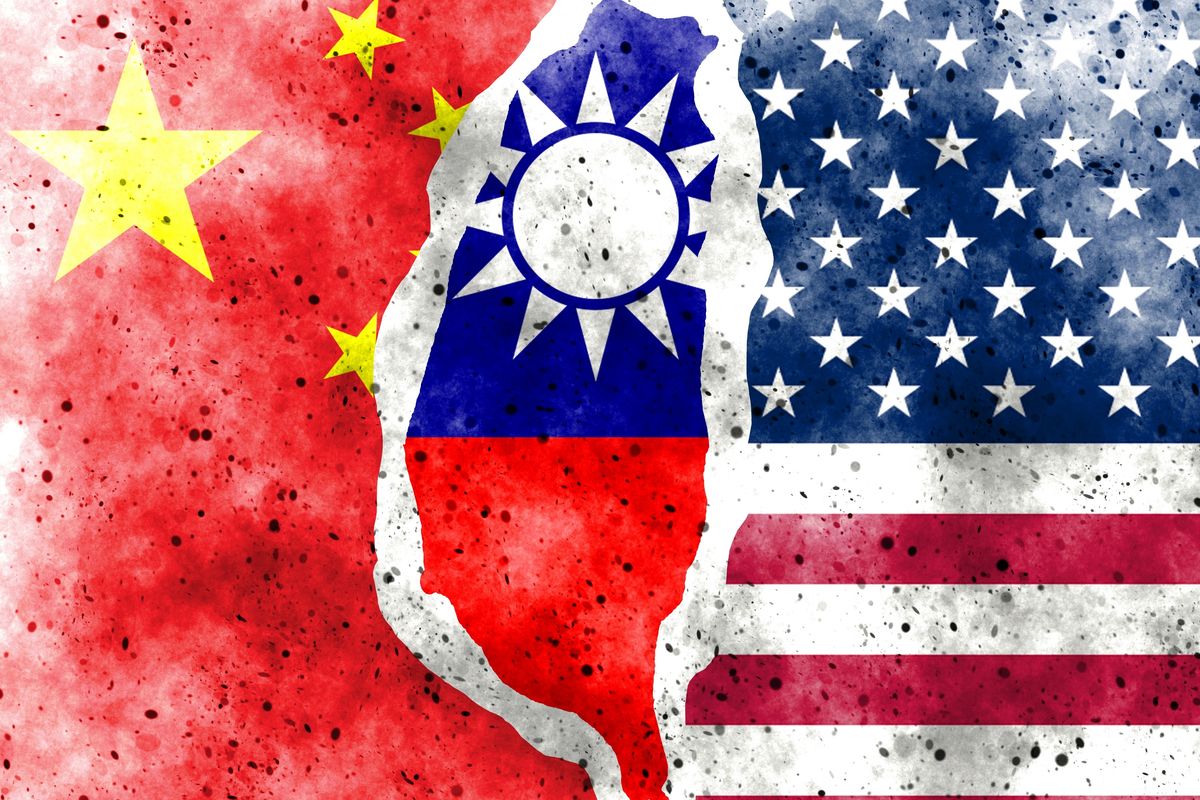
The third issue is Taiwan. At first glance, Taiwan is a security issue rather than an economic one. In reality, it is one of the most important economic factors in the world. Taiwan plays a central role in the global semiconductor industry, and any military or political shock around the island could hit microchip production, the automotive industry, electronics, defense manufacturing, and high-tech markets.
For global markets, even the absence of a crisis around Taiwan is already a positive signal. If a meeting between Trump and Xi helps reduce the risk of unpredictable escalation, it could calm investors and businesses. But if the two sides emerge from talks with tougher statements, the consequences could be serious. Taiwan is not just a diplomatic dispute. It is the nervous system of the modern digital economy.
The fourth issue is rare earth metals. This is one of China’s strongest levers of influence. Rare earth elements and magnets are essential for electric vehicles, wind turbines, electronics, radars, missile systems, aviation, and many defense technologies. For years, China has been the main and cheapest supplier of these materials, but export restrictions introduced by Beijing have exposed the vulnerability of Western supply chains.
This means that rare earth metals have become not just raw materials, but a strategic weapon of economic policy. The United States, Europe, Japan, and Australia are trying to build alternative supply chains, but this cannot be done in a few months. Mining, processing, environmental standards, financing, factory construction, and the creation of a stable market require time and major investment. China already has the industrial base, processing technologies, and production scale. Therefore, even if the West wants to reduce dependence, it will continue to face the reality of Chinese dominance for a long time.
The fifth issue is supply chains. They have become the main battlefield of the hidden struggle between the United States and China. Before the pandemic and trade wars, the global economy was built around the idea of maximum efficiency: produce where it is cheaper, faster, and more convenient. Now the key word is no longer “efficiency,” but “resilience.” Companies and governments want to know what will happen if export controls are introduced tomorrow, if a port is closed, if payments are disrupted, if a military crisis begins, or if one side uses economic pressure.
This is especially important because “decoupling” between the United States and China has proved much more difficult in practice than in political slogans. American companies still depend on Chinese components, Chinese factories, Chinese raw material processing, and the Chinese market. China, in turn, remains interested in access to international markets, technologies, capital, and consumers. A full break would be too costly for both sides. That is why the current process is not a complete rupture, but a painful restructuring of dependence.
For the global economy, the key question in May is whether Trump and Xi can create at least temporary predictability. Businesses do not necessarily need full friendship between the United States and China. They need clarity: which tariffs will apply, which technologies will be restricted, which supplies will remain permitted, which raw material markets will stay open, and how the two sides will manage the risk around Taiwan. Without this clarity, companies will delay investments, relocate production, increase inventories, and include a geopolitical premium in prices.
At the same time, no one should expect a major historic reconciliation. Too many contradictions have become structural. The United States is not ready to accept Chinese technological leadership as normal. China is not ready to accept American restrictions as legitimate rules. Washington speaks about protecting national security; Beijing speaks about resisting containment and discrimination. Both sides believe they are defending their lawful interests. This makes compromise possible, but limited.
The most likely scenario in May is not peace, but a managed pause. The two sides may agree to keep dialogue open, partially ease certain measures, create working groups, make promises on purchases, or send cautious signals on Taiwan. But the basic competition will not disappear. On the contrary, it may become even more complicated, because it now includes not only tariffs, but also technology, raw materials, logistics, data, investment, and infrastructure.
Source: responsiblestatecraft
For the rest of the world, this creates both risks and opportunities. The risks are obvious: rising prices, supply disruptions, pressure on companies, divided technology standards, and new sanctions wars. But there are also opportunities. Countries that can offer alternative production sites, raw materials, logistics routes, or technology partnerships will receive more attention. That is why India, Vietnam, Malaysia, Mexico, Australia, Central Asian countries, and the Caspian region may find themselves at the center of a new economic geography.
For Azerbaijan and the wider South Caucasus, this process also matters. The more the global economy searches for alternative routes and resilient supply chains, the more important transport corridors between Asia and Europe become. The Middle Corridor, the Caspian Sea, railway networks, and port projects may gain additional strategic importance if global companies and governments continue trying to reduce dependence on traditional routes and vulnerable chokepoints.
In May, the United States and China will be discussing more than their bilateral grievances. They will, in effect, be discussing the rules of the new global economy. Who controls technology? Who controls critical raw materials? Who determines the cost of access to markets? Who can withstand pressure in supply chains? And can the global economy remain unified if the two largest powers continue moving toward strategic rivalry?
The answers to these questions will not emerge from a single summit. But May could show whether the world is moving toward temporary stabilization or a new round of economic confrontation. If Washington and Beijing can at least define the framework for managed competition, markets will get a pause. If talks fail, tariffs, technology restrictions, raw material leverage, and the Taiwan factor could once again become sources of global shock.
That is why the May agenda between the United States and China is not a diplomatic detail, but one of the central stories of the global economy. The fate of global markets is no longer decided only in central bank reports or on stock exchanges. It is being shaped in negotiations over tariffs, microchips, Taiwan, rare earth metals, and supply chains. If the world’s two largest economies fail to keep their rivalry under control, the consequences will be felt not only by the United States and China, but by the entire world.
(If you possess specialized knowledge and wish to contribute, please reach out to us at opinions@news.az).
此内容由惯性聚合(RSS阅读器)自动聚合整理,仅供阅读参考。 原文来自 — 版权归原作者所有。
